

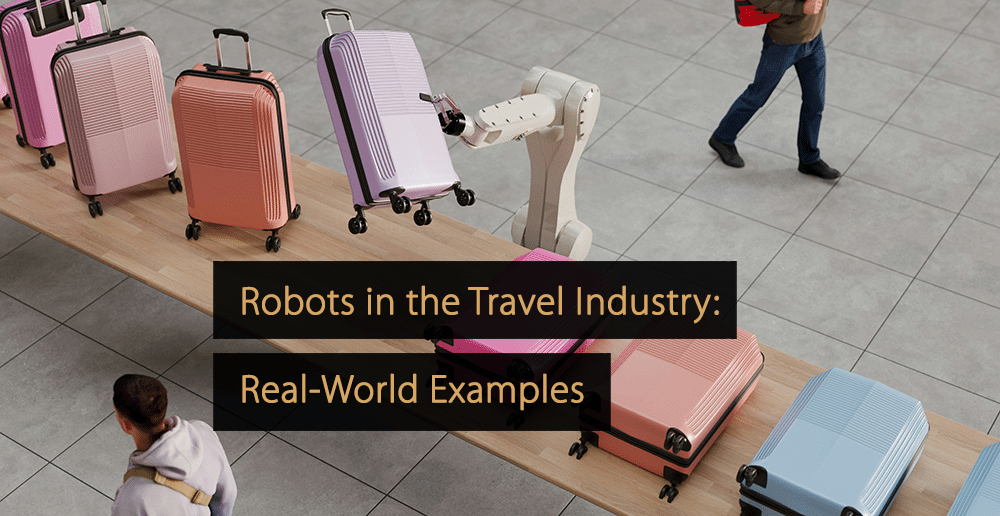
Um dos mais emocionantes tecnológica Um dos desenvolvimentos mais recentes na indústria de viagens tem sido a crescente presença de robôs, com exemplos que vão desde chatbots baseados em texto e assistentes robóticos na recepção até robôs de segurança e malas de viagem robóticas. Este artigo analisa mais de perto como os robôs estão transformando o turismo, apresentando 20 exemplos reais de sua utilização e examinando alguns prós e contras.
Índice:
- Compreendendo robôs
- Aplicações de robôs na indústria de viagens
- Exemplos reais de robôs na indústria de viagens
- Outros exemplos de robôs na indústria de viagens
- Robôs contra humanos: os prós e contras
Compreendendo robôs
Embora a maioria de nós tenha um conceito de robô, pode ser mais difícil definir o que é 'robô' significa claramente. Efetivamente, um robô é uma máquina projetada para executar tarefas específicas de forma precisa e automática. Isso pode incluir tarefas físicas, como montagem de peças em uma fábrica ou tarefas relacionadas a texto ou fala.
Em termos de aparência, embora você possa pensar imediatamente em um andróide semelhante a um humano, os robôs podem assumir muitas formas diferentes na realidade. Podem ser completamente autônomos ou semiautônomos, operando com alguma assistência humana. Os robôs modernos usam tecnologias que vão desde detecção de colisão até reconhecimento de fala e inteligência artificial. De acordo com o Relatório de Análise de Tamanho e Participação da Indústria de Robótica pela Mordor Intelligence, o tamanho do mercado global de robótica está projetado para atingir $95,93 bilhões até 2029.
Para aqueles no indústria de viagens, A IA é talvez a tecnologia mais empolgante relacionada a robôs porque pode facilitar o aprendizado de máquina e executar tarefas mais complexas, que normalmente requerem a função cognitiva humana. Simplificando, IA é a capacidade de uma máquina de imitar esse tipo de capacidade cognitiva.
As definições que descrevem precisamente o que conta como inteligência artificial são um tanto fluidas. No entanto, geralmente concorda-se que o reconhecimento de fala, a resolução de problemas, o aprendizado das interações humanas, o movimento completamente autônomo e a demonstração de lógica e raciocínio se enquadram nesse campo.
Aplicações de robôs na indústria de viagens
A tecnologia robótica está rapidamente ganhando popularidade na indústria de viagens, parcialmente motivada pela mudança de hábitos do consumidor em relação ao turismo. Os clientes buscam cada vez mais métodos de autoatendimento, tornando os robôs de automação atraentes para hotéis, agentes de viagens e outros negócios.
De acordo com Inteligência de Mordor, O mercado global de robôs para o setor hoteleiro deverá atingir US$ 0,61 bilhão em 2025 e crescer a uma taxa composta de crescimento anual (CAGR) de 24,721%, alcançando US$ 1,84 bilhão em 2030. Esse crescimento demonstra que hotéis, aeroportos, cruzeiros e atrações turísticas estão investindo fortemente em automação.
O setor de viagens enfrenta sérios problemas de pessoal. 67% de relatórios de hotéis Escassez de pessoal. Cerca de 721 mil pessoas afirmam não conseguir preencher vagas em aberto. Robôs são uma solução quando não é possível contratar funcionários suficientes ou quando há constantes demissões. Eles assumem tarefas repetitivas como entregas, limpeza e segurança básica, permitindo que a equipe se concentre nos hóspedes e na receita.
Contrariando as preocupações, os hóspedes adoram robôs. Os viajantes agora esperam um serviço inteligente e sem contato. Muitos estão dispostos a pagar mais para se hospedar em propriedades com tecnologia de ponta.
Tabela: Exemplos de robôs na indústria de viagens
Exemplos reais de robôs na indústria de viagens
Vamos explorar robôs que já estão servindo viajantes nos setores de transporte, hospedagem, alimentação e entretenimento. Cada exemplo mostra como a automação já está transformando as operações reais em toda a indústria de viagens.
Exemplos de robôs no setor de transportes
O transporte é onde muitos viajantes têm o primeiro contato com robôs. Os aeroportos usam robôs para ajudar os passageiros a encontrar portões de embarque, limpar os terminais e movimentar bagagens. De acordo com Inteligência de Mordor, O mercado global de robôs aeroportuários deverá atingir US$ 1,29 bilhão em 2025 e crescer a uma taxa composta de crescimento anual (CAGR) de 13,871%, alcançando US$ 2,47 bilhões em 2030. As companhias aéreas utilizam robôs para o manuseio de bagagens. Isso é importante porque Só as companhias aéreas dos EUA perdem 2 milhões de malas por ano.. Os navios de cruzeiro contam com bartenders robôs e sistemas de entretenimento. Esses robôs trabalham 24 horas por dia, 7 dias por semana, em ambientes movimentados e lotados, atendendo milhões de viajantes anualmente. Eles falam vários idiomas, nunca se cansam e cometem menos erros do que os humanos.
1. Robô AIRSTAR do Aeroporto de Incheon
O Aeroporto Internacional de Incheon, na Coreia do Sul, é um dos primeiros grandes aeroportos a utilizar robôs. O aeroporto recebe cerca de 70 milhões de passageiros por ano, portanto, assistência clara e espaços limpos são de extrema importância. AIRSTAR AIRSTAR é o simpático robô guia do Aeroporto de Incheon. Ele se move pelo terminal de forma autônoma, utilizando sensores e mapas internos para evitar pessoas e obstáculos. Os viajantes podem solicitar ao AIRSTAR informações sobre voos, indicações para portões de embarque, restaurantes, banheiros e outros serviços. O robô é capaz de falar diversos idiomas. O aeroporto também utiliza os dados anônimos coletados pelo robô para entender como as pessoas se movimentam pelo terminal e, assim, otimizar o layout, a sinalização e a equipe ao longo do tempo.
Vídeo: Robô AIRSSTTAR no Aeroporto de Incheon
2. Robôs de bagagem e mobilidade AirPorter e AirRide de Incheon
AirPorter e AirRide São robôs projetados para facilitar as viagens aeroportuárias, especialmente para famílias, viajantes idosos e pessoas com mobilidade reduzida. O AirPorter é um robô de bagagem que segue você e carrega suas malas pelo terminal. O AirRide é uma plataforma de mobilidade que auxilia passageiros com dificuldades para caminhar longas distâncias. Ambos os robôs utilizam telas para exibir direções e instruções simples. Eles guiam os viajantes do check-in à segurança ou ao portão de embarque com menos estresse e menos esforço físico. Incheon vê esses robôs como parte de uma “mobilidade inteligente” Sistema que oferece suporte aos viajantes do portão de embarque até o portão de desembarque e coleta dados para aprimorar serviços futuros.
Vídeo: Robô transportador de bagagens no aeroporto
3. Aeroporto CVG e robôs autônomos de manuseio de bagagens da IAG
O Aeroporto Internacional de Cincinnati/Northern Kentucky (CVG) firmou parceria com o International Airlines Group (IAG) e Aurigo implantar tratores de bagagem autônomos Auto-DollyTug. Esses tratores de bagagem autônomos substituem os tratores manuais que puxam carrinhos de bagagem pesados em condições climáticas adversas. Os robôs movem malas entre terminais, áreas de triagem e aeronaves, seguindo rotas planejadas e evitando obstáculos. Eles trabalham na chuva, na neve, no calor e à noite sem se cansar. Usando etiquetas RFID e sistemas de rastreamento, eles ajudam a reduzir o extravio de malas e os atrasos. De acordo com Fortune Informações sobre negócios, Prevê-se que o mercado global de sistemas de manuseio de bagagens em aeroportos cresça de US$ 9,15 bilhões em 2025 para US$ 15,33 bilhões em 2032, apresentando uma taxa de crescimento anual composta (CAGR) de 7,61 trilhões durante o período de previsão. Com o crescimento do uso de robôs para manuseio de bagagens em todo o mundo, os aeroportos os enxergam como uma forma de reduzir a falta de mão de obra e aumentar a precisão.
Vídeo: Auto-DollyTug - Tratores de bagagem autônomos
4. Royal Caribbean Bionic Bar: Bartenders Robôs no Mar
Bar Biônico da Royal Caribbean, O Bionic Bar, equipado com tecnologia Makr Shakr, conta com dois braços robóticos industriais que preparam coquetéis para os hóspedes em diversos navios, incluindo embarcações das classes Quantum e Oasis. O Bionic Bar é descrito como um “maravilha da tecnologia moderna” Capazes de preparar e misturar bebidas a partir de um menu gerenciado por tablets ou aplicativos móveis, os bares robotizados da Makr Shakr destacam que podem produzir um coquetel em 60 a 90 segundos, com algumas instalações capazes de produzir até 120 bebidas por hora. Para as companhias de cruzeiro, os bares robotizados reduzem a dependência de bartenders, difíceis de contratar, durante os horários de pico da noite, padronizam as receitas e criam uma atração digna de redes sociais que atrai hóspedes para os espaços a bordo.
Vídeo: Bar Biônico – Harmony of the Seas – Bartenders Robóticos (Royal Caribbean)
5. Ottonomy Ottobot - Entrega de Alimentos e Produtos de Varejo no Aeroporto
Ottobot da Ottonomy O Ottobot é um robô de entrega autônomo usado em aeroportos como o de Cincinnati/Northern Kentucky (CVG) e o de Roma Fiumicino (FCO). Os passageiros pedem comida ou itens de compras por meio de um aplicativo, e o Ottobot percorre o terminal até o portão de embarque ou um ponto de coleta. Ele evita pessoas e obstáculos usando sensores e mapas. Para lojas e cafés de aeroporto, o Ottobot amplia seu alcance sem a necessidade de funcionários adicionais, permite horários de funcionamento mais longos e atende às expectativas dos viajantes por um serviço rápido, baseado em aplicativo e sem contato.
Vídeo: Robôs Móveis Ottonomy
6. Robôs de segurança Knightscope K5 para estacionamentos em aeroportos e centros de viagens
K5 da Knightscope O K5 é um robô de segurança totalmente autônomo usado em shoppings, campi universitários e terminais de transporte, incluindo o Aeroporto Internacional de San Antonio. Lá, o K5 patrulha estacionamentos, utilizando câmeras de 360 graus, reconhecimento de placas e alertas automáticos para auxiliar as equipes de segurança. O robô segue rotas de patrulha predefinidas, analisa a atividade e sinaliza comportamentos incomuns, como arrombamentos ou acessos não autorizados, sem a necessidade de guardas extras em serviço. aeroportos, Em locais como resorts e grandes espaços ao ar livre, o K5 ajuda a proteger hóspedes e funcionários, enquanto os agentes humanos se concentram na resposta e investigação, em vez de patrulhas de rotina.
Exemplos de robôs trabalhando no setor de hospedagem
Hotéis em todo o mundo agora usam robôs para entregar itens aos quartos dos hóspedes, recepcionar visitantes e realizar o check-in, mudando fundamentalmente a experiência do hóspede. experiência do cliente. De acordo com HFTP, Hotéis relatam 201.000.000 vezes mais satisfação dos hóspedes e mais reservas após a implementação de robôs. Robôs de hotel entregam pasta de dente, toalhas, lanches e qualquer outro item solicitado pelos hóspedes em seus quartos com rapidez. Eles navegam pelos corredores, chamam elevadores e encontram os quartos corretos automaticamente. Os hóspedes adoram tirar fotos e gravar vídeos com os robôs do hotel. Abaixo, alguns exemplos de robôs sendo utilizados no setor hoteleiro.
7. Seaview Investors Hotels: Primeira rede hoteleira dos EUA com robôs por toda parte
A Seaview Investors LLC, com sede em Newport Beach, Califórnia, tornou-se a primeira rede hoteleira dos EUA a instalar um robô de entregas Relay em todos os seus hotéis. é proprietária. O grupo administra oito hotéis, e cada robô tem seu próprio nome e personalidade, como “Hannah” no H Hotel Los Angeles e “Winnie” No aeroporto Embassy Suites LAX North, esses robôs entregam artigos de higiene pessoal, carregadores, lanches e travesseiros extras nos quartos dos hóspedes 24 horas por dia, 7 dias por semana. Uma entrega comum leva cerca de 10 minutos, do pedido à porta. Os hóspedes adoram a experiência, compartilham nas redes sociais e costumam reservar novamente.
8. Robô Mario do Marriott
O projeto Marriott testou robôs humanoides com Mario, um pequeno robô ZoraBots que trabalha no Hotel Marriott em Ghent, na Bélgica. Mário Com cerca de 56 cm de altura, capaz de falar até 19 idiomas, Mario é usado principalmente como um anfitrião simpático. Ele recepciona os hóspedes no lobby, auxilia no check-in, compartilha informações sobre eventos e o café da manhã, e pode até ler apresentações ou dançar para entreter grupos. A Marriott e a ZoraBots enfatizam que Mario não substitui a equipe, mas agrega valor à experiência. O robô faz os hóspedes sorrirem, atrai a atenção da mídia e ajuda a posicionar a Marriott como uma marca de hotel inovadora e antenada em tecnologia.
9. Connie do Hilton: Concierge de IA do IBM Watson
Hilton Hotéis apresentaram Connie, Connie é uma concierge robô com inteligência artificial presente em propriedades selecionadas. Batizada em homenagem ao fundador da Hilton, Conrad Hilton, Connie utiliza a inteligência artificial Watson da IBM, o mesmo sistema que venceu o Jeopardy contra campeões humanos. Connie fica nos lobbies dos hotéis respondendo às perguntas dos hóspedes. Onde fica um bom restaurante por perto? A que horas a piscina fecha? Como chego ao centro de convenções? Quais atrações turísticas devo visitar? Com a implementação de Connie, a Hilton reduziu o tempo médio de resolução das dúvidas dos hóspedes em 25%. Isso libera a equipe humana para lidar com problemas complexos que exigem empatia, discernimento e atenção personalizada. Connie também gera repercussão, com hóspedes tirando selfies e compartilhando nas redes sociais.
10. Henn-na Hotel Japan: O primeiro hotel do mundo com funcionários robôs
Hotel Henn-na em Nagasaki Inaugurado como o primeiro hotel do mundo com funcionários robôs, o hotel conta com dois robôs dinossauros e um robô humanoide na recepção, que recebem os hóspedes e realizam o check-in em japonês, inglês, coreano e chinês. Em toda a propriedade, robôs carregam bagagens, limpam e, nos quartos, ajudam a controlar as luzes e respondem a perguntas simples. O reconhecimento facial substitui as chaves dos quartos, transformando seu rosto em sua chave. O hotel opera atualmente em cerca de 14 unidades e emprega aproximadamente 150 robôs, incluindo recepcionistas dinossauros, funcionários humanoides na recepção e robôs assistentes nos quartos, como o RoBoHoN. Posteriormente, o hotel reduziu o número de robôs que geravam trabalho extra e estabeleceu um equilíbrio entre robôs para tarefas rotineiras e humanos para necessidades mais complexas.
11. Jeno e Jena – Robot Butlers no Hotel Jen (Singapura)
O Hotel Jen, parte do Grupo Shangri-La, tornou-se a primeira marca hoteleira internacional na Ásia a utilizar robôs Relay. Duas propriedades em Singapura, o Hotel Jen Orchardgateway e o Hotel Jen Tanglin, introduziram robôs com nomes diferentes. Jeno e Jena. Quando os hóspedes solicitam serviço de quarto ou comodidades, a equipe carrega os itens e o robô usa o elevador para encontrar o quarto e avisar o hóspede quando ele chega. O hotel tem como público-alvo viajantes jovens e apaixonados por tecnologia, então os robôs se encaixam perfeitamente na marca. Muitos hóspedes reservam apenas para... “"encontrar"” Os robôs compartilham vídeos online. O sucesso do Hotel Jen ajudou a comprovar que os robôs de serviço funcionam especialmente bem nos mercados de viagens asiáticos, onde a tecnologia é fundamental.
12. Robô de armazenamento de bagagem Yobot
YOBOT do YOTEL O YOBOT é um robô industrial da ABB com 6 metros de comprimento que armazena e recolhe bagagens no YOTEL New York e em propriedades selecionadas. Quando os hóspedes chegam, colocam suas malas em um guarda-volumes. O YOBOT então pega a bagagem e a armazena em compartimentos altos e compactos, utilizando o mínimo de espaço possível. Para retirar as malas, os hóspedes escaneiam o comprovante de bagagem em um totem de autoatendimento, e o robô devolve a bagagem em menos de um minuto. O processo é totalmente automatizado, seguro e divertido de assistir. O YOBOT economiza espaço valioso em localizações caras da cidade e se tornou uma atração popular para fotos e publicações nas redes sociais.
Exemplos de robôs trabalhando no setor de alimentos e bebidas
Restaurantes, salas de jantar de hotéis e bares utilizam cada vez mais robôs para entregar comida e bebida. De acordo com a Business Insights, o mercado global de robótica para o setor alimentício deverá atingir US$ 14,95 bilhões até 2034, expandindo a uma taxa composta de crescimento anual (CAGR) de 20,91 durante o período de previsão de 2026 a 2034. Esses robôs carregam bandejas pesadas da cozinha até as mesas sem se cansar. Eles trabalham com a mesma eficiência tanto nos horários de pico do jantar quanto nos horários mais tranquilos da madrugada. Os robôs em restaurantes liberam os garçons para se concentrarem em receber pedidos, responder perguntas e proporcionar ótimas experiências. Os robôs são rápidos, confiáveis e nunca deixam cair pratos.
13. Pudu Robotics: Implantação Global em Restaurantes e Hotéis
Robótica Pudu A Pudu é uma empresa chinesa que fabrica robôs de serviço para hotéis e restaurantes. Atualmente, opera em mais de 60 países e 600 cidades. Até 2025, já havia enviado mais de 80.000 robôs, a maioria para mercados fora da China. Grandes marcas utilizam robôs da Pudu, incluindo os modelos Marriott e Hilton, além de redes como McDonald's, KFC, Burger King e a japonesa Skylark. A Pudu fabrica diversos modelos. O PuduBot transporta alimentos. O BellaBot é um robô simpático em formato de gato que os hóspedes adoram. O HolaBot e o SwiftBot são ideais para hotéis e restaurantes movimentados. Novas fábricas na China triplicarão a produção, permitindo que ainda mais empresas do setor de turismo adotem a automação.
Vídeo: PUDU T300 e PuduBot: Otimizando as entregas e aumentando a eficiência no Hotel Xiyuan, na China.
14. Bear Robotics: Robôs de serviço para restaurantes e hotéis
Serviço, O Servi, da Bear Robotics (recentemente adquirida majoritariamente pela LG), é um robô autônomo para entrega de alimentos usado em restaurantes, cassinos e hotéis. O robô transporta pratos e bandejas entre a cozinha e as mesas, usando LiDAR e câmeras 3D para navegar em salões lotados. Hoje, mais de 9.000 robôs Servi operam em restaurantes e outros estabelecimentos na América do Norte. A Bear fabrica três modelos principais. O Servi Plus é o maior, capaz de transportar até 30 kg e possui bateria com duração de 12 horas. O Servi tem tamanho padrão para a maioria dos restaurantes, e o Servi Mini é ideal para espaços menores. Futuros empreendimentos de hotelaria, A Bear agora está entrando em hotéis, onde robôs Servi cuidam do serviço de quarto, da roupa de cama e do fornecimento de suprimentos por meio de elevadores.
Vídeo: Bear Robotics – Implantação do Servi Restaurant
15. LG CLOi ServeBot – Robôs para entrega de comida em restaurantes e hotéis
LG CLOi ServeBot ServeBot é um robô de serviço com várias bandejas, projetado para transportar pratos e bebidas em restaurantes, estabelecimentos de hotéis e cafés. O ServeBot pode transportar até 24 kg de alimentos ou mercadorias e utiliza LiDAR e câmeras 3D para navegar com segurança em ambientes movimentados. Estudo de caso dos EUA na Arirange K, Um popular restaurante de churrasco coreano perto de Atlanta, frequentado por famílias e viajantes, descreve como quatro ServeBots auxiliam os garçons nos horários de pico, reduzindo as distâncias percorridas e permitindo que a equipe passe mais tempo junto às mesas. Para operadores do setor de turismo, o ServeBot exemplifica como os robôs de alimentação e bebidas podem aliviar a pressão sobre a mão de obra e criar uma experiência mais eficiente. “"uau"” fator para os hóspedes.
Vídeo: O LG Cloi ServeBot Advanced é a próxima grande inovação para o seu restaurante!
Exemplos de robôs trabalhando no setor de entretenimento
Cassinos, atrações turísticas e espaços de entretenimento utilizam robôs para segurança, atendimento e interação com os clientes. Robôs de segurança patrulham 24 horas por dia, 7 dias por semana, monitorando atividades suspeitas e transmitindo vídeos para centrais de controle. Robôs de serviço entregam bebidas diretamente às mesas de jogo para que os clientes não interrompam suas partidas. Robôs de limpeza mantêm os pisos limpos fora do horário de funcionamento. Esses robôs de entretenimento criam atmosferas futuristas que atraem viajantes interessados em tecnologia.
16. Stuntronics Homem-Aranha – Robô Aéreo Artista no Avengers Campus
O Homem-Aranha da Stuntronics é um dos mais nítidos. “puro entretenimento” Robôs na indústria de viagens. Uma figura autônoma do Homem-Aranha é um robô voador usado em Campus dos Vingadores no Disney California Adventure. Durante o espetáculo, um robô do Homem-Aranha é lançado a cerca de 20 metros de altura. Ele dá cambalhotas, gira e faz poses como um verdadeiro super-herói antes de pousar em um telhado escondido. O robô utiliza sensores, giroscópios e controles inteligentes para se manter equilibrado e seguro no ar. Ele pode repetir a mesma manobra arriscada várias vezes ao dia sem se cansar ou se machucar. Os visitantes adoram assistir ao show, filmá-lo e compartilhá-lo online, o que atrai ainda mais pessoas para o parque.
17. Robôs de serviço e entrega de cassino
Os cassinos agora utilizam robôs de serviço para manter os clientes satisfeitos e as operações funcionando sem problemas. Robôs KettyBot Eles se movem pelos salões de jogos entregando bebidas e lanches. Também podem exibir anúncios ou informações sobre eventos em suas telas enquanto trabalham. Os jogadores não precisam mais sair de uma máquina caça-níqueis ou mesa para encontrar um bar. Basta fazer o pedido e um robô chega com a bebida. Outros robôs, como FlashBot e SwiftBot, movimentar fichas e objetos de valor com segurança entre áreas usando compartimentos trancados e desinfecção por UV-C. “co-robôs” Ajudam os funcionários humanos, não os substituem, e são especialmente úteis quando os cassinos têm dificuldades para contratar trabalhadores suficientes.
Robert Ripee, diretor executivo do UNLV Black Fire Innovation Hub., observado:
“Estamos vendo robôs colaborativos que auxiliam humanos em diversas tarefas, como em restaurantes, serviços de alimentação e bebidas, limpeza e segurança. A capacidade e as habilidades do robô são bastante limitadas. Ele tem uma única finalidade.”
Vídeo: Robô Pudu – SwiftBot | Pudu Robótica
18. Cassinos de Las Vegas: Robôs de segurança Knightscope
Knightscope A empresa implanta robôs de segurança autônomos em cassinos e resorts de entretenimento nos Estados Unidos. Um grande grupo de entretenimento assinou um contrato-quadro para implementar robôs em mais de 40 propriedades, incluindo cassinos em Las Vegas. Os robôs patrulham os salões de jogos, estacionamentos e áreas externas 24 horas por dia, 7 dias por semana. Eles usam câmeras de 360 graus, sensores e análises para detectar atividades incomuns e enviar alertas em tempo real para as equipes de segurança. Ao contrário dos guardas humanos, eles nunca se cansam ou se distraem e gravam tudo o que veem. Sua presença visível inibe o crime, ajuda os hóspedes a se sentirem mais seguros e pode até ajudar as propriedades a se qualificarem para melhores prêmios de seguro.
19. Robô de limpeza Pudu SH1: Locais de entretenimento e hotéis
o Pudu SH1 O SH1 é um robô inteligente de limpeza de pisos usado em hotéis, cassinos, restaurantes, shoppings e espaços de entretenimento. Ele ganhou o prêmio iF Design Award de 2025, destacando-se entre quase 11.000 projetos do mundo todo. Desde o seu lançamento, o SH1 já foi implementado em mais de 1.000 locais globalmente. Ele esfrega e seca pisos automaticamente, substituindo a limpeza manual árdua e lenta que pode causar dores nas costas e nos joelhos. O robô opera fora dos horários de pico, garantindo que saguões e corredores estejam limpos antes da chegada dos hóspedes. O SH1 se conecta à internet e gera relatórios de limpeza, mostrando onde e quando a limpeza foi realizada.
Vídeo: PUDU SH1 – Limpeza versátil com acessórios expansíveis | Pudu Robotics
20. Pepper – Anfitrião Humanoide nos Navios de Cruzeiro da Costa e da AIDA
Pepper é um robô humanoide amigável da SoftBank Robotics usado em Navios de cruzeiro Costa e AIDA. O robô recebe os hóspedes, responde a perguntas e os ajuda a encontrar restaurantes, espetáculos e excursões em terra. Ele fala vários idiomas, incluindo inglês, alemão e italiano, o que é ideal para passageiros internacionais. O robô ajuda a reduzir as filas nos serviços de atendimento ao hóspede, respondendo a perguntas simples. Ao mesmo tempo, o Pepper promove ofertas de spa, pacotes de bebidas e excursões. Ele tem transformado informações em receita extra e criado uma experiência de cruzeiro divertida e memorável.
Vídeo: Pepper, o Robô – A bordo da Costa Cruzeiros
Outros exemplos de robôs na indústria de viagens
Finalmente, há uma variedade de outros usos para robôs na indústria de viagens. Isso inclui carregadores de bagagem e mordomos robôs, que podem navegar pelos hotéis e fornecer serviços valiosos ao cliente, e robôs capazes de lidar com check-ins e check-outs, proporcionando uma experiência muito mais rápida.
Robôs contra humanos: os prós e contras
Embora os robôs tenham usos válidos na indústria de viagens, eles são controversos para alguns, e há prós e contras a serem observados. Em geral, os robôs podem oferecer maior consistência e precisão do que os humanos e geralmente são mais rápidos do que os humanos, especialmente no que diz respeito aos cálculos.
Ao contrário dos funcionários humanos, os robôs nunca se cansam ou ficam entediados e não necessitam de motivação. Além disso, os robôs não precisam receber salário, não estão sujeitos a regulamentações trabalhistas e podem funcionar 24 horas por dia, sete dias por semana, 365 dias por ano, sem necessidade de pausas ou feriados.
No entanto, também existem desvantagens. Uma dependência excessiva de robôs pode levar a uma 'crise de automação', onde robôs substituem humanos, levando à escassez de empregos. Robôs não conseguem se adaptar a eventos imprevistos ou mau funcionamento e têm altos custos iniciais e de manutenção a longo prazo.
No entanto, existem algumas situações em que os robôs são necessários. Um grande ponto positivo para usá-los é sua capacidade de funcionar em ambientes perigosos ou traiçoeiros, onde as pessoas não podem trabalhar com segurança.
Perguntas frequentes sobre robôs na indústria de viagens
Nos últimos anos, os robôs se tornaram comuns na indústria de viagens, fornecendo atendimento ao cliente baseado em texto e mais interações físicas. Em última análise, os principais benefícios são a capacidade de funcionar 24 horas por dia, 7 dias por semana, sem necessidade de pausas ou motivação, proporcionando maior consistência do que os humanos seriam capazes.
Você gostou deste artigo sobre robôs na indústria de viagens?
Você também pode estar interessado nos seguintes artigos:
- Como a realidade aumentada está revolucionando a indústria de viagens
- Como a inteligência artificial está mudando a indústria de viagens
- Como a tecnologia Blockchain está transformando a indústria de viagens
- Como a realidade virtual está transformando a indústria de viagens
- Como a Internet das Coisas (IoT) pode beneficiar a indústria de viagens
- Como o Voice Control pode beneficiar a indústria de viagens?
- Maneiras de o reconhecimento facial ser usado na indústria de viagens
Mais dicas para expandir seus negócios
Revfine.com é a plataforma de conhecimento líder para a indústria de hospitalidade e viagens. Profissionais usam nossos insights, estratégias e dicas práticas para se inspirar, otimizar receita, inovar processos e melhorar a experiência do cliente.Explore conselhos de especialistas sobre gestão, marketing, revenue management, operações, software e tecnologia em nosso dedicado Hotel, Hospitalidade, e Viagem de Turismo categorias.
Este artigo foi escrito por:

Olá, sou Martijn Barten, fundador da Revfine.com. Com 20 anos de experiência no setor hoteleiro, sou especialista em otimizar receitas combinando revenue management com estratégias de marketing. Desenvolvi, implementei e gerenciei com sucesso revenue management e estratégias de marketing para propriedades individuais e portfólios de múltiplas propriedades.




À medida que os robôs se movem cada vez mais dos armazéns para as lojas, a incorporação de Inteligência Artificial (IA) neles permitirá que os varejistas transformem drasticamente suas interações com os clientes. Enquanto um robô baseado em sensor básico pode oferecer aos clientes o que eles procuram, um robô comandado por IA pode oferecer recomendações de produtos personalizadas. O 'conselho' do robô é invariavelmente orientado por insights analíticos reunidos pela combinação de dados como idade e localização dos clientes com seus históricos de compra.
Obrigado por compartilhar essas informações sobre robôs na indústria de viagens. Muito informativo e bem descrito.
Este artigo sobre robôs na indústria do turismo é interessante porque todos saem. É incrível ver como os robôs estão melhorando as indústrias de hotelaria, aeroporto e navios de cruzeiro, mudando assim a forma como viajamos. O rápido progresso em IA e robótica levou à sua aplicação em vários contextos, incluindo atendimento ao cliente, trabalho de concierge e limpeza. No entanto, nos faz pensar sobre o futuro do emprego humano no setor. Será interessante ver como essa tecnologia se desenvolve e como ela afeta a maneira como viajamos no futuro.