

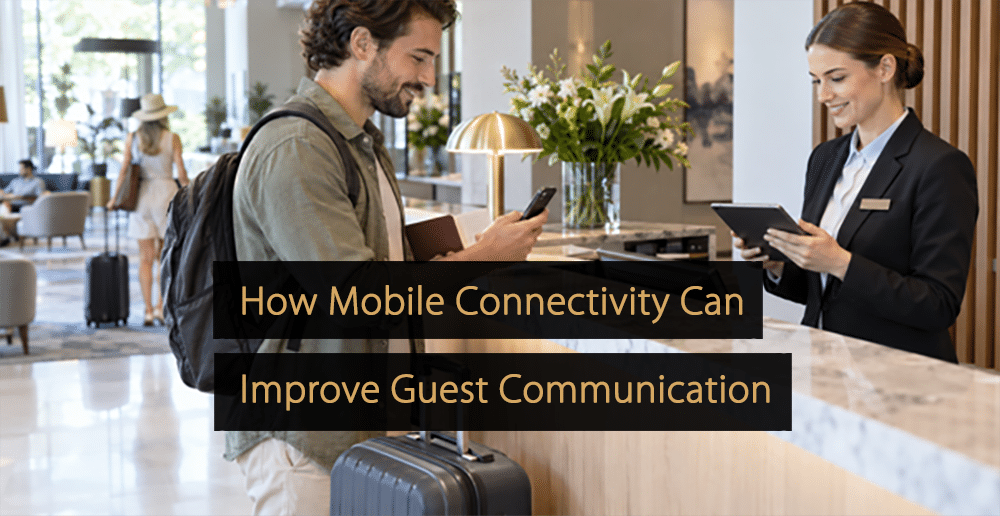
A hotel guest can have a smooth booking and still run into problems before reaching the property. A phone with no data, an overseas number that does not work as expected, or difficulty receiving an SMS can turn a simple airport transfer into a frustrating start to the stay.
For hotels, these issues may sit outside the property’s direct responsibility. Yet mobile access is connected to several services guests now use before and during a stay, including directions, ride-hailing, digital check-in, messaging, and booking updates.
Mobile data options and virtual phone numbers address different parts of this challenge. For hotel operators, the useful question is not which technology to promote, but where each option fits into the guest journey and the hotel’s communication process.
Key Takeaways:
|
Why Mobile Connectivity Matters to Hotel Guests
The guest experience starts before check-in. A traveler may need to find the hotel from an airport, contact a driver, confirm a late arrival, or message the property about a change in plans.
Most of these tasks happen on a smartphone. If the guest cannot get online or receive an important message, the hotel may end up handling a problem that began with mobile access.
That can create extra work for front-desk teams. A guest who cannot find a transfer driver may call reception repeatedly, while someone unable to open a digital check-in page may need help on arrival.
What an eSIM Adds to the Travel Experience
An eSIM is a digital SIM built into a compatible device. Instead of inserting a physical SIM card, a traveler can activate a mobile plan through the phone’s settings or an activation process provided by the network or service.
For international guests, the practical advantage is preparation. A traveler can arrange a suitable plan before leaving home and have mobile data available after landing, subject to the plan, device, and destination network.
Services such as eSIM Plus can be considered by travelers who want to arrange connectivity before a trip. For hotels, the point is less about recommending a particular provider and more about recognizing that guests may use roaming, local SIM cards, hotel Wi-Fi, or eSIM plans.
Hotels can mention these options in pre-arrival information without taking responsibility for the guest’s mobile service.
Where Connectivity Fits Into the Guest Journey
A working mobile connection supports several hotel interactions. Before arrival, guests can receive directions, check transport details, and contact the property if plans change. At the airport, maps, ride-hailing apps, and messaging can help coordinate a transfer.
During the stay, guests may use a hotel app, mobile ordering system, digital key, or chat service. If these tools are part of the property’s operating model, poor connectivity can become a practical obstacle rather than simply an inconvenience.
Hotels should therefore consider mobile access when reviewing the entire digital guest journey, particularly where important services depend on a smartphone.

Understanding Mobile Data and Virtual Phone Numbers
Mobile connectivity services and virtual phone numbers are often discussed together, but they solve different problems.
A mobile data plan provides network access. Depending on the service, it may include cellular data, traditional calls, and text messaging.
A virtual phone number is a separate number supplied through an online service. Depending on the provider, it may support incoming calls, SMS, outgoing communication, or verification messages.
For travelers, a virtual number can help separate personal and travel contacts or provide a dedicated number for a specific trip.
However, not every virtual number supports every form of SMS, and some websites or apps may reject these numbers for verification. Hotels should therefore avoid promising that a particular service will work with every platform.
Practical Hotel Uses for Virtual Numbers
Virtual numbers can be relevant on both sides of the hotel relationship.
For guests, a separate number may be useful for local services or for keeping travel contacts separate from a primary personal number.
For hotels, the applications are more operational. A property working with international guests may use dedicated numbers for reservations, guest messaging, or airport transfers.
A hotel group could also assign different numbers to individual properties, departments, or campaigns, making it easier to separate inquiries and understand which communication channels guests are using.
Dedicated numbers may also suit temporary events or packages. A conference package, for example, could have a separate contact number for relevant inquiries.
The value depends on the workflow. Any dedicated communication number should have a defined purpose, clear ownership, and a process for handling calls and messages.
Connecting Mobile Access With Hotel Communication
Mobile access and virtual numbers can work alongside each other without becoming part of the same system.
A traveler may use a digital mobile plan to access maps, messaging, and other online services after landing. A virtual number may provide a separate communication identity when one is needed.
Consider a guest arriving for a business conference. Before departure, the guest arranges mobile data. After landing, they use maps and messaging to reach the hotel. If a separate travel number is useful for local communication, a virtual number can serve that purpose.
The hotel does not need to control either service. Instead, it needs clear contact details in the booking confirmation, accurate arrival instructions, and, where appropriate, more than one way for guests to reach the property.
Staff should also know which number or channel handles reservations, transfers, and after-hours requests.
What Hotels Should Check Before Sharing Connectivity Guidance
Hotels should keep connectivity guidance practical and neutral.
For mobile data services, device compatibility should be checked alongside destination coverage, data allowances, activation requirements, and validity periods. Hotels should also make clear that a data plan does not necessarily include a local phone number or traditional voice and SMS services.
Virtual numbers require similar caution. Guests should understand whether the service supports calls, SMS, or verification and whether the number is temporary or reusable.
Privacy also deserves consideration. Travelers should know what information a service collects, how communications are handled, and who may have access to that data.
Most importantly, hotels should not assume every traveler needs the same solution. Some guests will use international roaming, a local SIM card, hotel Wi-Fi, or an existing mobile plan.
The goal is to explain the available options rather than direct every guest toward a single setup.
Making Connectivity Part of the Guest Experience
Hotels do not need a major technology project to make mobile communication easier for guests.
Clear contact information and phone-friendly directions can be included in pre-arrival emails. Hotels can explain how guests should reach the property after landing and ensure digital check-in instructions are easy to access on mobile devices.
A short pre-arrival page can also explain common connectivity options, including mobile data plans, physical SIM cards, roaming, and public Wi-Fi, without presenting one choice as suitable for everyone.
For hotel managers, the useful test is straightforward: can an international guest understand how to reach the property, contact staff, and use the hotel’s digital services without first having to solve a communication problem?
A connected guest is not automatically a happier guest. However, when hotel services increasingly depend on smartphones, removing avoidable connectivity barriers can reduce pressure on staff and make the journey from booking to checkout easier.
Mobile connectivity is now part of hotel guest communication. By giving travelers clear pre-arrival guidance, reliable contact options, and realistic information about mobile services, hotels can reduce avoidable friction, support digital touchpoints, and make arrivals easier for guests and staff.
More Tips to Grow Your Business
Revfine.com is the leading knowledge platform for the hospitality and travel industry. Professionals use our insights, strategies, and actionable tips to get inspired, optimize revenue, innovate processes, and improve customer experience.Explore expert advice on management, marketing, revenue management, operations, software, and technology in our dedicated Hotel, Hospitality, and Travel & Tourism categories.





Leave A Comment