
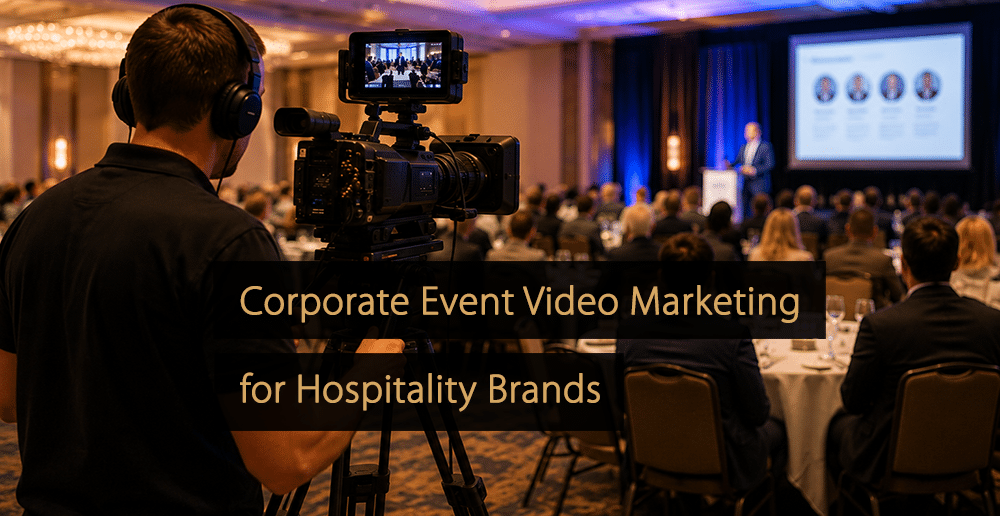
Every week, hotels, resorts, and event venues host corporate gatherings that represent thousands of dollars in production value: staging, lighting, catering, entertainment, and a room full of engaged guests. And every week, most of that value evaporates the moment the last attendee leaves. The event happened, the client was happy, and the only evidence is a handful of phone photos on someone’s camera roll.
For hospitality brands, this is one of the most expensive missed opportunities in marketing. A single well-documented corporate event can feed a venue’s sales and marketing engine for a full year. Here is how to stop letting that value walk out the door.
Why Video Outperforms Photography for Venue Marketing
Event planners do not book square footage. They book confidence. Before a planner commits to a property, they need to believe the space works at capacity: how guests flow through it, how the lighting reads at night, how food service moves without bottlenecks, how the room feels when it is full.
Still photography struggles to answer those questions. Video answers all of them at once. A ninety-second highlight film of a real corporate gala shows sightlines, energy, staffing, and atmosphere in a way no gallery of empty-room photos can. When a planner can see a space performing, the sales conversation starts several steps ahead.
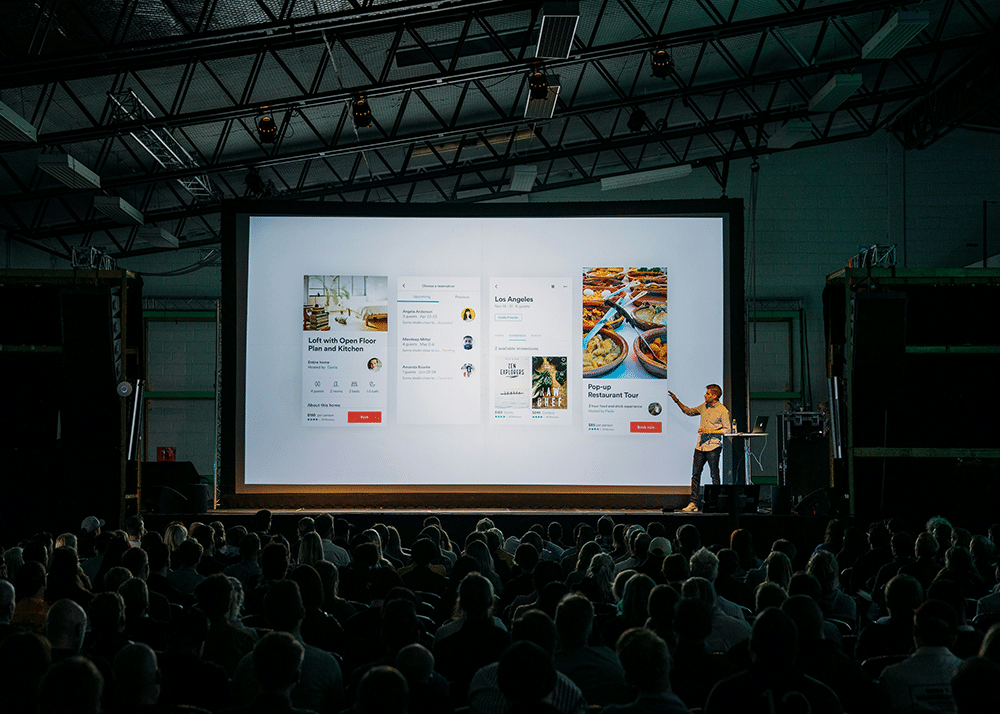
Plan the Shoot Around Outputs, Not the Event
The most common mistake venues make with event video is hiring a camera and hoping. The footage comes back generic because nobody decided in advance what it needed to become.
The fix is a deliverable map, agreed before anyone presses record. Before the event, list every asset the footage should produce: a highlight film for the venue’s site, a planner-facing walkthrough showing the room in use, short vertical cuts for social, clean b-roll of food and beverage service for future proposals, and testimonial moments from the host if they agree to appear.
Then build the shot list backward from that map. One capture day, planned this way, routinely produces eight to twelve distinct assets. The same day shot without a map produces one forgettable recap.
Capture the Experience, Not Just the Stage
Corporate event coverage tends to fixate on the podium. But the podium is the least persuasive part of the room for a venue’s future clients. What sells the property is everything around it: arrivals at the entrance, staff turning a room between sessions, plated service in motion, guests networking on the terrace, the bar at full tilt.
Brief the crew to treat the venue itself as a main character. That footage is what your sales team will actually reuse, because it belongs to the property rather than to one client’s agenda.
Get the Co-Marketing Agreement in Writing
Footage from a corporate event has three natural owners: the client who hosted it, the venue that staged it, and the production team that shot it. Handled early, this is an asset. Handled late, it is a dispute.
The clean approach is a simple usage agreement before the event: the client gets the deliverables built for their audience, the venue gets rights to atmosphere and property footage for its own marketing, and identifiable guests or proprietary content stay subject to client approval. Venues that host frequent corporate bookings often go one step further and keep a production partner on call rather than sourcing a new crew for every event.
FireBrand Media, a team specializing in corporate video production in Dallas, structures its event work exactly this way: one capture day, a deliverable map agreed in advance, and usage rights defined up front so both the venue and the corporate client leave with assets they can actually publish.
However you source the crew, the principle stands: decide who can use what before the cameras arrive.
Build the Twelve-Month Distribution Calendar
Once the assets exist, the difference between venues that compound this value and venues that waste it is a calendar. A practical rhythm looks like this: the highlight film goes on the events page and into every RFP response the week it is delivered. Social cutdowns release across the following quarter rather than all at once.
B-roll refreshes the sales deck and proposal templates. The planner walkthrough becomes the follow-up asset your sales team sends after site visits. And at year-end, the strongest clips from every event combine into a year-in-review piece that markets the property’s entire corporate program at once.
None of this requires new filming. It requires deciding, in January, where each asset will appear through December.
Treat Every Booking As a Content Asset
The hospitality brands that win corporate business in the next few years will not necessarily be the ones with the biggest ballrooms. They will be the ones that can prove, on a planner’s phone screen, what their space looks like when it is working. Every corporate booking on your calendar is a chance to build that proof. Film it with a plan, own the rights on purpose, and distribute it all year, and one good event stops being a Tuesday in March and starts being a sales tool with a twelve-month shelf life.
Modern hotel marketing depends on efficient content workflows that balance speed, consistency, and quality. By streamlining approvals, reusing content strategically, and embracing practical tools, marketing teams can create stronger guest experiences, improve brand consistency, and respond faster to changing traveler expectations.
More Tips to Grow Your Business
Revfine.com is the leading knowledge platform for the hospitality and travel industry. Professionals use our insights, strategies, and actionable tips to get inspired, optimize revenue, innovate processes, and improve customer experience.Explore expert advice on management, marketing, revenue management, operations, software, and technology in our dedicated Hotel, Hospitality, and Travel & Tourism categories.

Leave A Comment