

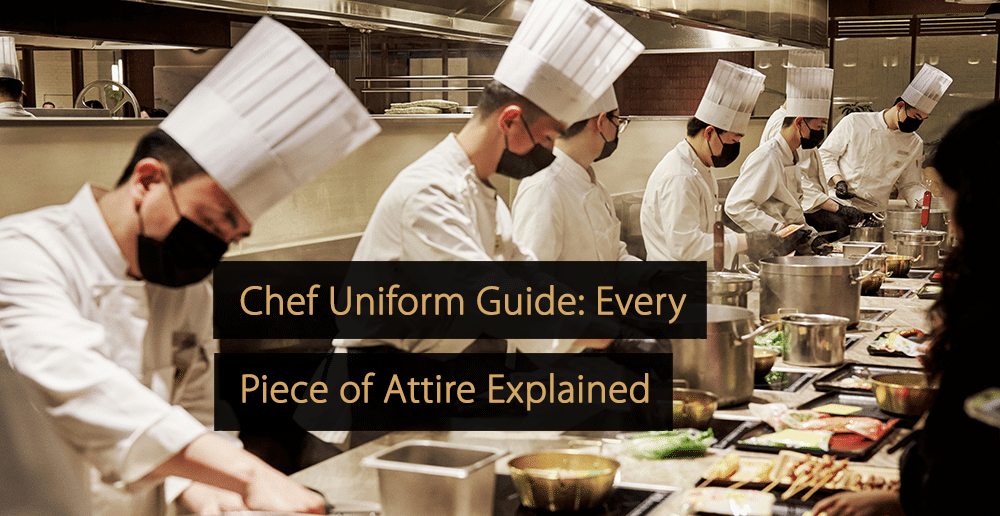
Every element of a professional chef’s uniform exists for a reason. The traditional chef kitchen uniform didn’t evolve from aesthetics; it emerged from the practical demands of a hot, fast-moving commercial kitchen where burns, spills, and contamination risks are part of every service. Understanding what each component does helps restaurant operators, hotel F&B managers, and kitchen supervisors make better decisions when outfitting their teams.
This guide breaks down each piece of the standard cook’s uniform, explains the function behind the design, and covers how to choose the right chef clothes for different kitchen environments, including where custom chef uniforms fit into the picture.
The Chef Jacket: Protection Built Into Every Detail
The chef jacket is the most recognizable component of any chef uniform, and almost every design feature on it has a protective purpose. If you’re sourcing chef clothes for your team, browse the available range of uniforms to find options suited to different kitchen environments.
Why Double-Breasted?
The double-breasted front panel creates two layers of fabric across the chest and stomach, the areas most exposed to steam, oil splashes, and oven heat. The outer panel can be reversed mid-shift to cover visible stains when a chef moves into a front-of-house setting. Fabric-knotted buttons (rather than plastic ones) resist high temperatures and survive repeated laundering without cracking.
White vs. Other Colors
White is the traditional choice because it signals hygiene and makes contamination visible at a glance. This matters during health inspections. Many modern kitchens now use black or charcoal jackets, which conceal staining through a long service and suit branded or contemporary kitchen aesthetics. The right color depends on the kitchen’s environment, inspection requirements, and the image the operation wants to project.
Sleeve Length and Fabric
Long sleeves offer better arm protection from burns, oven heat, and hot liquid splashes. Short sleeves are preferred in consistently hot kitchens where airflow and comfort outweigh that coverage. Fabric composition matters most for durability: cotton breathes well and handles heat, while cotton-polyester blends resist shrinking and maintain color through frequent commercial laundering. Look for reinforced stitching at stress points, underarms, cuffs, and collar. These are where cheaper chef jackets fail first.

The Chef Apron: The First Line of Defense Against Spills
The apron works in combination with the chef jacket, not instead of it. While the jacket handles heat and general protection, the apron catches what the jacket can’t: front-on splashes, oil, and the accumulated mess of a busy service.
Bib Aprons vs. Waist Aprons
Bib aprons cover from the chest down and are the standard in professional kitchens. They protect the whole front of the body and can be removed in seconds if a liquid spill occurs, an important safety detail that is easy to overlook. Waist aprons offer less coverage and are more common in front-of-house or service roles where protection is secondary to presentation.
Key things to check when selecting a chef apron:
- Adjustable neck strap: Essential for fit across different body types on a single team order
- Front pockets: Allow chefs to keep thermometers, spoons, and pens within reach during service
- Fabric weight: Heavier poly-cotton blends resist penetration better and hold up through commercial wash cycles
- Tie style: Cross-back ties distribute weight more evenly over long shifts than standard side ties
Chef Pants: Movement, Hygiene, and Stain Management
The standard chef kitchen uniform includes loose-fitting trousers designed for a physically demanding environment. Chefs spend entire shifts moving between stations, crouching, reaching, and working in heat; a tighter cut would restrict movement and hold heat against the body.
The Logic Behind Checkered Patterns
Houndstooth and checkered patterns remain standard in professional kitchens because they conceal the inevitable staining that builds through a long service. Plain black or white pants are also common, with black being practical in high-visibility kitchens where a clean appearance matters throughout the shift.
What to Look for in Chef Trousers
Fabric should be durable enough to withstand the kind of high-temperature laundering that commercial kitchens require, multiple cycles per week. Elasticated or drawstring waistbands are standard in a proper cook’s uniform because they’re adjustable, belt-free (reducing contamination risk), and stay comfortable through a full service. Pockets are useful but should be positioned so they don’t collect debris during prep work.

Chef Hat: Hygiene Regulation, Not Just Tradition
Keeping hair contained in a professional kitchen is a legal requirement in most food safety frameworks, not a matter of preference. The chef hat exists primarily for this purpose, with rank-signaling and tradition as secondary functions that have carried over from earlier kitchen brigade systems.
Toque Blanche
The tall, pleated white toque is the classical chef hat, with its height and pleat count historically indicating seniority and skill level. The executive chef wore the tallest toque; junior kitchen staff wore progressively shorter versions. Today, the toque blanche is more common in fine dining and formal culinary training environments than in high-volume commercial kitchens, where practicality takes precedence.
Skull Caps and Modern Alternatives
Most working kitchens have moved to skull caps, beanies, or structured flat caps. These sit close to the head, don’t impair visibility, and include mesh panels on many models to assist with ventilation in a hot kitchen. The choice between headwear styles generally comes down to:
- Kitchen formality: fine dining often maintains the toque; casual or high-volume kitchens use fitted caps
- Comfort through a long service: snug-fitting skull caps don’t shift during intense service the way taller hats can
- Color-coding: some kitchens use headwear color to differentiate roles at a glance, without verbal communication
Kitchen Safety and Non-Slip Shoes
Slip-and-fall incidents are among the most frequent injuries in commercial kitchens, and wet or oily floors are a constant reality during service. Proper chef footwear addresses this directly. A complete chef clothes set is not complete without purpose-built kitchen shoes.
The minimum requirements for kitchen footwear in a professional setting:
- Non-slip Sole: Rated for wet, oily, and smooth tile surfaces
- Closed Toe: Protects against dropped knives, falling equipment, and hot liquid
- Oil and water resistance: Extends shoe life and prevents liquid penetration
- Adequate Cushioning: Chefs are on their feet for entire shifts; inadequate support compounds physical fatigue
Clog-style shoes remain popular because the slip-on design allows fast removal if hot liquid enters the shoe. Many operations specify black footwear to maintain a consistent presentation, though the functional specification matters more than color.

The Neckerchief: A Small Detail That Does Specific Work
The chef’s neckerchief or scarf sits between the jacket collar and the skin, absorbing perspiration around the neck during a hot service. In a kitchen running at full capacity, this single item noticeably improves comfort and prevents sweat from running inside the jacket.
In some kitchen brigades, neckerchief color still signals role: executive chefs, sous chefs, and line cooks may each wear a different color, creating a visual hierarchy that functions without verbal communication in a loud, busy service environment.
The neckerchief is a small component, but it’s part of what makes a traditional chef uniform complete.
Custom Chef Uniforms: Where Branding Meets Function
The hospitality industry has increasingly moved toward treating the chef uniform as a brand touchpoint, not just workwear. This is particularly relevant for hotels with open kitchens, restaurants where chefs are visible to guests, and catering operations where first impressions carry weight.
What Customization Covers
A custom chef uniform can be as simple as color selection or as detailed as full embroidery with a restaurant logo, chef name, and role designation. The most common customization options on a standard chef uniform include:
- Color: Matching jacket and apron color to the restaurant’s visual identity
- Embroidery: Restaurant name, logo, or individual name and title on the jacket chest or sleeve
- Apron Branding: A branded bib apron over a standard white jacket is a cost-effective entry point
- Neckerchief Color-coding: Role differentiation without additional cost
The practical argument for custom chef clothes is straightforward: a team dressed in matched, intentional attire presents differently to guests than one wearing generic workwear. This matters in open kitchen concepts, hotel dining rooms, and catering environments where kitchen staff are routinely visible.
Fabric and Wash Performance in Custom Orders
Custom chef uniforms need to perform to the same standard as off-the-shelf options, and in commercial kitchen conditions, performance is measured in wash cycles, not weeks. Before committing to a full team order, confirm fabric composition, embroidery durability through commercial laundering, and the supplier’s policy on sizing exchanges. Running sample garments through several wash cycles before sign-off on a bulk order is a practical step that saves high cost and disruption at the point of rollout.
Choosing the Right Chef Uniform for Your Kitchen
The right chef kitchen uniform depends on the type of kitchen, the formality of the operation, and the practical conditions staff work in. A hotel fine dining kitchen, a high-volume hotel banquet operation, and a fast-casual restaurant each have different requirements, and a single uniform specification doesn’t serve all three well.
The practical decision points when selecting a cook’s uniform for a team:
- Kitchen Temperature and Ventilation: Determines fabric weight and sleeve length. A hot kitchen with poor airflow needs breathable fabrics and may benefit from short sleeves or mesh panels.
- Formality and Guest Visibility: Determines whether the toque, neckerchief, and full traditional chef uniform are appropriate, or whether practical alternatives serve better.
- Wash Frequency: Determines fabric specification. Higher-volume operations need heavier-weight, color-fast fabrics that survive multiple commercial wash cycles per week.
- Team Size and Turnover: Affects whether standard sizing works or whether a wider size range needs to be sourced from the outset.
- Branding Requirements: Determines whether custom embroidery, color-matching, or branded aprons are worth the additional lead time and cost.
For most professional kitchens, the baseline chef clothes specification covers a double-breasted jacket, bib apron, appropriate trousers, a fitted hat or skull cap, and non-slip closed-toe shoes. From that foundation, customization and adaptation depend on the specific operation.
Every component of a professional chef uniform exists to address a specific risk or requirement in a commercial kitchen. The jacket protects against heat and burns, the apron manages spills, the trousers allow movement, the hat contains hair, and the shoes prevent falls. Understanding this makes it significantly easier to specify, purchase, and brief kitchen teams on why the uniform matters, not just what it is.
More Tips to Grow Your Business
Revfine.com is the leading knowledge platform for the hospitality and travel industry. Professionals use our insights, strategies, and actionable tips to get inspired, optimize revenue, innovate processes, and improve customer experience.Explore expert advice on management, marketing, revenue management, operations, software, and technology in our dedicated Hotel, Hospitality, and Travel & Tourism categories.






Leave A Comment