

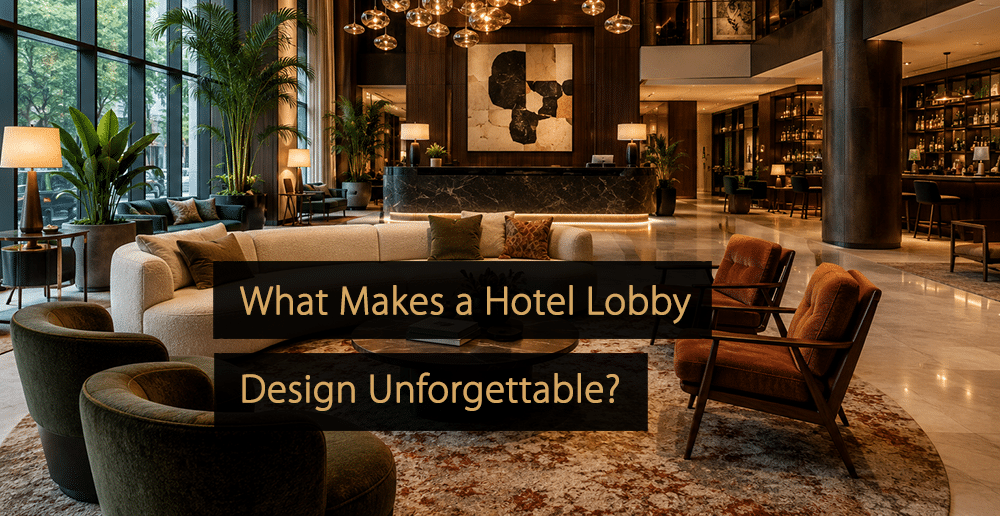
Before choosing a single chair, the most successful hotels right now decide exactly who is meant to walk through that door. Not a generic traveler, but someone specific: the freelancer who works from cafés, the couple who reads design magazines on the sofa, the guest who wants a version of home only more considered. Furnishing a lobby well is an act of recognition, a room built so that the right person sees it and understands, almost instinctively, that it was designed with them in mind.
How Statement Furniture Shapes a Hotel Lobby Experience
Even a common four-star hotel that welcomes guests with a vintage Camaleonda Sofa can immediately gain outsized value in their eyes, not for the price tag but because it offers something they would never have chosen for their own living room, whether for reasons of budget, space, or simply a lack of imagination. That’s familiarity working best when it’s paired with its opposite: what guests sit on, and where, becomes an experience they couldn’t have anywhere else in daily life, which is exactly what makes it worth remembering. The lobbies people talk about tend to sit in that gap, recognizable enough to feel like it belongs to them, aspirational enough that it doesn’t.
How the Most Talked-About Hotels Are Now Furnishing Their Entrance
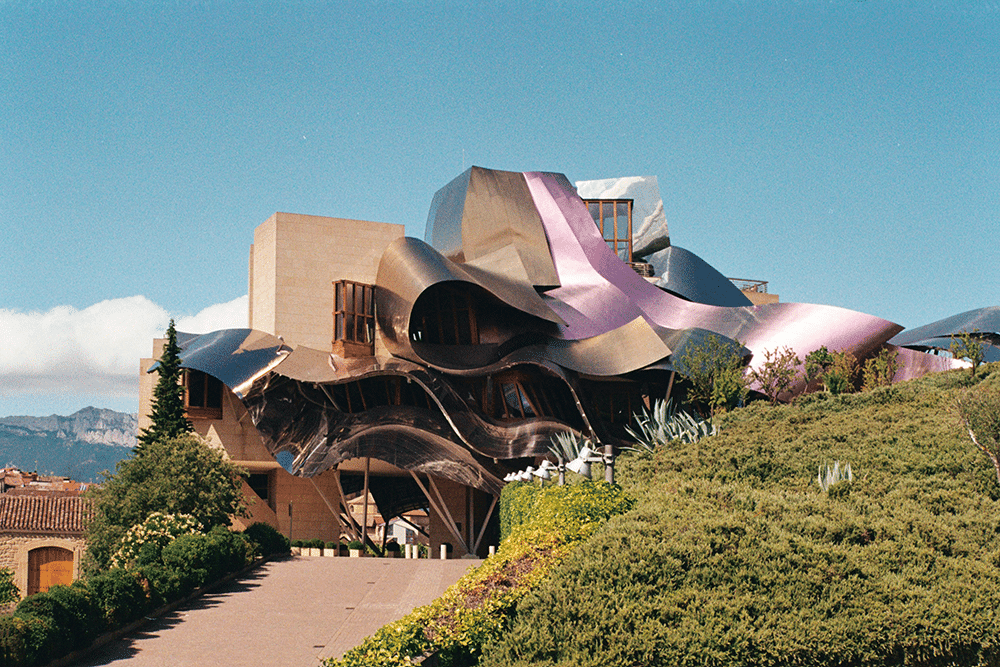
The common thread across the properties getting the most attention right now isn’t a shared aesthetic. Ace Hotel Seattle, Frank Gehry’s Marqués de Riscal in Spain, and Zaha Hadid’s Morpheus in Macau look nothing alike, yet all three built their entrances around the same principle: commit fully to one idea rather than hedging toward something inoffensive.
Ace Hotel Seattle set that tone in 1999, converting a 1909 halfway house for maritime workers into a 28-room property furnished almost entirely with flea-market finds and art by Shepard Fairey. The lobby looked lived-in from the day it opened, and that unpolished, personal quality became the brand’s signature, later reinterpreted at its 285-room New York property, where the design firm Roman and Williams filled the lobby with mismatched vintage pieces rather than anything that read as corporate.
The Marqués de Riscal takes the opposite bet. Gehry wrapped the 43-room hotel in roughly 3,000 square meters of titanium in pink, gold, and silver, colors chosen to echo the hue of Rioja wine, the mesh around its bottles, and the foil on the cork. Guests pass a glass elevator descending into a cellar of some 3,000 bottles before they ever reach a check-in desk. The entrance functions less like a lobby and more like the overture to the building, and it pulls in visitors who have no intention of booking a room, only of seeing it.
Zaha Hadid Architects went further still at the Morpheus, carving voids through a 40-story tower to create a 40-meter atrium visible the instant guests walk in, crossed by bridges that hold the hotel’s restaurants and bars. The building does the communicative work that furniture usually handles: it announces exactly what kind of property this is before a single staff member says a word.
What Smart Hoteliers Understand About First Impressions
None of these approaches would transplant cleanly onto another hotel, and that’s the point rather than a limitation. A lobby that could belong to any property in any city is, by definition, communicating nothing. Guests read a lobby the way they read a stranger’s living room: fast, instinctively, and mostly through details they couldn’t consciously list afterward, the weight of a cushion, the wear pattern on a chair arm, whether the furniture looks chosen or simply supplied.
That reading happens before check-in, which is exactly why hoteliers increasingly treat the entrance as the highest-leverage square footage in the building. It’s the one space nearly every guest passes through regardless of room category, and unlike a renovated bathroom or a new mattress, it’s the part of the stay most likely to end up photographed and shared before the guest has even unpacked.
Why Guests Never Want to Leave Certain Lobbies
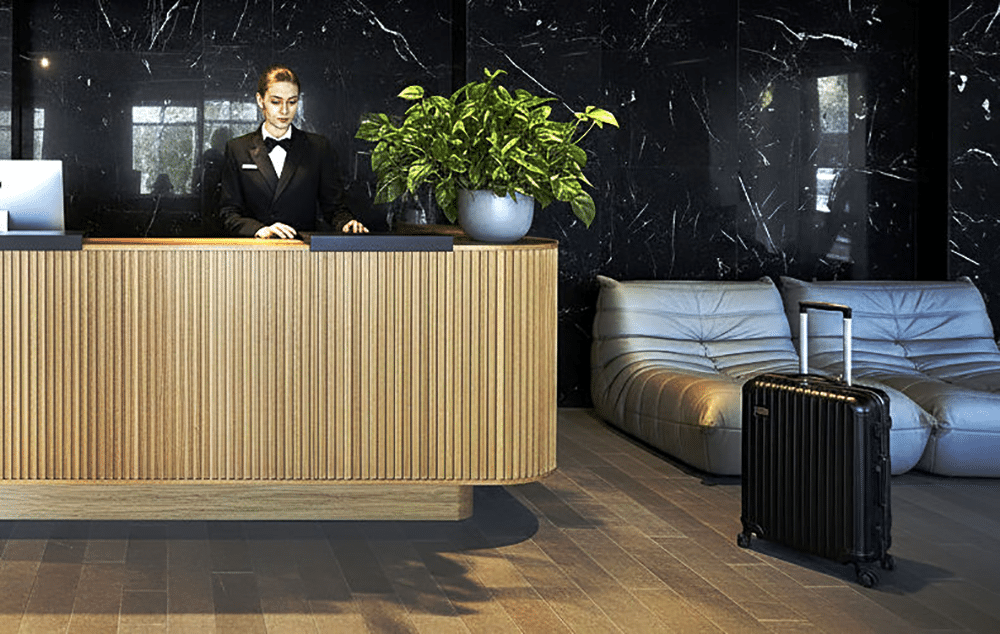
The data hoteliers cite informally tends to point the same direction: guests who like a lobby stay in it. They work from it in the morning, they return to it for a drink before dinner, and they treat it as a meeting point for people who aren’t even staying at the hotel. That behavior shows up in food and beverage revenue more than in any renovation spreadsheet, and it’s part of why modular seating has overtaken fixed arrangements as the default choice for new projects. A sectional system built from names like Poliform or Cassina alongside more flexible pieces lets staff reconfigure a corner of the room for a business meeting at noon and a private event by evening, without the furniture ever looking temporary.
The New Hospitality Strategy Behind Every Memorable Hotel Entrance
The lesson emerging from the most talked-about lobbies isn’t that every hotel needs a Gehry commission. It’s that a room furnished to hedge against everyone’s taste ends up appealing to no one in particular. Properties investing seriously in their entrance are choosing contract-grade pieces built to survive years of daily traffic rather than furniture that merely photographs well in a showroom, and they’re increasingly sourcing through specialists who understand both the design language and the operational demands a commercial lobby puts on a piece of furniture.
Whether this appetite for fully committed, story-driven lobbies holds as travel habits keep shifting is still an open question. Some operators are already testing entrances that dissolve outward entirely, blurring the line between lobby and terrace in climates where the distinction barely matters anymore.
An unforgettable hotel lobby does more than look impressive. It reflects the property’s identity, anticipates guest expectations, and invites people to stay longer. Bold design choices, durable furniture, and a clear sense of purpose turn entrances into memorable hospitality experiences.
More Tips to Grow Your Business
Revfine.com is the leading knowledge platform for the hospitality and travel industry. Professionals use our insights, strategies, and actionable tips to get inspired, optimize revenue, innovate processes, and improve customer experience.Explore expert advice on management, marketing, revenue management, operations, software, and technology in our dedicated Hotel, Hospitality, and Travel & Tourism categories.



Leave A Comment