


Here is the first thing you should know before you fly south to Okinawa: whatever you would normally pack for “Japan,” you may need to rethink. Okinawa is not Tokyo, and it is not Kyoto. It sits far to the south in the subtropics, closer in feel to a Pacific island than to mainland Japan. That means heat, humidity, strong sun, sudden showers, and warm water for most of the year.
So if you are working out how to pack for a trip to Okinawa, the standard Japan packing list you might use for destinations farther north can steer you wrong. Travelers sometimes arrive with heavy coats in March or without sun protection in February, only to discover that Okinawa’s climate calls for a very different approach.
This guide is designed to help you pack for what actually matters on the ground: sun, heat, water, and the practical things travelers often forget. You will also find a seasonal breakdown so you can prepare for the trip you are actually taking.
Why Packing for Okinawa Is Different From Mainland Japan
Mainland Japan has four distinct seasons and a packing list often built around layering for cold weather. Okinawa does not work the same way. The climate is subtropical, the sun is strong throughout the year, and you can get in the ocean during almost every month. The water only drops to around 21°C in February and climbs to about 30°C by August.
That single fact reshapes your whole suitcase. You should pack for warmth and sun first, with one reliable layer for cool evenings and strong indoor air conditioning, rather than building your wardrobe around cold-weather clothing.
If you are still deciding when to visit, that is a separate question with its own trade-offs. Once your dates are set and you are staring at an empty bag, start with the essentials below.
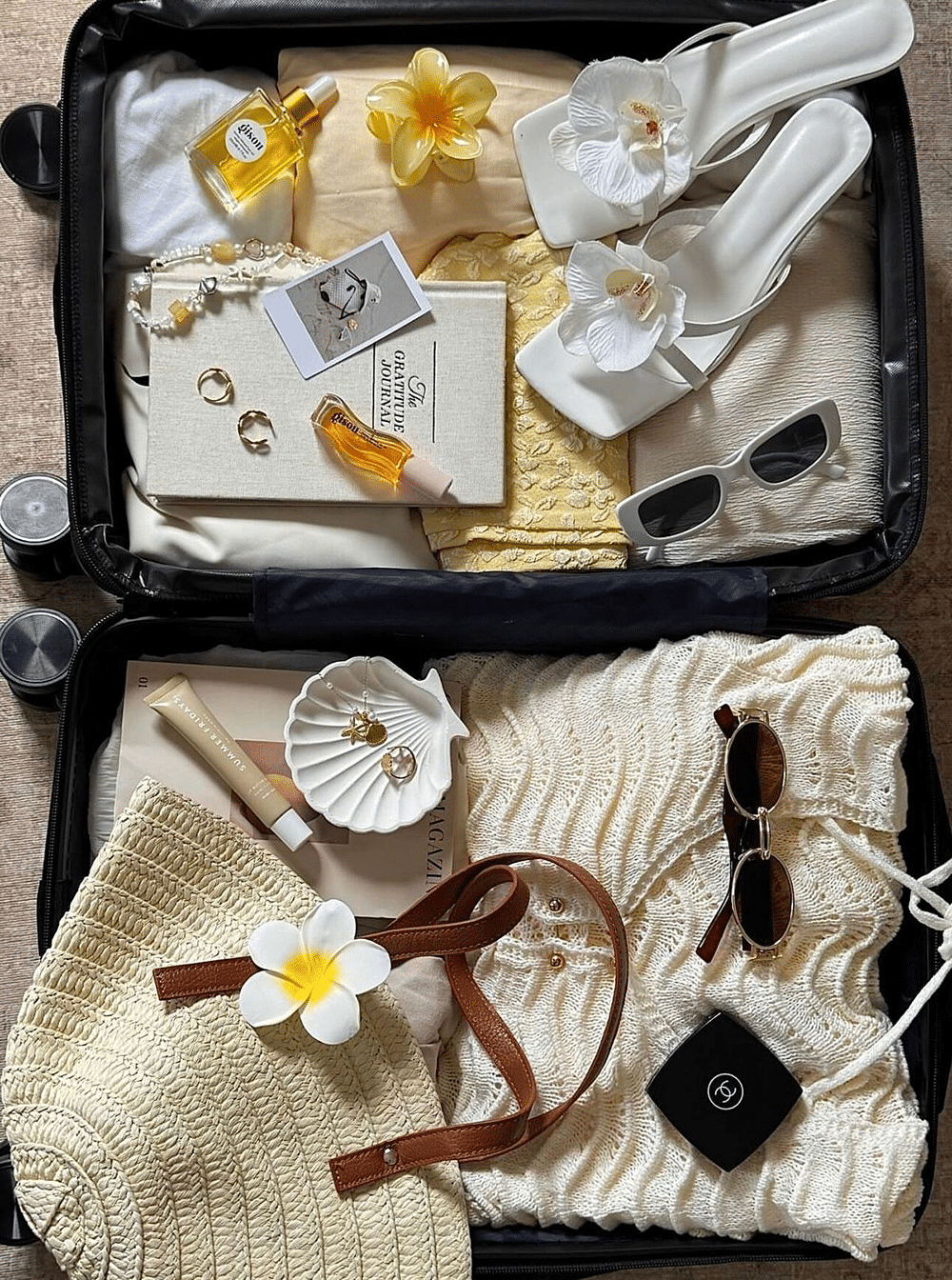
The Okinawa Packing Essentials: The Master Checklist
Here is the core of it. Bring this, and you are covered for almost any trip across Okinawa, with room to adjust for the season from there.
1. Clothing
- Lightweight, breathable tops in linen, cotton, or quick-drying synthetics
- Shorts, light trousers, and a skirt or dress or two
- One warm layer: a light jacket, cardigan, or button-up
- A change of clothes to throw on over swimwear
- Comfortable walking shoes or sneakers, plus sandals
2. Sun and Heat
- High SPF broad-spectrum sunscreen (SPF 30 or above)
- A wide-brimmed hat and sunglasses
- A UV rash guard or light cover-up
- A reusable water bottle
3. Water and Beach
- Swimwear, and pack two if you will be in and out of the sea
- Water shoes or reef shoes
- A dry bag for phone, keys, and cash
- A quick-drying towel
4. Tech and Practical
- A plug adapter for Japan’s Type A outlets
- A power bank
- An eSIM or pocket Wi-Fi plan sorted before you arrive
5. Documents and Money
- Passport and any travel documents
- A card that works abroad, plus 10,000 to 20,000 yen in cash
- Travel insurance details
6. Health
- Any personal medication
- Motion sickness tablets if you are taking ferries or boats
- A small first aid kit and insect repellent
Everything below explains why these items matter and highlights the things travelers most often get wrong.
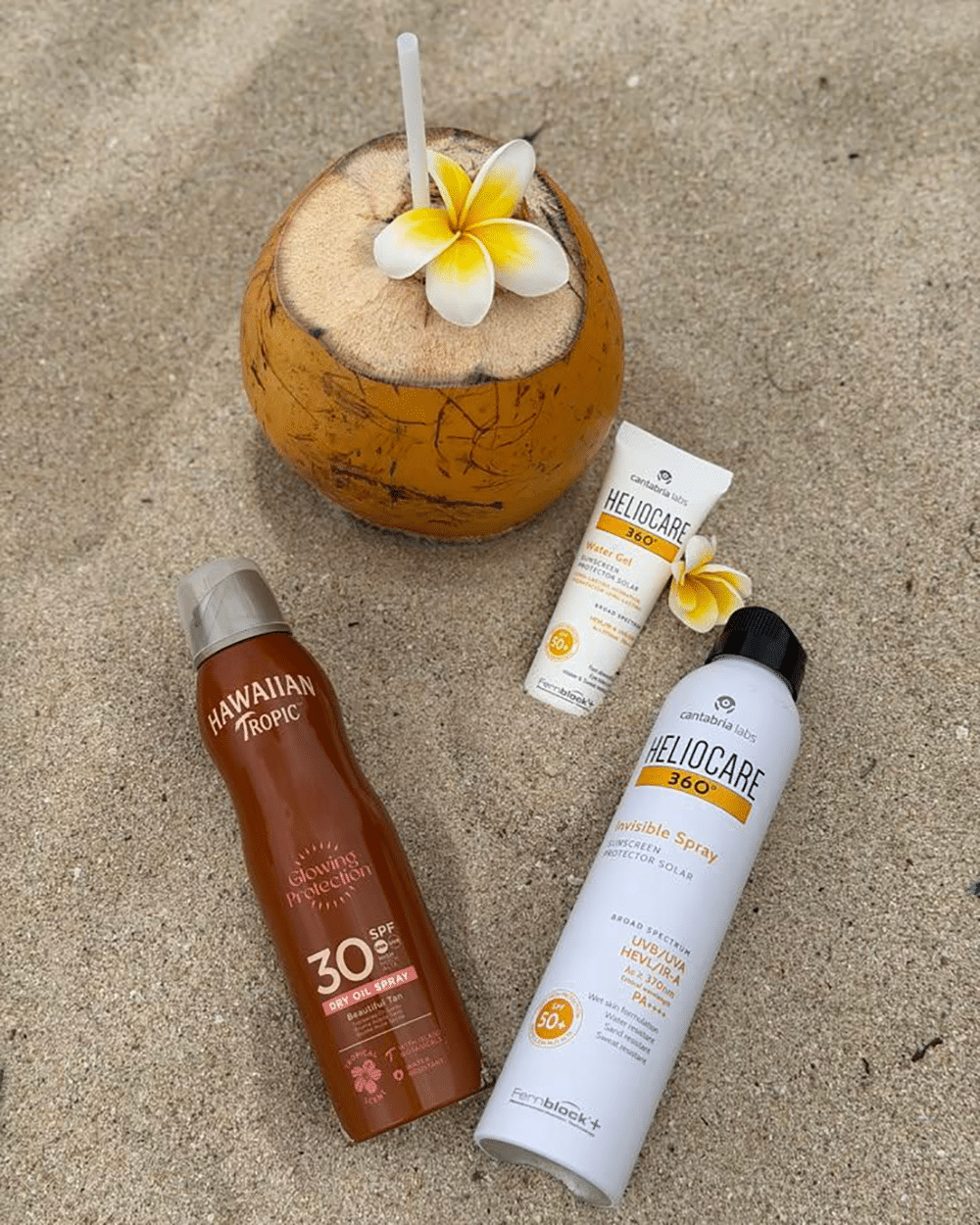
Sun and Heat Protection (The Part People Underestimate)
This is the section you should pay especially close attention to. The sun in Okinawa is genuinely strong, and not only in summer. The UV index regularly reaches extreme levels during the warmer months, while spring and autumn can still expose you to enough UV to burn unprotected skin quickly.
So sun protection is not a nice-to-have. It is the thing most likely to ruin a day if you skip it. Pack a high SPF, broad-spectrum sunscreen and actually reapply it. Bring a wide-brimmed hat and sunglasses, which became my most-used items, and ideally a UV rash guard you can pull on out on the water or while walking around at midday.
A quick word on reef-safe sunscreen, because there is a lot of confusion online. Japan has no law banning sunscreen ingredients the way places like Hawaii or Palau do. There is no Okinawa-specific ban and no fine waiting for you at the beach. That said, local groups there genuinely encourage reef-friendly, mineral-based sunscreens to protect the coral, so choosing one is a thoughtful option even though it is not mandatory.
The heat works on you in quieter ways as well. The humidity climbs to around 85 to 90 percent in high summer, and that is what wears you down, not the temperature on the forecast, which rarely tips past the low 30s. Drink more than you think you need, carry a bottle, and do not schedule everything for the middle of the day.

What to Wear in Okinawa by Season
The good news is that Okinawa’s dress code is relaxed almost everywhere. You will not need much formal clothing, and a few versatile outfits can cover most of your trip.
Summer (Roughly June to September)
Pack as light as you can go. Choose breathable fabrics, plenty of swimwear, and sun protection front and center. You will be damp from humidity more than rain, so quick-drying everything earns its place. Leave the heavy jeans at home; they are miserable in that air. Pack one light layer purely for the air conditioning, which can be fierce indoors.
Winter (December to February)
This is the season people pack wrong. Winters are mild but breezy, daytime around 18 to 21°C, dropping to roughly 13 to 16°C at night, which feels properly chilly once the sea breeze picks up. That means a light jacket and a couple of layered shirts, not a heavy coat. You can still walk the beaches comfortably; you just will not be sunbathing all day. If you are wondering specifically what to pack for Okinawa in winter, think cool spring day back home, not Japanese winter.
Spring and Autumn (The Shoulder Seasons)
Some of the best weather on offer. Warm days, lighter humidity, swimmable sea. Pack mostly summer clothing with one reliable warm layer for cooler evenings, and keep the sun protection in, because the UV is still high.
Beach and Water Activity Gear
If there is one category worth a little extra suitcase space, it is water gear, because you will use it more than you expect, and not only in July.
Swimwear is obvious. Pack a spare so you always have a dry set. The two items people skip and regret are a rash guard and water shoes. The rash guard saves you from both sunburn and the odd brush against coral. The water shoes matter more than they sound. A lot of the beaches and snorkel spots have coral, rocks, and the occasional sea urchin near the shoreline, and going barefoot over those reef edges is a fast way to ruin a day. On soft sandy beaches, ordinary sandals are completely fine. It is the rocky and reef entries where proper shoes save your trip.
A dry bag is the other quiet hero, somewhere safe for your phone, a camera, cash, and keys while you are in the water.
As for snorkel gear, whether to bring your own is a judgment call. If you are a keen snorkeller with a mask you trust, pack it. If you are doing the odd guided outing, you usually do not need to. Rentals are everywhere, and most tours include gear.
For example, on a full-day Northern Okinawa tour through Evertrail Tours, you may find that snorkeling equipment is already arranged as part of the experience. In that case, packing both swimwear and suitable walking or hiking clothes becomes more important than carrying a full set of snorkel gear.
Rain and Typhoon Season Packing
Rain in Okinawa tends to arrive in bursts rather than grey all-day drizzle. The rainy season, tsuyu, generally runs from around mid-May to late June, and even then it is often a heavy shower that clears as fast as it came.
Typhoon season is the bigger planning factor. It stretches roughly from June into October, with the real action concentrated in the late summer months. Most trips see nothing worse than a passing storm, but it is worth packing for the possibility.
You do not need heavy wet weather gear. A compact umbrella, a packable rain shell, and a waterproof pouch for your phone cover almost everything. The more useful packing here is mental. Build a little flexibility into your plans so a rough sea day or a washed-out afternoon does not derail you.
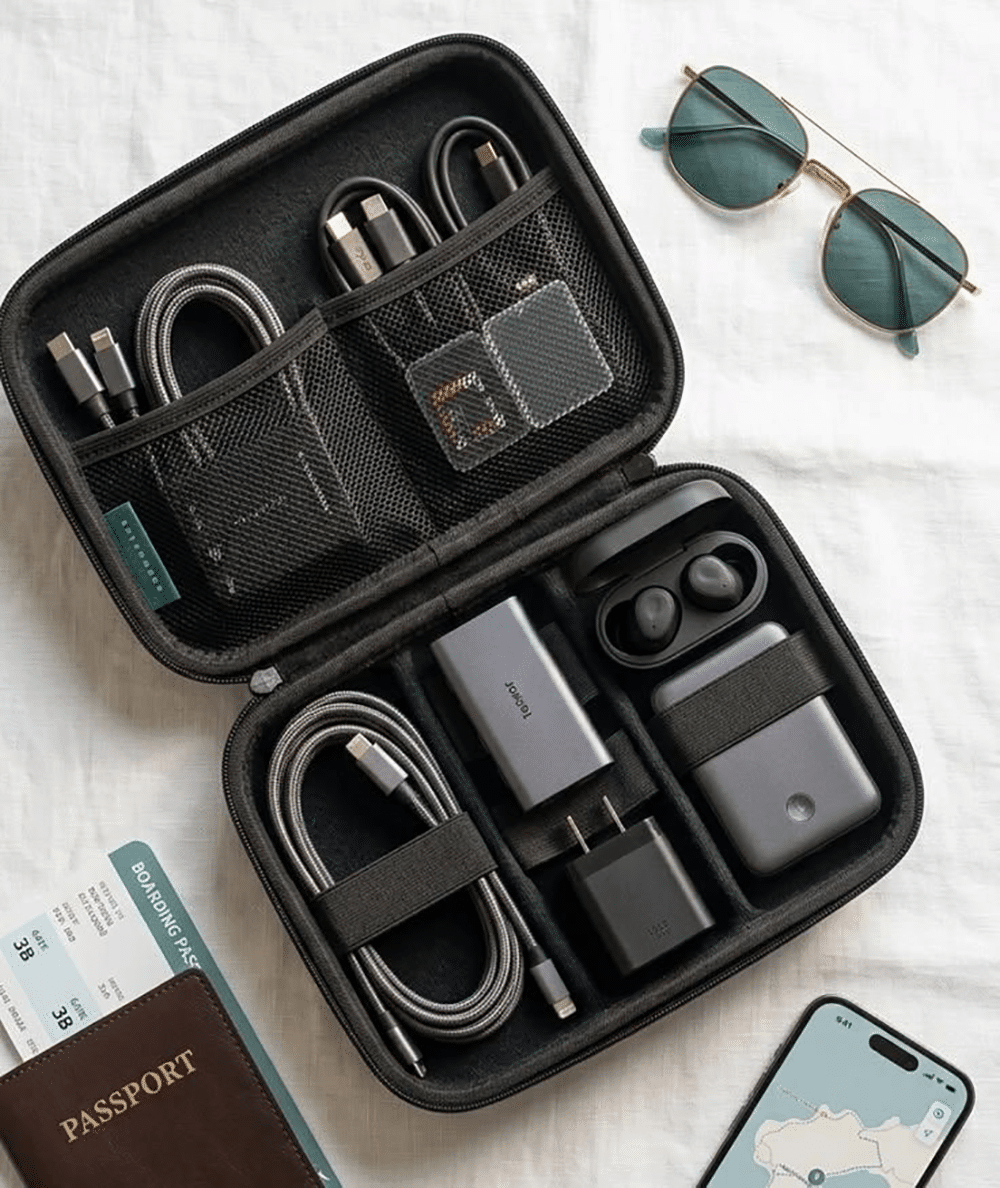
Electronics, Adapters, and Practical Kit
Japan runs on 100V, and Okinawa’s outlets are mostly Type A, the two-flat-pin kind, the same shape as North American plugs. A few are Type B, with a third grounding pin.
What that means for you:
- From the US or Canada (110V): Your plugs already fit. At most, you will want a cheap adapter for any three-pin devices, but you generally do not need a voltage converter.
- From the UK, Europe, or Australia (220 to 240V): Your plugs will not fit, so you will need an adapter, and you should check your devices. Phone and laptop chargers are nearly always dual voltage and fine on 100V. Anything with a heating element, like some hairdryers, may not be.
For getting online, sort it out before your plane lands. The main island has strong 4G from all the major carriers, so an eSIM is the easy modern choice. If you will spend time in the remote northern jungle or on the outer islands, a Docomo-based plan tends to hold up best out there. Rental pocket Wi-Fi is also available right at Naha Airport if you would rather. Either way, download offline maps before you go exploring, because signal can still drop in the deep north and on far-flung islands.
One more practical note: bring some cash. Japan is still a cash-leaning country, and Okinawa especially so once you leave the resort areas. Hotels and bigger restaurants take cards happily, but local shops, small eateries, and the buses often do not. The public buses will not take foreign credit cards at all, only cash or the local OKICA transit card. Convenience stores and major drugstores have ATMs that accept foreign cards, and the ones at 7-Eleven are reliable for this, so topping up is easy. Carrying around 10,000 to 20,000 yen gives you a useful buffer when exploring rural areas.
Traditional Dress and Etiquette
Okinawa is laid back, and you will not need to dress up for anything. There are really only two etiquette points worth packing around.
The first is sacred sites. The Ryūkyū Islands have their own sacred places, utaki, alongside the temples and shrines you find across Japan, and the custom at all of them is to dress modestly. Shoulders and knees covered, stay on the marked paths, and do not climb on the rocks or structures. It is courtesy rather than a strict rule, but it matters to the people for whom these places are still living and sacred. You will also be asked to take your shoes off when entering temples and some traditional buildings, so slip-on shoes are easier here than fiddly leather lace-ups.
The second point is simpler. Keep swimwear to the beach and pool. Locals do not wander into shops or restaurants in swimsuits or shirtless, so bring a cover-up or a T-shirt and shorts to change into when you leave the sand. That single change of clothes saves a lot of awkwardness.
What to Leave At Home (and Buy There)
The flip side of all this is reassuring. You do not need to pack for every contingency, because Okinawa is well stocked.
If you forget something, you will almost certainly find it there. Towns are full of drugstores and 24-hour convenience stores carrying sunscreen, toiletries, flip-flops, and snacks from familiar Japanese brands, and the bigger malls and discount stores cover clothing basics and beach gear. Even out on the smaller islands, there are mini markets and pharmacies for the essentials.
So do not overpack out of anxiety. Leave a little storage space in your luggage instead. Bring your medication, your documents, and the gear that is genuinely yours, and trust that a forgotten tube of sunscreen or a spare pair of sandals is a five-minute errand once you are there, not a crisis.
Quick Checklist By Traveler Type
- Families: Extra swimwear and rash guards for the kids, reef-safe sunscreen, water shoes all round, motion sickness tablets for ferries, and a day bag with snacks for island day trips where shops are scarce.
- Snorkellers and Divers: Your own mask if you are particular, a rash guard, water shoes, and a dry bag. Remember that guided trips usually supply gear, so do not haul more than you will use.
- Winter Visitors: A light jacket and layered tops, swimwear you will still want for the warmer days, and full sun protection, because the UV does not take the season off.
Frequently Asked Questions
Packing for Okinawa becomes much easier when you plan for its subtropical climate, strong sun, beaches, and seasonal weather. With lightweight clothing, practical water gear, suitable layers, and a few travel essentials, you can stay comfortable, prepared, and ready to explore.
More Tips to Grow Your Business
Revfine.com is the leading knowledge platform for the hospitality and travel industry. Professionals use our insights, strategies, and actionable tips to get inspired, optimize revenue, innovate processes, and improve customer experience.Explore expert advice on management, marketing, revenue management, operations, software, and technology in our dedicated Hotel, Hospitality, and Travel & Tourism categories.






Leave A Comment