

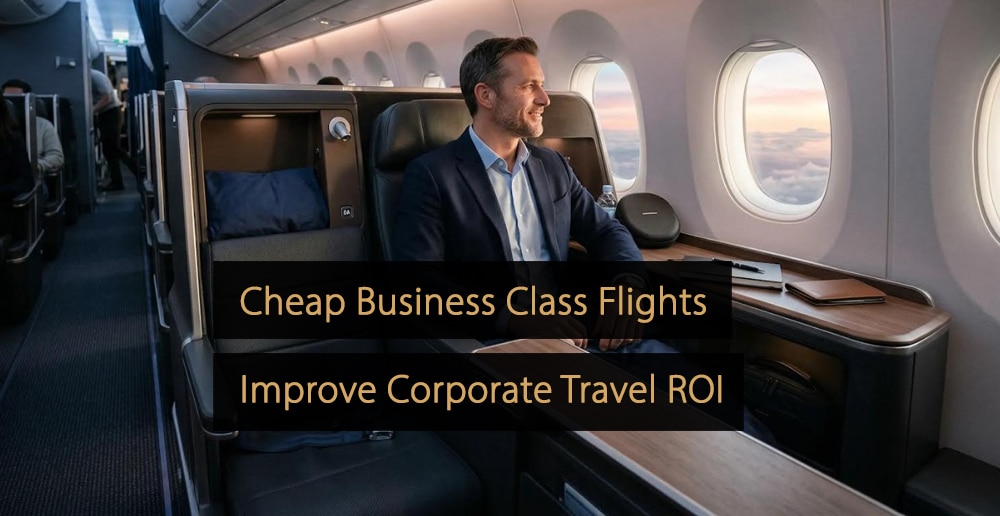
Many corporate travel programs still evaluate business class mainly by comparing its price to economy, not by what the trip requires the traveler to do on arrival. As a result, long-haul flights are often booked at the lowest available fare, even when travelers are expected to go straight into meetings or site visits.
When Lower Fares Deliver Higher Business Travel Value
On time-sensitive itineraries, that decision can create higher costs elsewhere. A traveler arriving from an overnight flight without proper rest may need extra recovery time, a delayed schedule, or even an additional hotel night before they can work effectively.
In that context, cheap business class flights are the premium fares that deliver the most value: lower-priced options that still give travelers the time, rest, and schedule reliability the trip requires. When used on the right routes, they can help preserve productive hours, reduce disruption after arrival, and avoid costs created by poor timing or slower recovery, making them a rational investment.
Why the Price Alone Is The Wrong Way To Evaluate Corporate Travel
When corporate travel policies treat business class as an upgrade rather than a decision tied to trip outcomes, it usually leads to poor results.
A lower fare may reduce the upfront spend while creating higher costs elsewhere. If an overnight economy booking saves $1,200 on the ticket but leads to a delayed meeting schedule, half a lost workday, or an extra hotel night costing $300 to $500, the overall saving narrows quickly.
The real cost of a flight is not limited to the ticket. It includes lost working hours, reduced effectiveness during key moments, and, in some cases, longer trip duration.
For this reason, many companies now evaluate travel decisions using metrics such as cost per productive hour or the ability to operate immediately after arrival. These measures shift the focus from ticket price to usable output. The key question becomes whether a travel option supports the purpose of the trip and allows the traveler to follow the planned schedule without disruption.
How To Calculate Cost-Per-Productivity-Hour
Companies can evaluate premium travel decisions by comparing the fare difference with the number of productive hours gained across the trip. This focuses the decision on usable time rather than ticket price.
A simple way to approach this is to look at three elements:
- The fare difference between economy and business class
- The working hours lost or preserved
- The cost of those hours, based on the traveler’s role
A Simple Example
Consider an overnight flight from San Francisco to Frankfurt with a morning arrival.
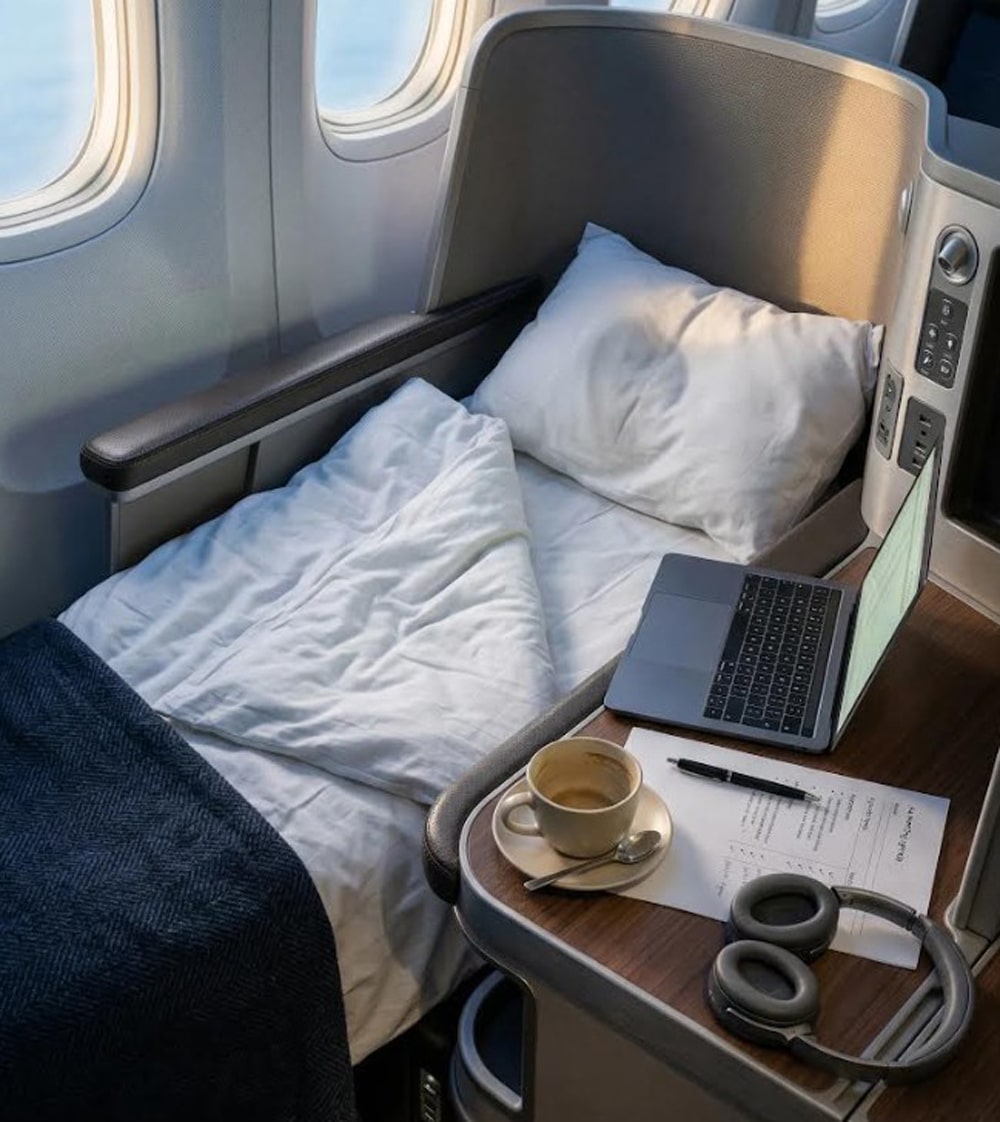
In economy class, a traveler may awkwardly sleep for two hours, if that, and need half a day to recover, losing 4 to 6 productive hours. In business class, a lie-flat seat in a 1-2-1 configuration, such as those found on long-haul products from airlines like United Airlines, SWISS, or Lufthansa, can allow 5 to 6 hours of proper rest.
In some cases, the fare gap can be significant. For example, a nonstop economy fare of $2,500 compared to a business class fare of $5,600 on this route creates a $3,100 difference. At a rate of $200 per hour, the productivity gain alone may not fully offset that gap.
However, the calculation does not stop at hourly output. Avoiding an extra hotel night, keeping meetings on schedule, or protecting the outcome of a high-value meeting can shift the balance. When discounted premium fares reduce the gap, business class undoubtedly becomes the more efficient option.
Where Companies Get This Wrong
Many companies compare ticket prices without factoring in what happens after arrival. When recovery time disrupts schedules or extends the trip, the lower fare often leads to a higher total cost.
When companies account for lost time, the comparison changes. Premium cabins can reduce total trip cost and protect the value of time.
When Business Class Delivers A Measurable Return
Business class creates the most value on routes where even small time losses have immediate consequences.
Long-Haul And Overnight Routes
Long-haul and overnight routes are the clearest use case for business class, especially on aircraft with modern lie-flat cabins rather than older angled or 2-2-2 configurations.
Companies often schedule morning meetings or site visits shortly after arrival. A traveler flying overnight from Los Angeles to London may land at 7:00 am and head to a 9:00 am meeting.
Without proper rest, they struggle to stay focused, try to adjust schedules, or extend the trip to give themselves time to recover from the flight and regain focus. In this case, a lie-flat seat in business class can make the difference between arriving ready for a full morning of meetings and losing several working hours to fatigue, reduced focus, or a schedule that has to be pushed back.
High-Value Travelers And High-Cost Time
The value of business class increases when the traveler’s time has a high direct business cost, as is often the case for executives, consultants, and technical specialists.
Take a consultant delivering a same-day workshop or a senior executive entering negotiations. If they arrive fatigued, they risk slower decisions, reduced focus, or weaker outcomes. The decision shifts from comfort to protecting performance at critical moments.
Booking Strategies For Securing Cheap Business Class Flights Without Undermining Policy
The best results for corporate travel come from clear premium-travel criteria, not broad access to business class. Companies that define when lower premium fares make sense, based on route length, overnight timing, or immediate post-arrival work, can secure business class flights more selectively while keeping policy control intact.
Set Clear Conditions, Then Watch For Better Premium Fares
Companies make more consistent premium-travel decisions when they base access on trip conditions rather than seniority. Key factors include route length, overnight timing, and whether the traveler needs to work soon after arrival. Many programs allow business class on overnight flights above a set duration while keeping shorter routes in economy.
Once those conditions are clear, pricing becomes easier to assess. Business class fares vary widely by route, season, and competition, and on some city pairs the difference can narrow sharply outside peak periods or with earlier booking. On routes with multiple carriers or softer seasonal demand, premium fares can run 20–40% lower than peak pricing, which makes business class materially easier to justify.
Teams can also use platforms like BusinessClass.com to compare fares and find cheap business class flights while staying within policy.
Avoid False Savings
The lowest fare often comes with trade-offs such as long layovers, late arrivals, or schedules that leave little room for productive work after landing. Those compromises can increase the total trip cost rather than reduce it, and initial savings will ultimately stretch the travel budget in other areas.
Why Airline Premium Products And Hotel Loyalty Strategies Work Better Together
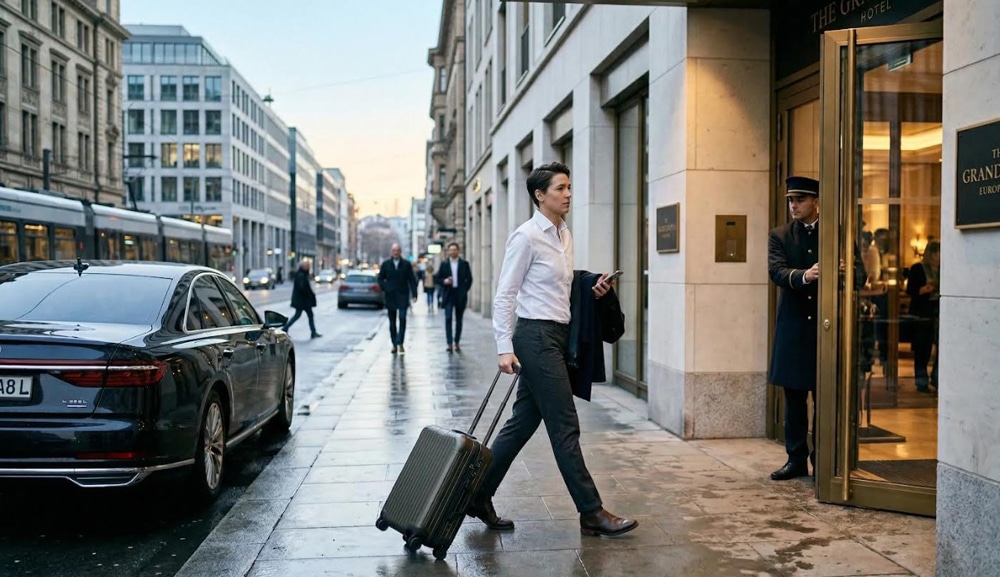
Corporate travel value rarely comes from the flight alone. A traveler may arrive rested and ready to work, but that advantage weakens if the hotel stay does not support the timing of the trip.
Hotel loyalty programs can help close that gap through benefits such as earlier room access, late check-out, priority handling, and upgrades across the same hotel brand. On short or tightly scheduled trips, those details help travelers use the time gained in the air more effectively on the ground.
Why This Matters For Hospitality Professionals
For hotels, this is not only a service issue but a positioning one. Travelers arriving on long-haul premium flights often value immediate access, reliability, and flexibility more than standard amenities alone.
Hotel brands that deliver those benefits consistently through loyalty programs become more useful to business travelers whose schedules leave little room for delay.
Companies gain most from premium cabins by evaluating total trip efficiency, not just airfare. On suitable routes, business class preserves productivity, reduces disruption, and lowers hidden costs. Effective travel programs use it selectively where it best supports trip objectives.
More Tips to Grow Your Business
Revfine.com is the leading knowledge platform for the hospitality and travel industry. Professionals use our insights, strategies, and actionable tips to get inspired, optimize revenue, innovate processes, and improve customer experience.Explore expert advice on management, marketing, revenue management, operations, software, and technology in our dedicated Hotel, Hospitality, and Travel & Tourism categories.





Leave A Comment