

A hotel’s Wi-Fi network usually gets treated as an amenity decision: how fast, how free, how easy to log into. Security tends to enter the conversation only after something has already gone wrong, which is exactly backward from how the risk actually works.
The Network Most Properties Are Running Is Bigger Than They Think
Guest Wi-Fi, back-office systems, point-of-sale terminals, and increasingly a layer of smart-room devices such as voice assistants and connected thermostats often sit closer together on a hotel’s network than most general managers realize. Each device is a separate entry point, and a guest-facing network that isn’t properly segmented from payment systems turns a minor guest-side compromise into a much larger one.
This is less about any single dramatic failure and more about how these systems tend to accumulate over time. A property might segment its network correctly when it’s first installed, then add a smart TV upgrade in one wing and a new POS vendor at the restaurant a year later, each connected without anyone revisiting the original architecture. None of those additions look risky in isolation. Together, they’re usually how the gap actually forms.
For this reason, cybersecurity reviews should not happen only when a new network is installed.
Practical Hotel Cybersecurity Measures
Hotels should revisit network architecture whenever they add new technology, change vendors, expand a property, or connect another system to guest, operational, or payment infrastructure.
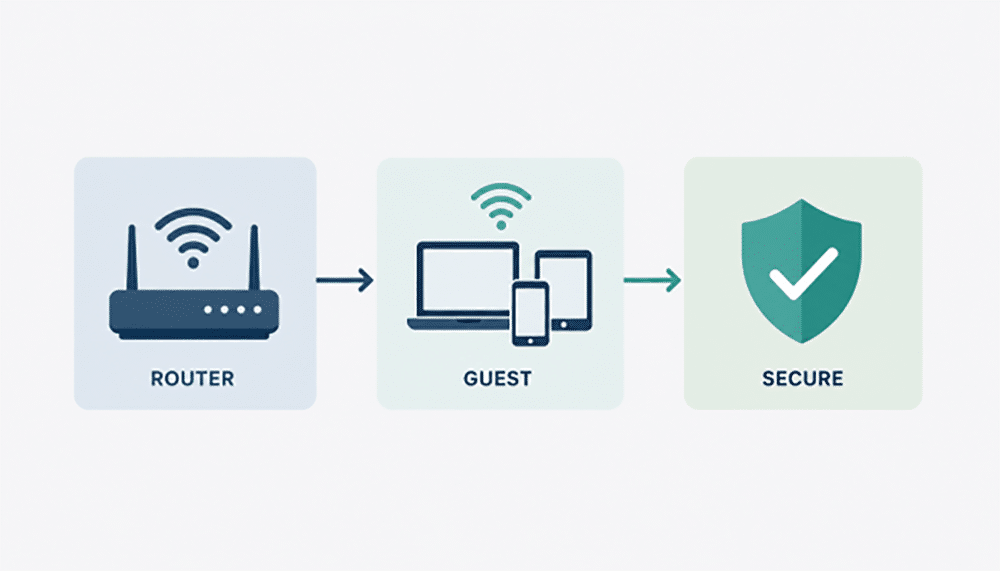
- Segment guest Wi-Fi entirely from payment processing and internal management systems, so a compromised guest device can’t reach either.
- Require a login rather than leaving the guest network fully open, which also gives IT a way to isolate a problem device if one shows up.
- Change default credentials on every router and IoT device before it goes live, since default logins are the first thing automated scans check for.
- Train front-desk and reservations staff to recognize social engineering attempts, particularly callers posing as “IT support” asking for system access.
- Patch routers, access points, connected TVs, smart-room technology, and other networked devices on a defined schedule.
Hotels should also maintain an accurate inventory of connected devices. Knowing what is attached to the network, who owns it, when it was last updated, and whether it is still supported makes it easier to identify forgotten technology that may otherwise remain connected for years.
Why This Keeps Showing Up in Hotel-Specific Threat Reporting
Hotels aren’t a random target. Kaspersky’s security researchers first documented a long-running campaign known as DarkHotel in 2014, which specifically used hotel Wi-Fi networks and in-room connections to target traveling business executives, tricking guests into downloading malware disguised as a routine software update.
More recent Kaspersky research has tracked a related pattern under the name RevengeHotels, targeting hotel booking and reservation systems directly. The specifics change year to year, but the underlying reason hotels keep appearing in this kind of reporting hasn’t.
A single property’s network can expose a concentrated mix of high-value guests, corporate credentials, and payment data that’s harder to find in one place anywhere else.
| Vulnerable Point | Practical Fix |
| Shared guest Wi-Fi with no segmentation | Separate VLANs for guest, staff, and payment traffic |
| Default router and IoT credentials | Change on installation, audit on a set schedule |
| Untrained front-desk staff | Regular, brief social-engineering awareness training |
| Outdated router firmware | Scheduled patching, not just at install |
A useful principle for hotel teams is to assume that no single control will prevent every incident. Network segmentation limits how far an attack can travel, authentication reduces unauthorized access, patching removes known weaknesses, and training helps employees recognize attempts to bypass technical controls altogether.
Where Guest-Side Protection Fits Into a Hotel’s Own Security Posture
None of this puts the burden entirely on the property. Guests who bring their own protection, most commonly a VPN running on their laptop or phone, add a layer that holds up even if a hotel’s own network has a gap the property hasn’t caught yet.
According to VPNOverview’s cybersecurity experts, VPNs can help protect traffic on public networks by encrypting the connection between a user’s device and the VPN service. This can be particularly relevant for guests handling corporate information, financial accounts, or other sensitive data while traveling.
However, guest-side protection should be treated as an additional safeguard rather than a replacement for hotel security. A VPN cannot compensate for poorly separated payment systems, weak administrator credentials, unpatched hotel infrastructure, or compromised staff accounts.
That’s part of why some properties have started mentioning VPN compatibility or even guidance in their guest communications rather than treating network security purely as an internal IT matter. It costs nothing to flag, and it signals the kind of attention to guest data that increasingly shows up in how travelers choose where to stay.
For the operational side of hotel network security specifically, Hospitality Technology’s reporting on Wi-Fi risk in the sector goes further into the threat categories properties are dealing with today.
Cybersecurity Should Include Staff, Vendors, and Third Parties
Hotel cybersecurity is not only about equipment owned by the property. Modern hospitality businesses often depend on external booking platforms, payment processors, CRM tools, revenue systems, digital locks, smart-room providers, maintenance platforms, and managed IT companies.
Each connection introduces another relationship that needs to be understood.
Before connecting a new system, hotel operators should ask practical questions such as:
- What hotel or guest data can the provider access?
- Which employees can access the platform?
- Does the system support multifactor authentication?
- How quickly are security updates applied?
- What happens when an employee leaves the hotel?
- How is third-party access removed when a contract ends?
- Who is responsible for responding if the provider experiences a breach?
These questions are particularly important for smaller properties that outsource most of their IT operations. Outsourcing technology does not remove the need to understand who is responsible for protecting it.
Prepare for an Incident Before One Happens
Prevention is essential, but hotels should also plan for what happens if a cybersecurity incident occurs. A basic response plan should identify who has authority to isolate affected systems, who contacts the IT provider, when senior management is notified, how guest-facing operations continue, and how evidence is preserved for investigation.
Hotels should also consider how operations would continue if key technology became temporarily unavailable. Front-desk teams, for example, may need documented procedures for managing arrivals, payments, room access, or guest communication during an outage.
Useful preparation includes:
- Keeping current contact details for technology and security providers
- Backing up critical information appropriately
- Testing restoration procedures rather than assuming backups work
- Documenting important network and system dependencies
- Defining who communicates with guests and partners
- Recording incidents and lessons learned after they are resolved
A short, practical plan that employees understand is more useful than a lengthy document nobody can find during an actual disruption.
Cybersecurity Is Part of Business Resilience
Security spending competes with many other hotel priorities, which can make cybersecurity difficult to evaluate purely as a revenue-generating investment.
For hotels weighing security investment against the broader picture of guest satisfaction and revenue, Revfine’s overview of hotel revenue management is a useful starting point for framing where a network upgrade fits against everything else competing for the same budget.
Cybersecurity is better viewed as part of operational resilience. A network incident can affect bookings, payments, check-in, guest communications, staff productivity, reputation, and potentially regulatory responsibilities at the same time.
The objective is therefore not to eliminate every possible cyber risk. No hotel can do that. The goal is to reduce avoidable weaknesses, limit how far an incident can spread, protect sensitive systems, and ensure the business can respond quickly when something unusual occurs.
Hotel cybersecurity works best as an operational discipline, not a one-time IT project. Segmented networks, updated devices, strong access controls, trained staff, vendor oversight, and clear incident procedures help reduce exposure while protecting guest trust, payment systems, and business continuity.
More Tips to Grow Your Business
Revfine.com is the leading knowledge platform for the hospitality and travel industry. Professionals use our insights, strategies, and actionable tips to get inspired, optimize revenue, innovate processes, and improve customer experience.Explore expert advice on management, marketing, revenue management, operations, software, and technology in our dedicated Hotel, Hospitality, and Travel & Tourism categories.






Leave A Comment