


Travelers increasingly want the privacy and character of a private residence without giving up the reassurance of professional hospitality. This gives independent properties an opportunity to compete through space, flexibility, local identity, and thoughtful guest support rather than trying to reproduce a conventional hotel experience.
The Growing Appeal of Private-Residence Hospitality
The boundary between hotels and holiday homes has become less rigid. Guests still expect reliable standards, responsive assistance, and accurate information, but many also want the freedom to organize the day around their own needs.
This is particularly important for families and groups. Fixed breakfast times, shared lounges and separate hotel rooms may be inconvenient when several people are traveling together. A private residence offers a different rhythm. Guests can prepare a meal, spend time together and enjoy outdoor space without adapting every part of their stay to a hotel timetable.
The appeal is not simply having more square meters. What matters is the combination of autonomy and reassurance. Travelers want to feel that the property is theirs during the stay, while knowing that someone competent is available when they need information or assistance.
Privacy Has to Be Tangible
Privacy is often used as a marketing term, but guests experience it through practical details. A separate entrance, a private kitchen and an outdoor area reserved for one party are more meaningful than a general promise of exclusivity.
Descriptions should therefore explain exactly how the accommodation works. If a historic building contains several independent residences, guests need to know whether entrances, terraces or other facilities are shared. They should also understand whether they are reserving one unit or the complete property.
This clarity helps travelers select the right accommodation and reduces the likelihood of disappointment after arrival. It is especially valuable when a property serves both couples and larger groups, because those guests may have very different expectations of space and privacy.
One Property Can Serve Different Types of Stay
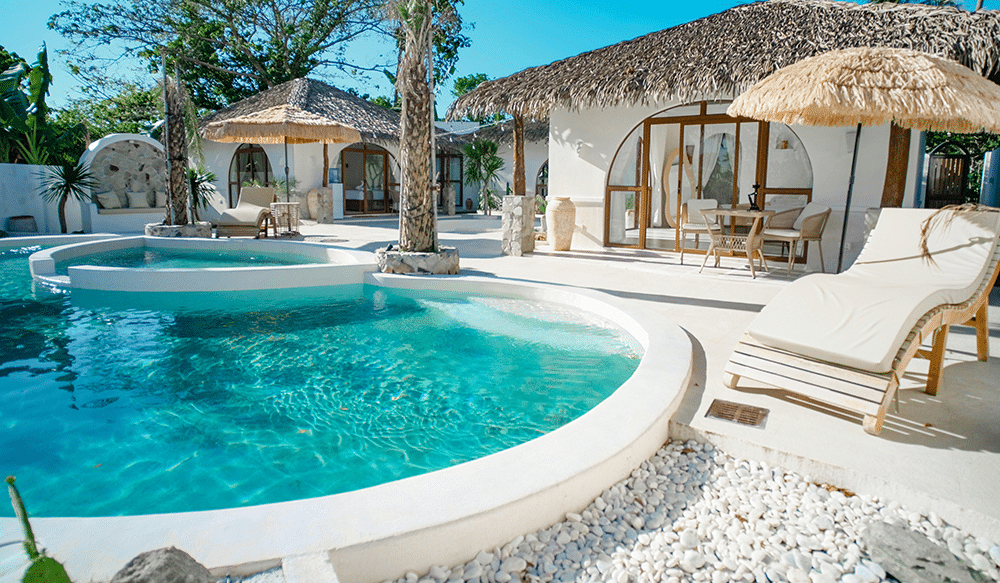
A residential property divided intelligently can reach more than one market without losing its identity. Individual residences may suit couples and families, while the entire building may work for extended families, groups of friends or private gatherings.
On the Amalfi Coast, Palazzo Rocco provides a useful example. The historic building in Praiano contains four independent holiday units, each with its own entrance, kitchen and sea-view terrace. The residences can be booked separately, but the complete complex can also accommodate groups of up to 24 guests.
This arrangement gives the operator commercial flexibility throughout the year. Smaller units can respond to ordinary leisure demand, while exclusive use of the property creates an option for guests who want to stay together without sacrificing personal space.
For this model to work, the booking journey must make the alternatives easy to understand. Capacity, layout, and sleeping arrangements should be explained in plain language. A large group should not have to reconstruct the configuration of the property by comparing several unrelated listings.
Historic Character Needs Honest Explanation
Historic accommodation offers qualities that standardized properties cannot easily reproduce. Original proportions, traditional materials, decorated ceilings, handmade furniture, and local ceramics create a stronger connection with the destination.
These features are commercially valuable, but they also need context. An older residence may have a layout that differs from a modern apartment. Rooms may vary in shape, and some architectural elements cannot be altered without damaging the character of the building.
Good hospitality does not conceal these differences. It explains them before booking and helps guests understand the kind of stay they are choosing. This turns an apparent limitation into part of a credible story, while allowing travelers with particular requirements to make an informed decision.
The same honesty should be applied to location. On the Amalfi Coast, a distance expressed only in meters can be misleading. Gradients, pedestrian lanes, stairways, and seasonal traffic can make a short route more demanding than expected. Practical descriptions should explain how guests reach the entrance, where vehicles can stop, and what the walk from the nearest square or transport connection is actually like.
Local Knowledge Can Replace a Traditional Reception
A private residence does not need a permanent front desk to deliver attentive hospitality. It does, however, need a reliable system for supporting guests before and during the stay.
This is particularly relevant in destinations where transport requires planning. A first-time visitor may not know when to use a bus, boat, private transfer, or rental car. Travel times can change with traffic and season, and an itinerary that looks simple on a map may be unrealistic in practice.
Independent operators can create considerable value by offering precise arrival instructions and sensible local guidance. Restaurant suggestions should take location and opening periods into account. Excursion advice should reflect the time needed to reach the departure point. Guests should know whom to contact if plans change or a practical problem arises.
Automated messages are useful for check-in details and routine information, but they are not a substitute for judgment. The strongest private-residence experiences combine efficient digital communication with access to a person who understands both the property and the surrounding area.

The Guest Experience Begins Before Check-In
Many operational problems can be prevented before the guest arrives. Clear communication should cover access, check-in arrangements, facilities, parking or transfer options, and the distance to useful services. It should also explain what is included and what guests are expected to organize themselves.
This information does more than reduce questions. It establishes trust. Travelers are more comfortable booking an independent residence when they can picture the arrival process and understand how support will work.
The tone matters as much as the detail. Instructions should feel welcoming and practical, not defensive. If a property has an unusual characteristic, it is usually better to explain it directly and show how guests can manage it than to leave them to discover it after arrival.
Reviews Should Inform Operations
Guest reviews are often treated mainly as promotional material. Their greater value lies in the patterns they reveal.
When visitors repeatedly mention terraces, views, cleanliness, local guidance, or convenient access, those elements are probably central to the property’s appeal. They deserve to be explained prominently and accurately across the website and booking channels.
Recurring criticism should be studied in the same way. Sometimes the solution is an operational improvement. In other cases, the property cannot change the underlying feature, but it can communicate it more clearly. Both responses improve the match between the accommodation and the people booking it.
A Distinct Alternative to Standardized Hospitality
Independent residences are most convincing when they do not attempt to imitate hotels. Their strengths lie in privacy, residential space, flexible arrangements, and a more direct relationship with the destination.
Professional management remains essential, but it operates behind the experience rather than dominating it. Guests notice it through a well-prepared arrival, accurate descriptions, clean and functional spaces, useful local advice, and timely assistance.
When these elements come together, a private residence can offer something difficult to reproduce in a conventional hotel: the feeling of temporarily living in the destination while still being supported by people who know it well.
Independent hospitality properties can learn from private residences by combining privacy, flexible space, local character, clear communication, and responsive support. When these elements are managed professionally, guests gain greater autonomy while still receiving the reassurance and guidance that define hospitality.
More Tips to Grow Your Business
Revfine.com is the leading knowledge platform for the hospitality and travel industry. Professionals use our insights, strategies, and actionable tips to get inspired, optimize revenue, innovate processes, and improve customer experience.Explore expert advice on management, marketing, revenue management, operations, software, and technology in our dedicated Hotel, Hospitality, and Travel & Tourism categories.





Leave A Comment