

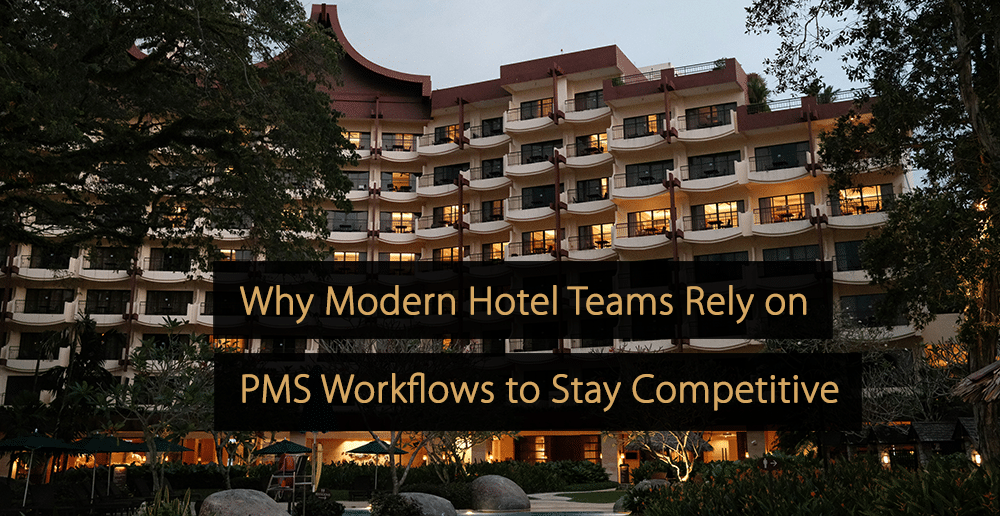
Independent hotels today operate in a demanding environment shaped by rising guest expectations, labor shortages, and tighter operating margins. Managing reservations alone is no longer enough. Teams must coordinate room status, housekeeping, payments, guest communication, and reporting across every stage of the stay. Without efficient systems, small operational delays can quickly turn into service issues or lost revenue. This is where modern PMS workflows become essential.
In this article, you will learn how smarter property management systems help hotel teams streamline operations, improve guest experiences, and maintain competitiveness.
Why Operational Structure Matters for Modern Hotels
In a market where small hotels face rising guest expectations, labor pressure, and tighter margins, the right operational foundation can make the difference between constant firefighting and steady, confident growth.
Running a hotel today requires much more than managing reservations. Even a modest property must coordinate front desk activity, housekeeping, room status, rate updates, guest requests, payment tracking, reporting, and internal communication.
When these tasks are handled manually or across disconnected tools, teams lose valuable time. Errors become more common, service becomes inconsistent, and owners often end up working inside the business rather than leading it.
The Role of a Hotel PMS System in Daily Operations
This is where a well-structured hotel PMS system becomes essential. At its core, a property management system helps centralize daily hotel operations so teams can work from a single reliable source of information. But for small hotel owners, the real value is practical rather than theoretical. It means the front desk can see room availability instantly.
It means housekeeping can update the room status without repeated calls. It means managers can understand occupancy trends without spending hours compiling spreadsheets. Most importantly, it means the guest experience becomes more seamless because the team is less distracted by preventable operational issues.
Why Efficiency Matters for Small Hotel Owners
Small hotel owners often wear many hats. In one day, they may act as general manager, revenue lead, guest relations contact, and operations supervisor. Because of this, efficiency is not a luxury; it is a survival strategy. A strong system supports consistency, which is one of the biggest challenges in hospitality. Guests may forgive a small room or limited facilities, but they rarely forget a delayed check-in, a billing error, or poor communication about their stay. These problems often do not come from a lack of effort. They come from fragmented processes.
How PMS Workflows Support the Guest Lifecycle
A modern PMS setup helps create structure across the guest lifecycle. Before arrival, it can improve reservation accuracy and reduce the risk of overbooking. During the stay, it helps teams coordinate room readiness, track preferences, and manage service requests. After departure, it can simplify invoicing, reporting, and follow-up for owners, which creates more visibility. For staff, it reduces confusion. For guests, it feels like a better-organized hotel.
Why PMS Conversations Matter for Independent Hotels
For many independent properties, the conversation around PMS in hotel operations is no longer just about software; it is about how hotel owners create smoother guest journeys, reduce daily friction, and make better decisions with limited time and staff.
This matters especially in the independent and boutique segments, where differentiation often hinges on personal service. Many small hotels build their reputation on warmth, local character, and attention to detail. Yet personal service becomes difficult to deliver when staff are overwhelmed by repetitive administrative work. Technology should not remove the human side of hospitality. It should protect it by freeing staff to focus on guests instead of chasing paperwork or correcting avoidable mistakes.
Choosing the Right PMS for Small Hotels
That is why the discussion around PMS systems for small hotels should be framed realistically. Smaller properties do not need complexity for its own sake. They need tools that match their pace, staffing model, and business priorities. For some, the priority is reducing check-in bottlenecks. For others, it is improving reporting accuracy or managing inventory with fewer errors. The best-fit solution is not necessarily the most advanced or feature-heavy one. It is the one that solves the daily pain points that slow down service and decision-making.

Preparing for Growth with Multi-Property PMS Systems
Another important shift in the industry is that growth no longer belongs only to large brands. Many successful operators begin with one property, then expand into a second or third location. This is where system selection becomes a strategic decision, not just an operational one.
A business that starts small may soon need shared oversight across multiple sites, standardized processes, and consolidated reporting. In that context, a multi-property PMS for a hotel chain can offer a stronger operational backbone, helping ownership groups maintain consistency while giving each property enough flexibility to serve its own market.
Even for smaller groups, multi-property visibility can deliver major advantages. Owners can compare performance across locations, identify staffing inefficiencies, standardize service procedures, and support revenue planning more effectively. Without that visibility, decisions are often based on assumptions or delayed reports. In a fast-moving market, delayed insight can be just as costly as bad insight.
Technology Works Best With Clear Processes
Still, technology alone does not solve operational problems. Hotels get the best results when systems are paired with clear processes and team adoption. A property can build a strong platform and still struggle if staff are not properly trained or if internal workflows remain unclear.
For example, if front office and housekeeping do not follow a shared process for room status updates, delays will continue regardless of the software in place. The same applies to guest data, payment handling, and reservation modifications. The system should support a disciplined way of working, not replace it.
Asking the Right Operational Questions
For hotel owners, this means thinking beyond installation. It means asking practical questions. Which daily tasks consume the most staff time? Where do errors happen most often? Which reports are hardest to produce? Which parts of the guest journey feel inconsistent? These questions lead to smarter operational choices than simply asking which platform is popular or which feature list looks impressive. Hospitality success is rarely built on buzzwords. It is built on removing friction from both the guest and staff experiences.
The Cultural Impact of Better Systems
There is also a cultural benefit to improved systems. Teams perform better when they feel organized and informed. In hospitality, morale matters because the emotional tone of the workplace shapes service quality. When employees spend less time dealing with miscommunication, duplicate work, and last-minute surprises, they are more likely to engage positively with guests. That improvement may not appear immediately on a balance sheet, but it often shows up in reviews, repeat business, and staff retention.
Aligning Operations With Better Hospitality
Smaller properties can benefit significantly from choosing systems and workflows that fit their business reality. Whether a hotel is trying to stabilize daily operations, elevate guest service, or prepare for expansion, stronger process management enables better decisions and better hospitality.
In the end, guests remember how a stay felt. Owners remember whether the business ran smoothly. Staff remember whether the day was manageable or chaotic. A thoughtful approach to property management helps align all three. That is why a smarter operational structure matters so much in modern hospitality. It is not about replacing people with systems. It is about giving people the support they need to deliver the kind of service guests will return for.
Smarter PMS workflows help hotels reduce operational friction, support staff efficiency, and create smoother guest experiences. When systems align with clear processes and real operational needs, hotel teams can focus less on administration and more on delivering consistent, high-quality hospitality.
More Tips to Grow Your Business
Revfine.com is the leading knowledge platform for the hospitality and travel industry. Professionals use our insights, strategies, and actionable tips to get inspired, optimize revenue, innovate processes, and improve customer experience.Explore expert advice on management, marketing, revenue management, operations, software, and technology in our dedicated Hotel, Hospitality, and Travel & Tourism categories.



Leave A Comment