

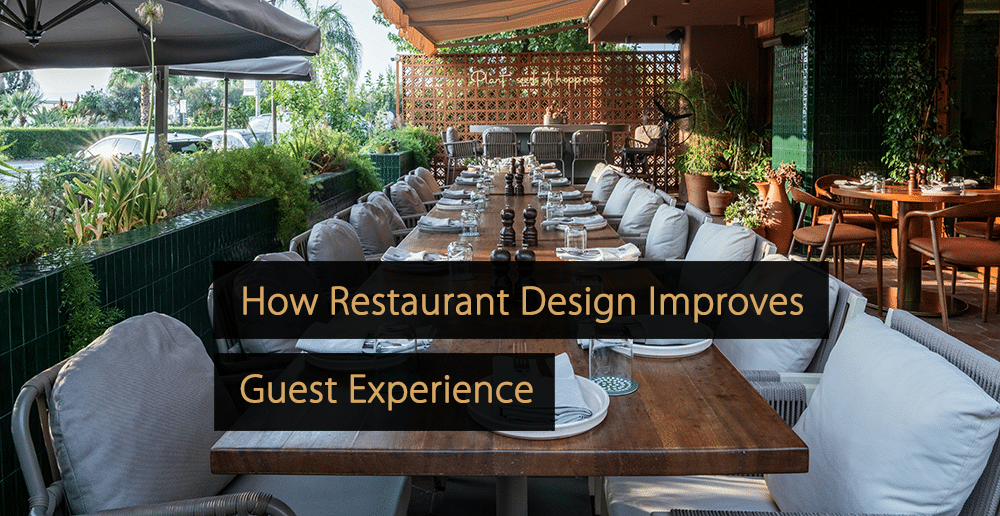
Walk into a restaurant, and you’ve judged it before anyone hands you a menu. The light, the noise, the seat you’re shown to, whether the room feels alive or awkward, your guests do the same thing to you, every service, within seconds. That snap judgment is design at work, and it sets the bar that the food then has to clear.
So when you plan a restaurant, furniture and finishes are the smallest part of what you’re really deciding. You’re deciding how people enter, where they wait, whether they can hear each other, how your staff gets a plate from the pass to table nineteen without doing a lap of the room. Get that wrong, and no menu rescues it.
What Is Restaurant Design?
Plenty of operators hear “design” and think decoration, including paint, fixtures, and the thing on the wall. That’s the surface. Underneath it, design is the floor plan deciding how many covers you can actually serve in comfort. It’s the seating that either fits your concept or quietly undermines it. It’s whether your servers spend the night moving efficiently or crossing each other’s paths a thousand times.
Two jobs, then, happening at once. One is the look that the atmosphere guests respond to, and the brand they read off the room. The other is the machinery that keeps the place running at full tilt on a Friday. Operators who treat these as one problem tend to win. The ones who chase a gorgeous room and leave the service flow to sort itself out pay for it on every shift.
Why Design Matters for Guest Experience
Most of what shapes a guest’s night is felt, not noticed. They don’t tell you the acoustics were good. They just leave relaxed instead of hoarse. They don’t praise the table spacing. They simply didn’t feel jammed against the strangers next to them.
Think about what your design quietly decides for them. Whether a party of six can sit together or get split across two tables and a mood. Whether the wait felt fine because there was somewhere pleasant to stand. Whether the corner table felt private or exposed. These touchpoints add up across the visit, and they’re the ones that drive a five-star review or a one-line complaint. The meal might be the headline. The room writes a lot of the story.
Plan the Layout Before You Commit to Fit-Out
Of every decision you’ll make, the layout is the one you can least afford to get wrong, because once it’s built, changing it means tearing it out. So this is where to slow down. Trace the whole guest path in your head: door, greeting, wait, table, and back out again. Then trace your staff’s path, and your delivery traffic, and make sure none of them are fighting each other for the same three feet of floor.
If you’re planning a new concept, a renovation, or a hotel F&B outlet, restaurant 3D visualization can help you review layout, seating, lighting, materials, and circulation before construction or fit-out begins. The value is in catching the problems early. The bar that bottlenecks. The two-top was wedged beside the kitchen door, where nobody wants to sit. The server route cuts straight through where guests walk in. All is cheap to fix on a drawing. All is painful to fix once the floor is poured.
Use Seating to Balance Comfort and Revenue
Seating is where your comfort instincts and your business model argue. Cram the tables, and you’ve bought capacity at the price of every guest noticing how close their neighbor’s elbow is. Spread them out, and the room feels generous, but the maths gets harder.
A mix usually beats uniformity. Banquettes and booths give people the back-to-the-wall comfort they ask for first. Two-tops flex for couples and push together when you need them to. A larger table or a communal run handles groups and the buzz that comes with them. Bar seats catch the solo diners and the walk-ins. And leave yourself some flexibility, such as a section that reconfigures for a private booking, is worth a lot on the right night. One rule holds above the rest: comfort comes first. An uncomfortable guest is a guest you serve once.
Lighting Shapes the Mood at Every Hour
Lighting is the tool operators underrate most, probably because a single room has to be three or four different rooms over a day, and the change has to feel invisible. Morning and lunch want brightness, daylight, and energy. Evening wants the room to fold inward, warmer, lower, more intimate, and it should arrive gradually, never like someone flipped a switch.
There’s a practical side too, easy to forget when you’re chasing ambiance. Your kitchen pass and service stations need real light to work under. Your guests need enough light to read the menu without lifting their phones for the torch. The food needs to look like the food, as nobody photographs a beautiful plate lit like a car park. Hit all of that across every service, and you’ve done something genuinely hard.
Materials and Acoustics Affect Comfort
Every material you pick is doing two jobs; you might only be thinking about one of them. There’s the look, which gets all the attention. And there’s the sound, which gets almost none until opening night, when the gorgeous exposed-brick-and-concrete room turns into a place where guests are shouting across the table by eight o’clock.
Hard surfaces are loud. That’s physics, not opinion. If you want the raw industrial look, you have to buy the quiet back somewhere else, such as upholstered seats, a curtain, acoustic panels, anything soft enough to swallow the echo. And whatever you choose has to take a beating: daily wear, constant cleaning, the spilled red wine that’s coming whether you like it or not. The right surface balances how it looks, how it sounds, and how it survives. Guests can’t name good acoustics. They feel it in whether they want to stay for another drink.
Design Should Support Staff Workflow
Here’s a test for any layout: watch where your staff would actually walk. The fast restaurants are built around that movement, like kitchen to table without detours, POS terminals where servers naturally reach them, a bar that doesn’t trap whoever’s working it, clean lines for clearing and resetting.
Short, uncrossed routes mean quicker service and a calmer team. Long or tangled ones mean your people spend the night fighting the building, and guests feel the lag even if they can’t see the cause. Don’t forget the modern additions, either; takeaway and delivery need their own lane so the driver collecting an order isn’t standing in your dining room. Designing for your staff is designing for your guests, because the speed and ease of service are something they experience directly.
Connect Design With Your Marketing Strategy
Your room is a marketing asset, whether you treat it like one or not. It should back up your positioning as a space that whispers casual will fight a fine-dining price point and lose. And it feeds every channel that brings people in: the corner that photographs well, the light that flatters a plate, the moments guests want to post become your social feed, your listings, your website.
A real restaurant marketing strategy reaches well past advertising into service, pricing, loyalty, menu, location, and events, and the physical space sits underneath most of it. The room is part of what you’re selling, so design it knowing the camera and the brand are watching.
Hotel Restaurants Need a Different Approach
Run a hotel restaurant and your problem multiplies, because you’re feeding audiences that want different things and sometimes show up at once. Hotel guests want an easy breakfast and all-day convenience. Locals need a reason to pick you over the independent place down the street. Event and conference crowds arrive in surges. Room service pulls from the same kitchen.
All of that has to flex inside one space that still reads as part of the hotel. The lobby connection, the breakfast volume, the event traffic, the all-day versatility, all these pull the layout in directions a standalone restaurant never deals with. Solid hotel restaurant management leans hard on getting the space right for these overlapping demands, which is exactly why planning carefully upfront matters even more here.
Reduce Friction Across the Guest Journey
A lot of guest annoyance is just design failing quietly. A door that’s hard to find. A host stand they can’t spot. A menu they can’t read in the light you chose. A clumsy payment moment at the end. A long trek to the restrooms. Nowhere to put a coat.
Walk your own guest journey, from entrance to bill, and pull the friction out of every step. Make sure it works for everyone, with clear wayfinding and genuine accessibility, not as an afterthought. None of these fixes is dramatic on its own.
Together, they’re the difference between a visit that just flows and one that feels like a low-grade obstacle course.
Common Mistakes to Avoid
The errors repeat across the industry. Too many tables, comfort sacrificed for covers. Acoustics are ignored until the room is a roar. Lighting that nails dinner and ruins lunch, or the reverse. Chairs that photograph beautifully and punish you by the main course. An entrance nobody can find. Service routes are blocked by furniture. Restrooms down an awkward corridor. Materials that clash or wear out fast. No room to flex for an event. Delivery flow no one thought about. And the newest trap of all, such as a room designed for the camera instead of for the hundred nights it actually has to run.
Restaurant Design Checklist
- Can guests tell where to enter and wait?
- Does the seating mix fit your concept and capacity?
- Are your servers’ routes short and uncrossed?
- Does the lighting hold up across every service period?
- Are the materials durable, cleanable, and quiet enough?
- Is the noise bearable when the room is full?
- Does the design back your menu, price point, and brand?
- Can the layout adapt for groups or events?
- Are accessibility and comfort genuinely handled?
- Does the space serve both operations and marketing?
Strong design lifts the guest experience because it ties atmosphere, comfort, and operations into one thing rather than three. Plan the layout, the light, the seating, and the workflow with care, and you end up with a restaurant that’s easier to run and better to sit in, which is, in the end, what brings people back.
More Tips to Grow Your Business
Revfine.com is the leading knowledge platform for the hospitality and travel industry. Professionals use our insights, strategies, and actionable tips to get inspired, optimize revenue, innovate processes, and improve customer experience.Explore expert advice on management, marketing, revenue management, operations, software, and technology in our dedicated Hotel, Hospitality, and Travel & Tourism categories.
Leave A Comment