

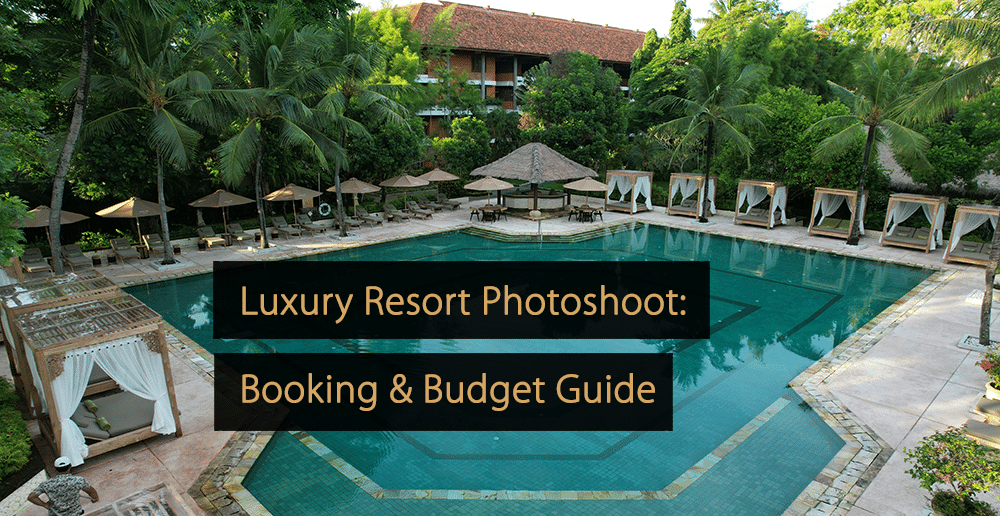
Resort photography sells rooms long before a guest reads a single description. Great images are won in pre-production, not on set, in a shot list, a call sheet, and a casting decision made weeks ahead. This guide walks you through booking, budgeting, casting, and scheduling a luxury resort photoshoot so you finish with images you can use for years.
Who Do You Need to Book First for a Resort Photoshoot?
Book your photographer and your talent before anything else, because both carry the longest lead times and both constrain your dates. Talent can come either from a traditional modeling agency or directly from a booking platform. Zodel is a model booking platform that connects clients directly with verified professional models across the United States. Everything downstream, from crew to rooms to permits, can be arranged once those two are locked.
Three bookings set your entire schedule:
- Photographer. Strong hospitality shooters are often booked out well in advance during peak season.
- Talent. Your casting drives wardrobe, which drives your shot list.
- Room block. Crew and talent rooms come out of sellable inventory, so give revenue management your dates early.
What Should You Lock Before Committing to Shoot Dates?
Lock your operational variables before dates go on a contract, because reshoots are the most expensive line in resort photography. Occupancy comes first. Shooting a suite during a sold-out weekend means shooting at 6 am or not at all.
Bring revenue management, housekeeping, and F&B into the same conversation. Housekeeping needs to know which rooms you are holding out of service and for how long. F&B needs to know whether the restaurant closes for a service or plates food purely for the camera.
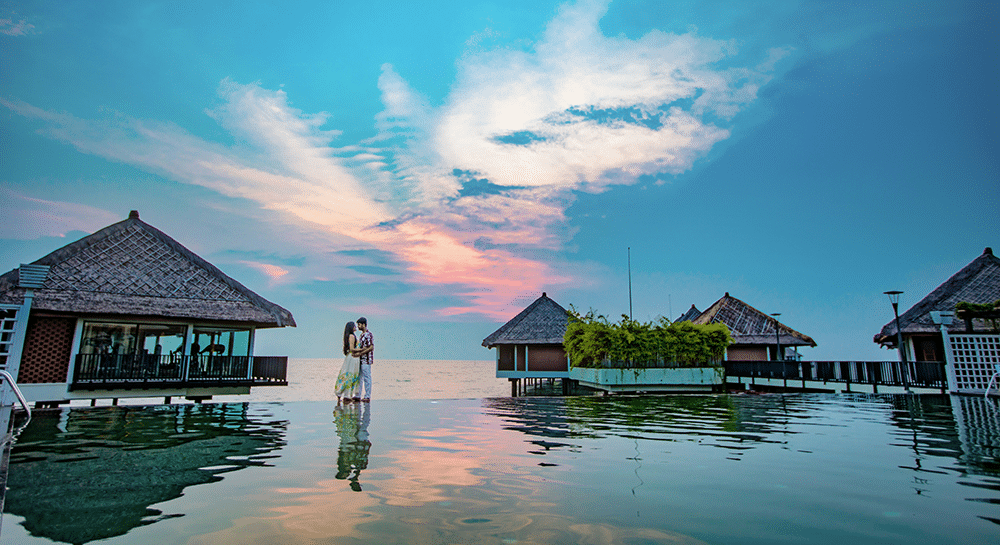
Then check the sun. Golden hour dictates your exterior and pool schedule, and it shifts a little every day. A shoot planned for late October in Arizona gives you a very different usable window than the same shoot in June.
How Do You Build a Resort Shot List That Uses the Full Day?
Count setups, not shots. Plan around a fixed number of setups per day, where a setup means one location, one lighting condition, and one wardrobe look. Building your list this way is the single easiest way to protect the schedule.
A standard luxury resort list covers six zones:
| Zone | Relative setup weight | Notes |
| Hero exterior and arrival | Light | Golden hour only. Weather-dependent. |
| Guest rooms and suites | Heavy | Requires rooms out of service the night before. |
| Pool and beach | Medium | Swimwear talent. Earliest or latest light. |
| Spa and wellness | Light | Fitness or wellness talent. Controlled lighting. |
| F&B and bar | Medium | Coordinate with your chef on plating windows. |
| Lifestyle and detail | Light | Fills gaps when weather cancels an exterior. |
Build your lifestyle and detail setups as a weather contingency. They shoot indoors, they need no golden hour, and they will save a day that would otherwise be lost.
How Many Models Does a Luxury Resort Shoot Need?
Your talent count is driven by pairings and wardrobe changes, not by the number of frames. A shot list spanning suites, pool, spa, and an evening venue needs different people in each, and that is what sets the number.
| Resort scenario | Talent needed | Model category |
| Couple in suite, at dinner, on the terrace | 2 | Commercial or catalog models |
| Pool, beach, and spa lifestyle | 2 | Swimwear and fitness models |
| Family or multigenerational stay | 3–4 | Commercial models |
| Bar, lounge, and evening venue | 2–4 | Atmosphere models |
| Vertical social and paid social cutdowns | 1–2 | UGC models or content-creator models |
Cast for the guest you want to attract, rather than for the most striking portfolio. If you sell a high average daily rate to couples in their forties, casting that reads twenty-four works against you. Match the casting to your guest profile and the images will do their job.
Sourcing across categories is easier when it runs through one system. Few individual agencies cover swimwear, commercial, and atmosphere talent equally well, so a full property refresh often means several separate conversations. Consolidating that step saves you more time than any other change to your process.
What Does a Two-Day Luxury Resort Photoshoot Cost?
Budget in six buckets. The figures below are illustrative sample rates for a U.S. property rather than quoted prices, and they move substantially by market and season.
| Line item | Illustrative two-day cost |
| Photographer plus assistant | $6,000 |
| Talent: 5 models at $1,000 per day | $10,000 |
| Booking fee for talent | See below |
| Hair, makeup, and wardrobe styling | $3,000 |
| Room nights, meals, and incidentals | $2,500 |
| Post-production and retouching | $2,000 |
The booking fee is the line you control most directly. Traditional modeling agencies typically charge 10–40% commission, while some direct booking platforms charge as low as 5%. On $10,000 of illustrative talent cost, that is the difference between roughly $2,000 and $500.
That $1,500 gap buys you a full day of retouching or an additional wardrobe stylist. Across a group refreshing four properties a year, the illustrative annual difference reaches $6,000. Small in isolation, but useful against a photography budget that rarely grows.
Should You Use a Production Company, a Creative Agency, or Book Direct?
All three routes work well. The right one for you depends on whether your property has someone who can run a call sheet.
| Factor | Full production company | Creative agency | Direct booking platform |
| Casting handled by | Producer | Agency casting | Your in-house team |
| How you see talent | Producer’s shortlist | Agency’s roster | Full profiles, rates, and availability before contact |
| Fee on talent | Producer markup plus commission | 10–40% commission | As low as 5% |
| Verification | Producer vouches | Agency represents | Identity and portfolio verified before booking |
| Contracting | Producer negotiates | Agent negotiates | Terms sit in the booking; you approve |
| Payment | Invoiced after the shoot | Agency invoicing terms | Escrow, released on completion |
| Creative direction | Included | Included, usually the strength | Your responsibility |
| Speed to shortlist | Days | Days | Typically same day |
| Coordination burden | Almost none | Low | Sits entirely in-house |
| Best fit | Flagship launches, brand films | Multi-property campaigns needing a concept | Properties with a coordinator and a clear brief |
| Column 1 Value 11 | Column 2 Value 11 | Column 3 Value 11 | Column 4 Value 11 |
What Does Booking Direct Actually Involve?
Direct booking replaces the account-manager relationship with a system you operate yourself. You post the job with your dates, location, rates, and the look you need. Verified professionals apply or are matched to it, and you review portfolios and availability before anyone is contacted.
Contracting is where the two routes diverge most. An agency negotiates terms on your behalf and invoices you afterward, which genuinely helps when usage rights get complicated. On a direct platform, the terms sit inside the booking, and you approve them, so a two-day shoot with standard usage can be locked in an afternoon.
Payment works differently too. Escrow-based platforms hold your funds from confirmation until the job is complete, so talent has certainty, and you are not wiring a deposit to someone you have never met. That structure is what makes same-week bookings workable at all.
What Does Direct Booking Cost You in Time?
Booking through a model booking platform like Zodel carries a cost that is not financial. Someone on your team writes the brief, builds the call sheet, confirms arrivals, and manages the day. If you have that person, the savings are real. If you do not, the commission you saved tends to reappear as overtime.
Run that test honestly before you choose. A property with a marketing coordinator who has produced a shoot before will find direct booking faster and cheaper. A property where the DOSM is absorbing this on top of everything else will get better images from an agency, even at 10–40%.
What Paperwork Does a Resort Photoshoot Require?
Six documents, and missing any one of them can pull an image out of circulation months later.
- Signed model release for every person appearing on camera, executed before the shoot.
- Usage rights in writing naming territory, channels, and duration. Your imagery runs on OTA listings and brand sites for years, so short terms create expensive problems later.
- Property release if any third-party space or artwork appears in frame.
- W-9 and 1099 reporting for U.S. independent professionals, including talent and crew.
- Guest privacy releases for any actual guest visible in the background, or a closed-set plan that avoids the issue.
- FAA Part 107 certification for your operator on any drone work, plus airspace authorization where required.
Payment protection belongs on this list too. Escrow-based booking systems hold funds until the job is complete, which removes the awkward deposit conversation with a professional you have not worked with before.
What Usually Goes Wrong, and How Do You Prevent It?
Weather, occupancy conflicts, and no-shows account for most lost shoot days. Each has a cheap preventive fix, and all three are within your control.
Weather is solved by the indoor contingency block described above. Occupancy conflicts are solved by entering your shoot dates into the revenue management system as a block, rather than leaving them in an email thread. No-shows are solved with confirmed call times well ahead of the day and a payment structure that gives talent a reason to appear.
The fourth failure is quieter. Wardrobe arrives wrong because nobody was assigned to own it. Write the wardrobe owner’s name directly into your brief.
When Should You Hire a Full Production Company Instead?
Three situations justify the markup. A flagship property launch that anchors your positioning for years deserves a producer.
Video work with sound, talent direction, and multiple setups per hour needs one. Multi-property shoots running consecutively across markets need a single person owning continuity.
There is also a bandwidth test worth running honestly. If your marketing coordinator already owns the OTA content calendar and the loyalty email program, adding a two-day production is how both slip.
Frequently Asked Questions
A successful luxury resort photoshoot depends on careful planning, from booking photographers and talent to managing schedules, budgets, usage rights, and contingencies. With the right production approach, hotels can create versatile, high-quality imagery that supports marketing campaigns and drives bookings for years.
More Tips to Grow Your Business
Revfine.com is the leading knowledge platform for the hospitality and travel industry. Professionals use our insights, strategies, and actionable tips to get inspired, optimize revenue, innovate processes, and improve customer experience.Explore expert advice on management, marketing, revenue management, operations, software, and technology in our dedicated Hotel, Hospitality, and Travel & Tourism categories.
Leave A Comment