



The Latest Travel Marketing Tips to Optimize Your Results in 2027
The quality of travel marketing can greatly affect the overall success of businesses operating in the travel industry, including hotels, airlines, and OTAs. In particular, companies must use the right travel marketing strategies and keep up to date with the latest trends. With this in mind, in this article, you will find some of the most important travel marketing tips for 2027 to help you improve your performance and results. Table of Contents What Is
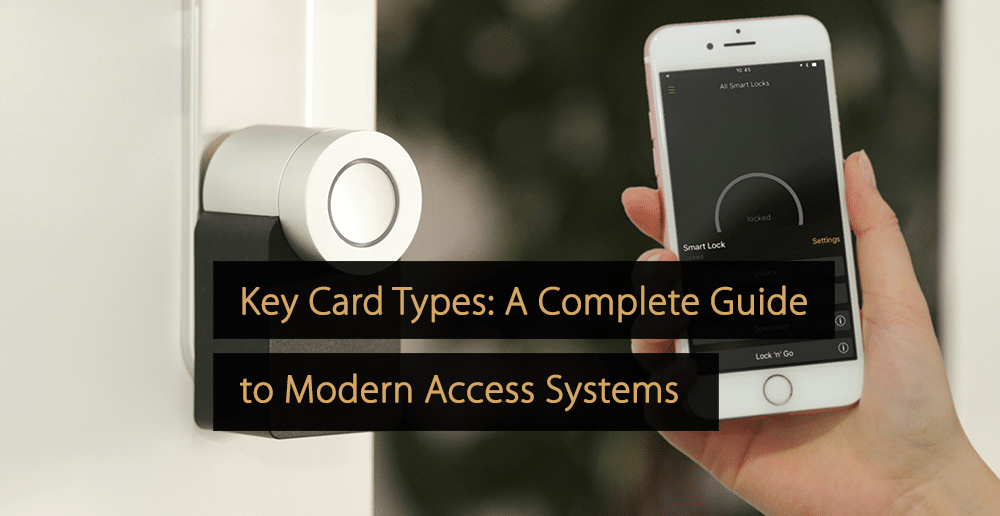
Key Card Types: A Complete Guide to Modern Access Systems
Key card systems incorporate various technologies to provide a more secure form of access control to both the hospitality and business sectors. The card's digital authentication provides extra security and ease of use. A card will not just replace locks, but improve a location's security and privacy. In this article, you'll discover how to best leverage key cards, strategic optimization to get the most out of them, and how to benefit from their security features.
Digital Marketing for Restaurants: Trends to Follow in 2027
Digital marketing for restaurants has never been more important. Every industry today needs digital marketing, but it's especially vital in the hospitality sector. As technology has evolved and consumer habits have changed, digital marketing has changed, too, with new platforms and techniques emerging all the time. In this article, you'll discover the secrets of digital marketing and how it can work for your restaurant business in 2027. Table of Contents: What Is the Restaurant Industry?

Discover The Latest Business Travel Trends Business Travelers Desire
Business travel is growing. As a result, hotels and others in the travel industry are looking to attract more business travelers, but to do so effectively, you need to know what those travelers are looking for. In this article, you will learn more about the latest trends influencing modern business travel decisions in 2027. Table of Contents: What is Business Travel? Business Travel is Growing 15 of the Latest Business Travel Trends in 2027 1.

Hotel Groups: Top 10 Luxurious Hotel Groups to Work For
Some hotel groups are geared towards the higher end of the market. They focus on offering premium luxury accommodations and services to the more discerning traveler. A certain amount of cache comes with working for a high-end hotel group, as well as better compensation and benefits. Here are some of the most luxurious hotel groups you can work for today. Table of Contents: What is the Hotel Industry? What is a Hotel Group? How to Apply for a Position With a Hotel Group What Are Some Luxurious Hotel Groups to Work for? Marriott International Hilton Hotels & Resorts Jinjiang International

Hotel Profit Management Redefining Performance for the Future
For years, revenue management was the commercial heartbeat of hotels: optimizing room rates, forecasting demand, and filling beds efficiently. But the landscape has shifted. Relying solely on RevPAR is like saying you watched a movie after watching the trailer; you may know what it is about, but you miss the full plot. To thrive in a world of rising costs and demanding owner expectations, hotels must embrace total profit management. Profitability is the scoreboard that

Are Guests Ready for Dynamic Pricing in Hotel Ancillary Services?
Question for Our Revenue Management Expert Panel: Are hotels ready to effectively implement dynamic pricing for ancillary services? Are guests ready to accept fluctuating prices for ancillary services? (Question proposed by Pablo Torres) Our Revenue Management Expert Panel Pablo Torres - Hotel Consultant Tamie Matthews - Revenue, Sales & Marketing Consultant, RevenYou Massimiliano Terzulli - Revenue Management Consultant, Franco Grasso Revenue Team Niko Krauseneck - Founder, RevenueRebel
Creating a Data-Driven Culture in Hotels: Why just getting a BI platform is not enough.
Hotels across the globe have made massive investments in business intelligence (BI) solutions in recent years. From revenue and finance to operations and marketing, data is flowing in more ways than ever before. Yet, many hotel teams still struggle to make truly data-informed decisions. Why? Buying a BI platform is

Satisfaction Up, Volume Flat, What’s Driving the Divide?
The first quarter of 2025 offered a nuanced picture for the global hospitality industry. Analysis reveals continued growth in global guest satisfaction, measured by the Global Review Index™ (GRI). Indeed, satisfaction levels briefly surpassed the 2019 benchmark of 86.4% in June of 2024. Despite a typical seasonal dip in January,
Group Bookings vs. Transient: How to Always Choose What’s Best for Your Property
Should you accept that group request or wait for more lucrative individual guests? This decision can significantly impact your hotel's profitability. In this article, you'll discover how to confidently assess each booking opportunity through a practical approach. Group or Transient? Why This Choice Is So Important Whether you run a