

Hotel room cleaning is the process of preparing, sanitizing, and servicing a room, so it is ready for the next guest. It can involve everything from vacuum cleaning and changing bed sheets to carrying out inspections and wiping surfaces. Cleaning is essential for living up to guest expectations and forms a major component of the housekeeping department’s workload. It makes your hotel presentable, ensures hygiene standards are upheld, and protects your guests.
In this article, you can discover strategies and best practices that can be used to enhance the quality of your hotel rooms, improve guest satisfaction levels, and ultimately boost your financial results.
Quick Definition:
Key Takeaways:
|
–
Table of Contents:
- What Is Hotel Room Cleaning?
- Why Is Hotel Room Cleaning Important for Guest Satisfaction and Revenue?
- What Should Your Daily Hotel Room Cleaning Process Include?
- Why and When Hotels Need Deep Cleaning?
- Case Study: Four Seasons Hotels
- 5 Hotel Room Cleaning Strategies that Drive Results
- 1. Enhanced Guest Satisfaction Through Systematic Protocols
- 2. Advanced Technology Integration for Operational Excellence
- 3. Sustainable Cleaning Practices for Environmental Responsibility
- 4. Post-Pandemic Enhanced Sanitization Standards for Your Property
- 5. Data-Driven Performance Optimization for Your Hotel
- How Hotels Can Maintain Cleaning Standards During Disruption
- 11 Hotel Room Cleaning Tips Every Hotelier Should Know
- AI and Technology in Hotel Room Cleaning: What’s Changing Now
- Training and Quality Control for Housekeeping Teams
- Hotel Rooming List: An Essential Tool for Guest Management
- Hotel Room Maintenance Checklist: Strategies and Templates
- FAQs Related to Hotel Room Cleaning
What Is Hotel Room Cleaning?
Hotel room cleaning describes the various actions housekeeping staff perform to prepare a room for guests. It is a critical part of room servicing and helps to ensure guest rooms are tidy, hygienic, and visually pleasing.
Examples of hotel room cleaning activities include vacuum cleaning, dusting, changing bed linen, and sanitizing surfaces. Responsibilities may also include testing technology, inspecting room fixtures, and replenishing toiletries.
The most important areas for cleaning include floors, commonly touched surfaces, bathrooms, and beds. Deep cleaning can be performed less frequently, but it helps to maintain hygiene levels and aesthetic appeal.
Why Is Hotel Room Cleaning Important for Guest Satisfaction and Revenue?
Hotel room cleaning is important because it impacts the visual appeal of your hotel and helps to create an environment where guests feel safe. It also helps you to uphold hygiene standards and meet or exceed guest expectations.
Research from P&G Professional found that 78% of guests cite cleanliness as the most important factor when booking a hotel. The study also found that dirty bed sheets or bathrooms were the factors most likely to cause guests to leave.
The commercial impact is also significant. According to the J.D. Power North America Hotel Guest Satisfaction Index Study, based on responses from 39,219 guests across 102 brands, room cleanliness and condition remained the biggest drivers of guest room satisfaction across all hotel segments. The same study found that stronger satisfaction with room cleanliness was a key reason guests felt they were receiving better value for their money, even as the average daily rate reached a record $158.67.
Cleaning your hotel increases the chances of making a positive first impression and can serve as a major competitive differentiator. COVID-19 made many guests more aware of the ways germs and viruses spread, so expectations are higher, and hotel cleaning protocols post-COVID often place an emphasis on hygiene and disinfecting surfaces.
As Andrea Stokes, Hospitality Practice Lead, J.D. Power, states:
“With post-pandemic travel prices still elevated, hotel guests are taking fewer trips, on average — yet staying longer. This puts a real focus on the hotel property for everything from room cleanliness and facilities maintenance to interactions with front desk personnel.”
What Should Your Daily Hotel Room Cleaning Process Include?
Establishing a daily hotel room cleaning process can help you optimize your activities and achieve consistency. Here, you can read a brief overview of the essential components to include in your process:
- Room Inspection: Carry out a systematic inspection of in-room surfaces, fixtures, furniture, amenities, and technology before a new guest arrives and settles in.
- Sanitization Process: Disinfect high-touch surfaces and room items, including light switches, remote controls, and door handles. Use EPA-approved disinfectants and follow AHLA guidelines.
- Linen Management: Replace bed linen for each guest and make sure staff are using the correct handling procedures to maintain hygiene standards and avoid cross-contamination between new and old bed sheets.
- Bathroom Deep Cleaning: Clean the bathroom extensively, covering the toilet area, shower or bath, sink, mirrors, and floor. Use specialized hospitality cleaning agents.
- Technology Resets: Use your hotel room cleaning process to reset the in-room technology, including smart room features, televisions, air conditioning units, heating systems, and Wi-Fi adapters.
- Final Quality Assessment: Carry out an in-depth inspection of each room, using a checklist. Document your findings with photographs and ensure approval from supervisors before releasing the room.
Video: Hotel Room Cleaning
Why and When Hotels Need Deep Cleaning?
At times, hotel room cleaning must go beyond the usual procedures. A deep clean involves special techniques and a thorough process, targeting all areas of the room, including those that are overlooked during regular cleaning.
Deep cleaning hotel rooms between guests is important for maintaining hygiene levels and keeping rooms looking pleasant. It is especially important after long guest stays, special events, and the peak season.
Examples of deep hotel room cleaning include cleaning out air vents, swapping out filters, polishing floors, and steam cleaning carpets. During deep cleaning, you should also wash walls and ceilings.
In general, it is recommended to deep clean a hotel room every three to six months, depending on how frequently the room is used. Performing a deep clean at least twice a year is crucial for preventative maintenance.
As Andrea Stokes, Hospitality Practice Lead, J.D. Power, frames it:
“Hotel owner and operator investments in guest room décor and furnishings, in addition to bathroom updates, are paying off in higher satisfaction. One area in which hotels can significantly influence guest satisfaction without massive capital expense is with technology like smart TVs and updated room temperature controls.”
Case Study: Four Seasons Hotels
Hospitality industry cleaning standards increased across the board during the COVID-19 pandemic, and a good example of this was Four Seasons Hotels partnering with Johns Hopkins Medicine International.
Together, they implemented the Lead With Care program to enhance health and safety. This is achieved through activities like black light inspections and the use of EPA-approved disinfectants for hotel room cleaning.
As a result, Four Seasons was able to successfully navigate a time of intense scrutiny over hygiene and cleanliness. The “Lead With Care” program remains in place, with modifications, even after the pandemic.
5 Hotel Room Cleaning Strategies that Drive Results
Hotel room cleaning has the potential to drive financial results by boosting guest satisfaction, customer loyalty, and your hotel’s reputation. Here, you can explore guest room cleaning strategies that drive results:
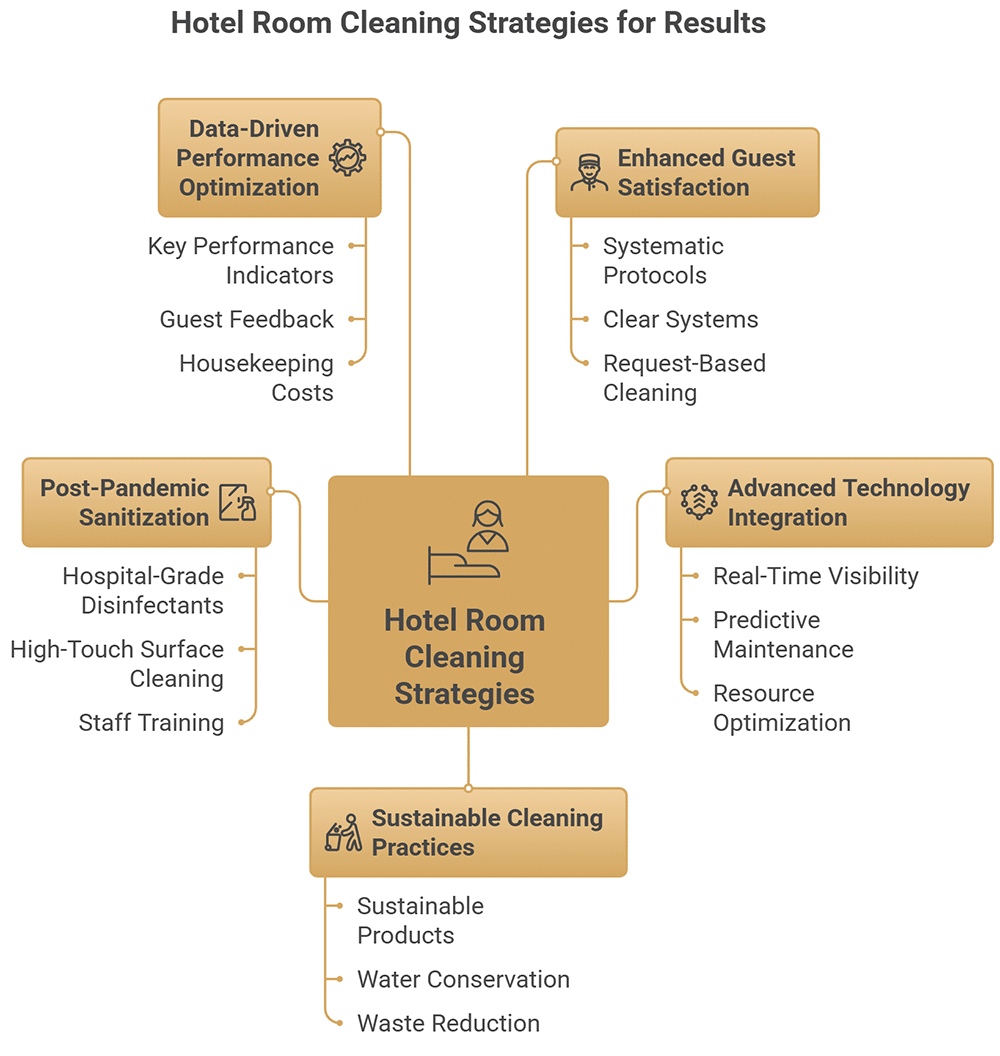
1. Enhanced Guest Satisfaction Through Systematic Protocols
Standard operating procedures and systematic protocols for hotel room cleaning can enhance guest satisfaction. These protocols help to ensure that surfaces, fixtures, and amenities all receive the attention they need.
Having clear systems in place is important for consistency, so every guest experiences the same level of care and attention. It also helps your housekeeping team to develop a routine, which boosts efficiency.
You should also have clear protocols in place for when rooms are cleaned. This is important because an AHLA survey found 88% of guests would feel more comfortable if hotel room cleaning during their stay was by request only.
2. Advanced Technology Integration for Operational Excellence
Integrating advanced technology into your hotel room cleaning can greatly improve results. In particular, modern hotels need to move away from traditional cleaning towards a data-driven approach.
Technology is important for everything from understanding the status of each room in real-time to communicating needs to housekeeping staff. It can help you to optimize your use of resources and cleaning materials.
For example, Hilton makes use of “Connected Room” technology, allowing housekeeping staff to gain real-time visibility into room status. It also offers predictive maintenance alerts, so significant maintenance work is minimized.
3. Sustainable Cleaning Practices for Environmental Responsibility
Taking steps to implement sustainable cleaning practices can boost your reputation for environmental responsibility. This can include using sustainable cleaning products, conserving water, and finding ways to reduce waste.
Sustainability is playing a growing role in daily hotel room cleaning services because the issue matters to guests. By highlighting your use of sustainable practices, you can potentially appeal to eco-conscious travelers.
In fact, over 80% of travelers now believe sustainable travel is important, according to Statista. Failing to use sustainable cleaning practices has the potential to put guests off, which will cost you revenue.
4. Post-Pandemic Enhanced Sanitization Standards for Your Property
In the aftermath of the COVID-19 pandemic, there are new baseline standards for hotel room cleaning. Examples include using hospital-grade disinfectants and placing a greater emphasis on cleaning high-touch surfaces.
Enhanced sanitization is especially valuable in an age where guests have heightened awareness and anxiety about germs and viruses. Using cutting-edge methods can put their minds at ease and minimize negative feedback.
Maintaining enhanced sanitization standards requires comprehensive staff training. You will need to make sure the hotel housekeeping team knows how to use the latest products and technology to keep standards high.
5. Data-Driven Performance Optimization for Your Hotel
In addition to using data to enhance communication, you should also use it to optimize hotel room cleaning performance. This means developing key performance indicators and referring to these metrics to inform your actions.
Adopting a data-driven approach allows you to achieve continuous improvement. It also means you can more easily identify issues and address them quickly, so you keep guest satisfaction levels high.
Examples of metrics to focus on include guest feedback and reviews, housekeeping costs, and room cleaning time for each room. You may also look for a correlation between the time taken to clean a room and guest satisfaction rates.
How Hotels Can Maintain Cleaning Standards During Disruption
Housekeeping strategy becomes even more important during periods of disruption, such as labor shortages, sudden occupancy swings, or health-related concerns. Hotels need cleaning systems that remain consistent even when staffing levels are tight or demand patterns change quickly. WTTC’s workforce forecast suggests this challenge will not disappear soon, because hospitality labor shortages are expected to remain a long-term issue.
To maintain standards during disruption, hotels should rely on clear checklists, role-based training, stronger room-priority systems, and better use of real-time operational data. The goal is to protect guest trust even when conditions are difficult. For many hotels, resilience in room cleaning is no longer just an operational issue. It is part of brand protection and revenue protection as well.
Video: Hotel Room Cleaning Sequence │ Instructional Video
11 Hotel Room Cleaning Tips Every Hotelier Should Know
Over the years, hoteliers have developed tried and tested techniques which continue to influence how hotels clean guest rooms. Here, you can access 11 top tips to optimize your hotel room cleaning and boost guest satisfaction:
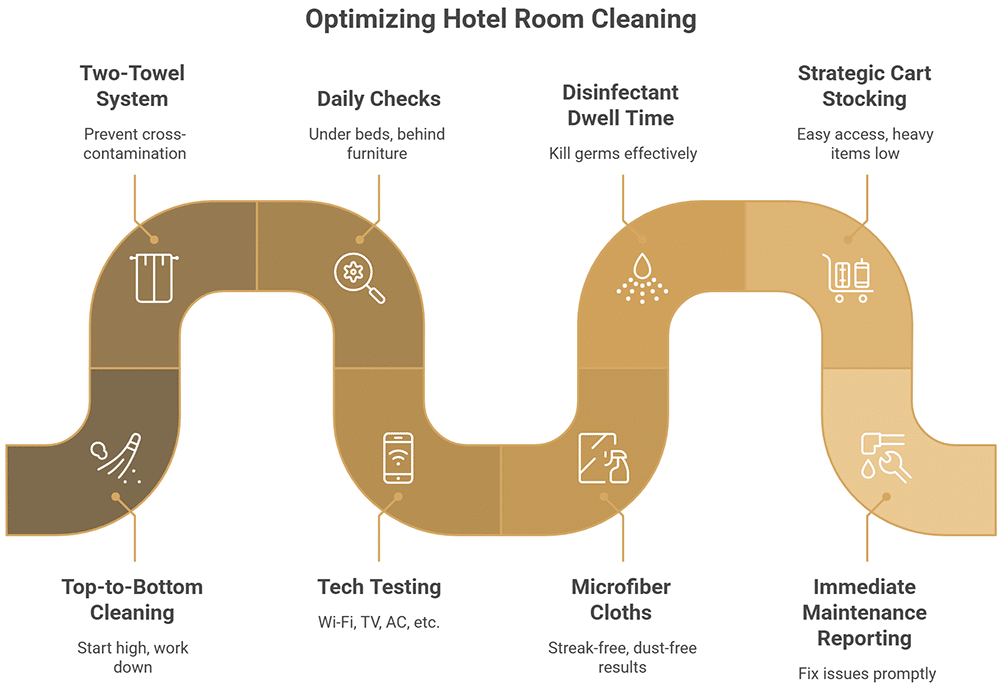
- Clean Top to Bottom, Back to Front: Begin your hotel room cleaning from the highest surfaces and work down. You should also start at the back of the room and work towards the door.
- Use the Two-Towel System for Bathrooms: To prevent cross-contamination and maintain high standards of hygiene, you should always use one towel to wipe mirrors and fixtures in the bathroom and another for the floor and toilet.
- Check Under Beds and Behind Furniture Daily: Check for obvious signs of dirt or debris under beds, behind bedside tables, and down the side of chair cushions.
- Replace Remote Control Batteries Regularly: Create a schedule for replacing the batteries on remote controls and make this part of your hotel room cleaning process.
- Test All Technology Before Marking Rooms as Ready: Check in-room technology before releasing the room for the next guest. Examples include Wi-Fi, the television, air conditioning controls, and other electrical appliances in the room.
- Use Microfiber Cloths for Streak-Free Results: When cleaning surfaces like mirrors, use microfiber cloths to prevent streaks. These cloths are also better at removing dust and bacteria.
- Leave Cleaning Products for Sufficient Time: Make sure you are leaving cleaning products on surfaces for the amount of time recommended by the manufacturer.
- Stock Your Housekeeping Carts Strategically: Arrange the items on your housekeeping carts so the most frequently used items are always within easy reach.
- Document Any Maintenance Issues Immediately: Make sure hotel housekeeping staff know to report issues right away, so maintenance staff have time to carry out repairs.
- Pay Special Attention to High-Touch Surfaces: Focus on light switches, door handles, remote controls, bathroom fixtures, and other surfaces where germs can build up easily.
- Set Hotel Room Cleaning Times Based on Type: Your hotel will likely have different room types, which require different cleaning times, so plan accordingly.
If you want to learn more about hotel room cleaning tips, read the article “Hotel Room Cleaning Tips for Meeting & Exceeding Guests’ Expectations.”
AI and Technology in Hotel Room Cleaning: What’s Changing Now
Artificial intelligence and robotics are no longer just future ideas in hotel room cleaning. They are becoming part of real hotel operations, and hoteliers need to understand how this change is developing.
One of the biggest reasons for this shift is the ongoing labor shortage in hospitality. According to the American Hotel & Lodging Association’s State of the Industry report, the U.S. hotel industry is still short by around 200,000 workers compared to pre-pandemic levels. Housekeeping is one of the roles most affected.
Hotels are now using more housekeeping technology to support cleaning operations. This includes robotic vacuum cleaners for corridors and public spaces, UV-C disinfection systems in higher-risk areas, and AI-powered scheduling tools that assign rooms based on occupancy and departure times. New robotic solutions are also being developed for in-room cleaning tasks, including bathrooms and floors.
For most hotels, the goal is not to replace housekeeping staff. The main goal is to support them. Technology can handle repetitive and time-consuming tasks, while human housekeepers focus on detailed cleaning, room inspections, and the service quality that still depends on human care and judgment.
If you want to find more information about housekeeping technology, read the article “Housekeeping Technology; The Latest Tech Used in Hotel Housekeeping.”
Training and Quality Control for Housekeeping Teams
Implementing a training program and a standardized system for quality control can help you deliver consistent performance with your hotel room cleaning efforts:
- Structured Onboarding: New employee orientation should cover cleaning techniques, technology usage, and safety protocols. This allows new recruits to get up to speed quickly.
- Continuous Development: Training and other ongoing education efforts should highlight changes in processes, new cleaning products, new technology, and opportunities for career advancement.
- Daily Supervisor Inspections: Regular assessment of hotel room cleaning helps to keep standards high. Use a checklist with photo documentation to assist with feedback.
- Weekly Management Audits: On a week-by-week basis, take stock of overall performance, look for any noteworthy trends, and track key performance indicators to understand changes in standards.
- Multi-Level Quality Checks: Combine supervisor inspections, management audits, and housekeeping self-assessment to build up a comprehensive view of hotel room cleaning standards in your property.
Video: A Day in the Life of a Housekeeper
Hotel Rooming List: An Essential Tool for Guest Management
A hotel rooming list is a document that allows you to manage group hotel bookings effectively. Using this list, you can manage room allocation, easily access guest information and special requests, and plan for the arrival and departure of the group. You can also use this list to plan your hotel room cleaning efforts.
In the “Hotel Rooming List: Essential Guide for Efficient Guest Management” article, you can access an overview of what these documents are, why they exist, and how you can put them to good use for guest management.
Hotel Room Maintenance Checklist: Strategies and Templates
Hotel room cleaning and maintenance go hand-in-hand. Performing routine maintenance checks is a core responsibility of the housekeeping department, and any maintenance issues need to be flagged so maintenance staff can take action. High-quality checks should make use of a checklist to optimize preventative maintenance.
In the “Hotel Room Maintenance Checklist: Ensuring Comfort and Quality” article, you will be able to learn more about the value of these checklists and find an adjustable template you can use for your own lists.
FAQs Related to Hotel Room Cleaning
Hotel room cleaning can have a significant bearing on customer satisfaction levels and guest loyalty. With the right strategies and training, you can make your hotel more hygienic, visually appealing, and safe. This should include taking a data-driven approach, using the latest technology, and creating a robust cleaning policy.
Did You Like This Article About Hotel Room Cleaning?
You might also be interested in the following articles:
- Housekeeping Duties: Main Responsibilities of a Room Attendant
- Room Attendant Guide; Meaning, Job Description, Duties & Technology
- Housekeeping Department in Hotel Businesses: Why Is It So Important?
More Tips to Grow Your Business
Revfine.com is the leading knowledge platform for the hospitality and travel industry. Professionals use our insights, strategies, and actionable tips to get inspired, optimize revenue, innovate processes, and improve customer experience.Explore expert advice on management, marketing, revenue management, operations, software, and technology in our dedicated Hotel, Hospitality, and Travel & Tourism categories.
This article is written by:

Hi, I am Martijn Barten, founder of Revfine.com. With 20 years of experience in the hospitality industry, I specialize in optimizing revenue by combining revenue management with marketing strategies. I have successfully developed, implemented, and managed revenue management and marketing strategies for individual properties and multi-property portfolios.






Leave A Comment