



How Do Hotels Build a Corporate Sales Strategy
Hotels build a corporate sales strategy by identifying companies with recurring room night demand, negotiating rates that maintain both volume and yield, and managing those accounts as a portfolio rather than a stack of one-off RFP responses. A hotel corporate sales strategy is the organized plan a property uses to win, price, and grow bookings from corporate travel programs. Key Takeaways: Corporate business is won through account management discipline, not through offering the deepest

Discover Hotel Marketing Trends Reshaping the Future of Hospitality in 2026
Hotel marketing is key in helping you attract bookings and optimize revenue. For the most part, your marketing messages are how customers will become aware of your hotel and also how they will understand your values and unique selling proposition. Of course, to optimize your marketing, you need to be aware of the latest hotel marketing trends for 2026. In this article, you can learn about the more general trends within hotel marketing and those

How Can Hotel Local Partnerships Drive More Bookings
Hotels drive more bookings from local partnerships by turning nearby businesses, employers, venues, and attractions into formal referral and distribution channels. A hotel local partnership is a commercial arrangement in which a local organization sends guests to your property in exchange for reciprocal value. Managed as a real channel, it produces direct demand no OTA can tax. Key Takeaways: Local partnerships convert demand that already exists around your property into direct bookings OTAs can't commission.

How Much Should Your Hotel Marketing Budget Really Be?
A hotel marketing budget is the annual amount a property commits to acquiring and retaining guests, typically between 4 and 8 percent of total revenue. The percentage matters less than what it buys. Every point you underspend on direct demand generation, you repay to intermediaries in commission, usually at a higher rate. Key Takeaways: The 4 to 8 percent benchmark is a starting anchor, not a target your property should defend on principle. Separate
Discover Hotel Marketing Trends Reshaping the Future of Hospitality in 2026
Hotel marketing is key in helping you attract bookings and optimize revenue. For the most part, your marketing messages are how customers will become aware of your hotel and also how they will understand your values and unique selling proposition. Of course, to optimize your marketing, you need to be aware of the latest hotel marketing trends for 2026. In this article, you can learn about the more general trends within hotel marketing and those that have emerged as a result of the coronavirus. Table of Contents: What is Hotel Marketing? Why is Hotel Marketing Important? 24 Hotel Marketing Trends

How Much Should Your Hotel Marketing Budget Really Be?
A hotel marketing budget is the annual amount a property commits to acquiring and retaining guests, typically between 4 and 8 percent of total revenue. The percentage matters less than what it buys. Every point you underspend on direct demand generation, you repay to intermediaries in commission, usually at a higher rate. Key Takeaways: The 4 to 8 percent benchmark is a starting anchor, not a target your property should defend on principle. Separate

How Can a Hotel AIO Strategy Get Your Property in AI Answers
Hotel AI search optimization is the practice of making a property's website, listings, and public facts easy for AI search systems to discover, interpret, verify, and cite. A hotel AIO strategy turns that practice into a repeatable operating process. It helps your hotel earn visibility in conversational answers without replacing proven search engine optimization. Key Takeaways: Hotel AI search optimization extends SEO by governing every machine-readable signal describing your property. A hotel AIO strategy

Beyond the Harbor: Exploring the Hidden Corners of Hvar Town
Hvar Town is often described as the crown jewel of the Adriatic, and anyone who has strolled through its marble streets understands why. Beyond the postcard views of the harbor lined with yachts and the imposing Spanish Fortress overlooking the bay, the Old Town hides a maze of stone alleys,
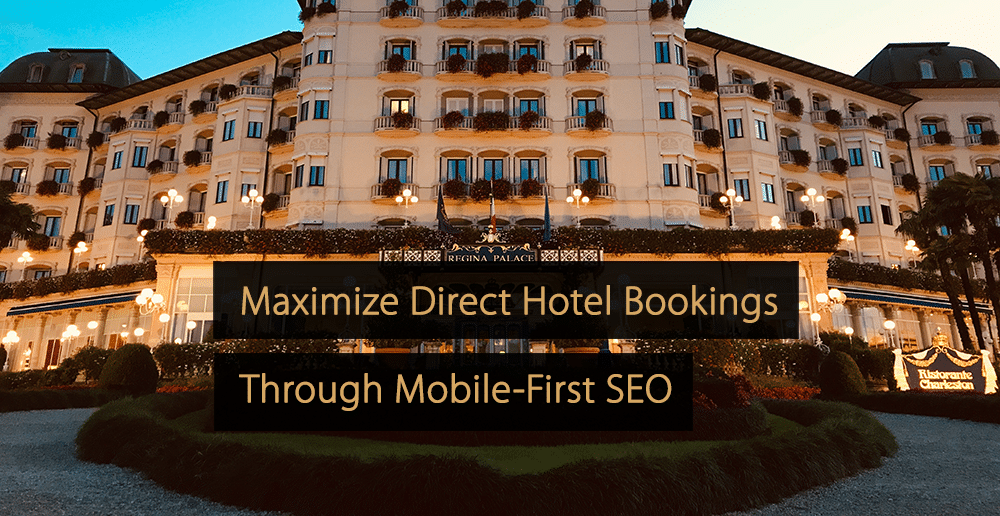
Maximize Direct Hotel Bookings Through Mobile-First Web Design and SEO
Direct hotel bookings give properties greater control over revenue, guest relationships, and long-term profitability. As travelers increasingly search and book on smartphones, hotels need websites that load quickly, rank well, and make reservations effortless on smaller screens. A mobile-first web design strategy, supported by technical SEO, can help properties reduce

Hotel Rate Shopping: 8 Reasons Competitor Rate Data Is Wrong
Rate shopping is the practice of collecting the published rates of competing hotels across the channels where guests actually book, so that pricing decisions rest on the live market rather than on last year's assumptions. Nearly every revenue management system now includes it, and nearly every revenue manager has at