


Long flights, time zones, and unfamiliar scripts can make your first hours in Japan feel like a blur. Yet those first two days also set the tone for the rest of your trip. With a little planning, you can move from jetlagged and overwhelmed to quietly confident much faster than you’d expect.
This guide walks through a realistic first 48 hours in Japan — from stepping off the plane to your first bowl of ramen and beyond — with a focus on simple habits that make everything easier.
Arrival: From Airplane Door to City Train
Most international flights land at Tokyo’s Narita or Haneda airports or at Kansai Airport near Osaka. No matter where you arrive, your first tasks are the same: clear immigration, pick up your luggage, find cash, and then figure out how to reach your first hotel.
A few tips that help right away:
- Have Your Hotel Address in Japanese and English: Many hotels list both on their website; a screenshot on your phone can smooth conversations with taxi drivers or station staff.
- Withdraw a Modest Amount of Cash At An Airport ATM: Convenience store ATMs (7Eleven, Lawson, FamilyMart) are usually compatible with foreign cards and tend to offer fair exchange rates.
- Follow the Train Icons: Major airports have clear English signage for rail and bus connections. If you’re tired, airport limousine buses can be less stressful than navigating city trains straight away.
Getting Your Bearings: Staying Connected Without Overthinking It
Once you leave the terminal, having working mobile data removes a lot of friction. You’ll need it for maps, train apps, translation, and, let’s be honest, sending that first “we made it” photo home.
Some travelers still pick up a physical SIM or pocket WiFi at the airport, but if your phone supports it, installing a travel eSIM before you leave home can simplify those first hours: you scan a QR code or install a plan while on your home WiFi, then your phone connects automatically as soon as you switch off airplane mode in Japan. You keep your original number for calls and texts, and use the eSIM only for local data.
If you want to explore Japan-specific options in advance, you can look at dedicated services such as Japan eSIM plans designed for visitors, which let you set up data before you fly and avoid searching for a SIM counter when you land.
Whether you go with eSIM, a local SIM, or a portable hotspot, sorting out connectivity early means you can spend more time looking up at your surroundings and less time hunting for free WiFi networks in a daze.
Day 1 Afternoon: Check-in, Reset, and Go Small
Jet lag is real, especially if you’ve crossed the Pacific from North America or Europe. Instead of trying to “do Tokyo” on day one, aim for small wins.
- Check into Your Accommodation and Unpack A Little: Even ten minutes of settling in helps your brain register that this is now home base.
- Take a Short Walk Around Your Neighborhood. Note the nearest convenience store, train or subway station entrance, and any cafés that look appealing.
- Eat Something Simple and Local. Chain restaurants and department store food halls are great first stops: picture menus, plastic food displays, and ticket machines take the pressure off ordering.
If you can, stay awake until early evening local time, then sleep. Your body will thank you on day two.
Day 2: Learning To Ride the Rails
Japan’s rail system looks intimidating at first glance, but once you understand a few basics, it becomes one of your best allies.
- Get an IC Card: Suica, PASMO, and their regional equivalents work like contactless travel cards; you tap in and out of most trains, subways, and buses. Many foreign visitors can now use digital versions inside apps, but physical cards from machines still work well.
- Start With A Simple Route: For your first outing, choose a single line with no transfers — for example, a short hop to a well-known district or attraction — so you can get used to platforms, signage, and announcements.
- Use Station Exits As Landmarks: Major stations have many exits; your hotel or chosen destination will usually recommend a specific one. Take a photo of the sign the first time you use it.
Once you’ve done one or two short journeys, longer rides to places like Asakusa, Ueno, Shinjuku, or Kyoto start to feel much less daunting.

Eating Well Without Reading Kanji
You don’t need to read Japanese to eat well in Japan, but having a strategy helps.
- Look for places with picture menus or counter displays. Many ramen shops, curry restaurants, and casual chains display dishes visually.
- Vending machine tickets are your friend. In some restaurants, you choose your meal on a machine near the entrance, pay, and then hand the ticket to the staff. If you’re unsure, it’s fine to watch what locals do and copy them.
- Learn a couple of key phrases. Simple words like “sumimasen” (excuse me) and “arigatou gozaimasu” (thank you) go a long way and ease the pressure of ordering.
Don’t worry too much about getting it perfect; staff are generally patient with visitors, especially in areas used to tourists.
Building in Quiet Moments
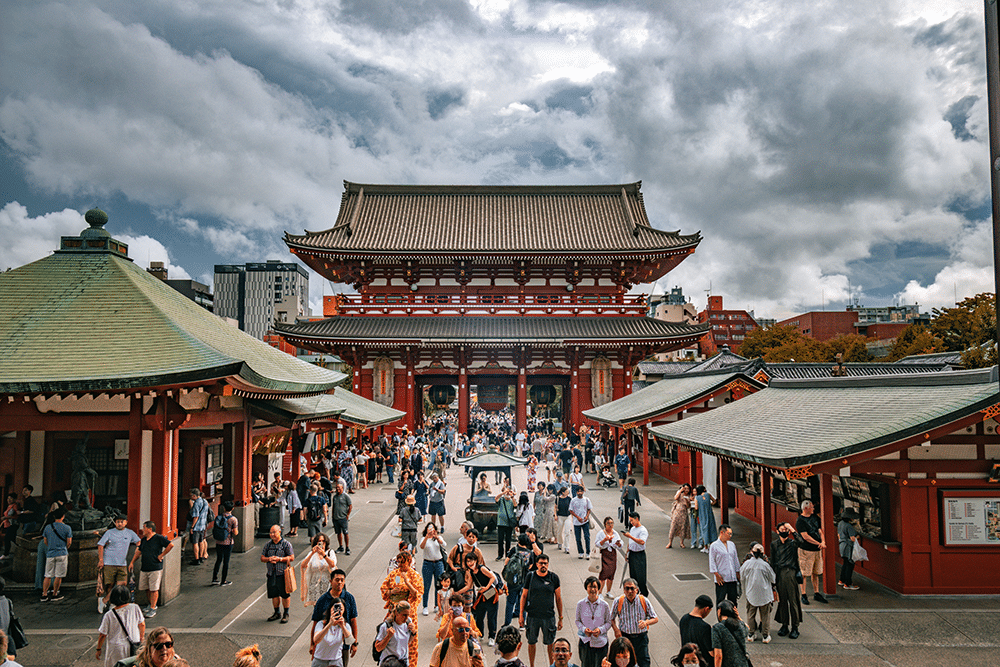
It’s tempting to stack your first days with big sights: Sensoji, Fushimi Inari, and the Shibuya Crossing. But some of Japan’s most memorable experiences are quieter.
Consider balancing your schedule with:
- A local park or garden near your accommodation, where you can sit, adjust to the time zone, and watch daily life unfold.
- A neighborhood shotengai (shopping street), often covered and full of small shops and snack stalls.
- An evening soak in your hotel or a nearby bathhouse has an onsen or sento (check etiquette beforehand).
These pauses give your senses time to catch up with everything that’s new.
Leaving Room For the Unexpected
Perhaps the most useful thing you can bring into your first 48 hours in Japan is a flexible attitude. Trains may be delayed, you may get off at the wrong exit, or you might end up in a tiny bar you’d never find again on a map.
With a few basics in place, an address written down, a working internet connection, a rough grasp of trains, and a little cash in your wallet, those detours stop feeling like disasters and start becoming stories. You don’t have to “conquer” Japan in two days. You just have to arrive, pay attention, and give yourself enough space to enjoy where you’ve landed.
Your first 48 hours in Japan do not need to feel overwhelming. With mobile data ready, simple transport plans, light sightseeing, and room for rest, you can settle in smoothly and start enjoying Japan with confidence from day one.
More Tips to Grow Your Business
Revfine.com is the leading knowledge platform for the hospitality and travel industry. Professionals use our insights, strategies, and actionable tips to get inspired, optimize revenue, innovate processes, and improve customer experience.Explore expert advice on management, marketing, revenue management, operations, software, and technology in our dedicated Hotel, Hospitality, and Travel & Tourism categories.






Leave A Comment