

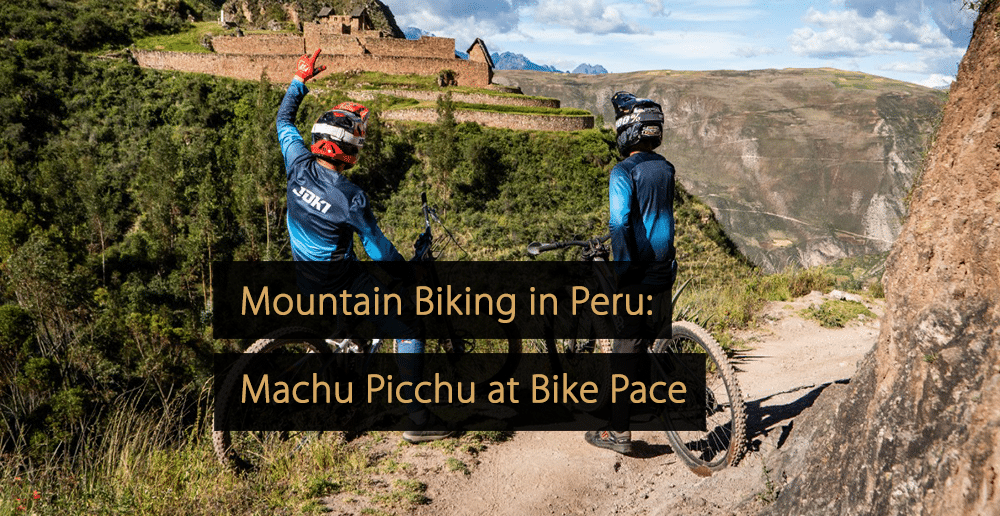
Mountain biking in Peru offers a slower, more physical way to understand the land around Machu Picchu. Instead of passing through the Sacred Valley by train, riders can move through high-altitude routes, rural villages, lagoons, Inca stone paths, and technical descents at their own pace. From easy e-bike rides near Cusco to demanding enduro trails in Lamay and Maras, the journey adds depth, movement and adventure before reaching Peru’s most famous archaeological site.
Why Mountain Biking Offers a Different Way to Experience Machu Picchu
The train to Machu Picchu crosses part of the Sacred Valley in a few hours. Through the window, you see the Urubamba River, maize fields, cultivated hillsides, and small villages that appear briefly before slipping from view. It is a beautiful journey, though a fast one. On a bicycle, that same map takes on a different scale. Cusco, the former capital of the Inca Empire, sits at about 3,400 meters above sea level (11,150 ft). From there, travelers reach the Sacred Valley, a region of villages, farmland, mountains, and hundreds of archaeological sites spread along the Urubamba River before Machu Picchu. There are also high-altitude lagoons, rural tracks, and routes that descend from the mountains into the valley. That variety explains why Cusco has become an interesting destination for mountain biking. A visitor can move from historic streets and city viewpoints to dirt roads, farming communities, and trails that require real technical skill. Machu Picchu remains a major moment in the trip, while the territory around it offers plenty for anyone who wants to explore it on two wheels.
From Cusco’s High Country to the Sacred Valley
The routes move through more than one type of landscape. At higher elevations, there is cold air, grassland, lagoons, and open mountain terrain. Lower down come crops, wooded stretches, villages, and a warmer climate. The ground changes throughout the ride, too. There are compacted dirt roads, loose gravel, open corners, narrow singletrack, and stone sections that demand careful handling.
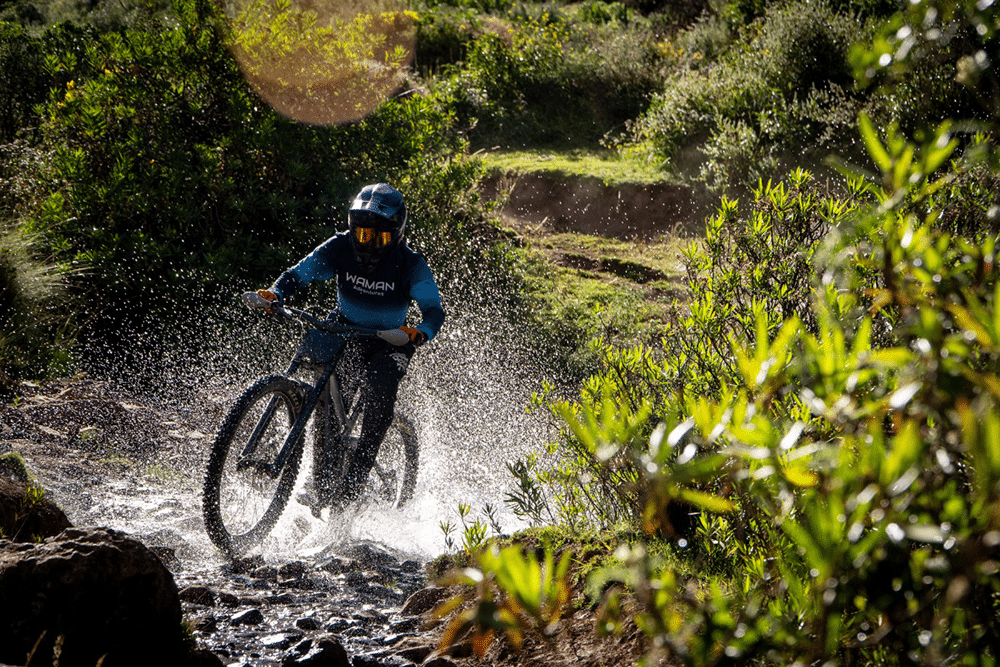
Lamay illustrates this mix well. It is a rural village in the Sacred Valley, surrounded by mountains that descend towards the Urubamba River. Its enduro routes begin on higher ground and drop through technical singletrack, rock, Inca stone stairways, and eucalyptus forest. It suits cyclists who already feel comfortable on a mountain bike over uneven terrain and know how to brake, take tight corners, and pick a line through rocks.
Maras, Perolniyoc, and Yuncaypata are other areas known among local riders. Maras combines descents with broad views across the Sacred Valley. Perolniyoc follows mountain paths near a waterfall and Inca archaeological remains. Yuncaypata sits closer to Cusco and offers routes with panoramic views over the city. Each area has its own terrain, altitude, and level of challenge.
Riding these routes also means understanding the environment. The paths cross communities, small farms, grazing areas, and spaces used every day. Cyclists share the terrain with local residents, animals, and agricultural activity. Riding here means learning how to move through a territory that is still living its history.
E-bikes, Enduro and Downhill
An e-bike is an electric bicycle with pedal assistance. The motor helps on climbs, while the rider still steers, brakes, and chooses their line. This format works well for travelers who want to experience high-altitude landscapes without having the physical effort of the ascent define the whole day.
The Pisac Lagoons route reaches 4,200 meters (13,779 ft) and covers around 22 kilometers (13.6 miles). It covers around 22 kilometers on rural paths and mountain tracks and is designed as a low-difficulty e-bike ride. It can work well for someone beginning to take an interest in mountain biking, for a couple with different fitness levels, or for a group looking for an active day before visiting Machu Picchu.
Enduro and downhill belong to a different kind of experience. Enduro combines technical descents with linking sections between trails. Downhill focuses on descending more direct and demanding terrain. Both require previous experience, a full-suspension bike, an appropriate helmet, and, depending on the route, knee pads, elbow pads, or a full-face helmet.
Someone used to cycling on bike paths may enjoy a scenic e-bike outing but will probably find a Lamay or Maras descent too demanding. A rider already comfortable on technical singletrack will be looking for rock, elevation change, stone stairways, and fast corners. That is why it is worth discussing real experience before booking, rather than fitness alone. The number of days spent in Cusco, the type of bike normally used and the rider’s comfort with risk all matter.
Altitude Is Part of the Experience
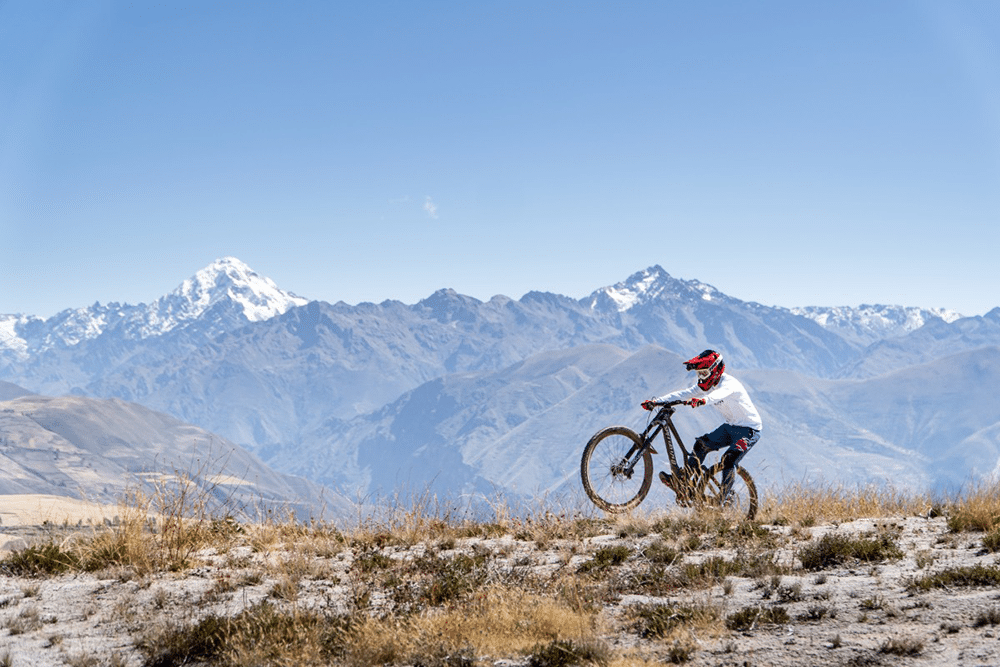
Above 3,300 meters, the body responds differently. Fatigue can arrive sooner, a short climb can feel longer than expected, and recovery may take more time. The first days in Cusco are often best used for acclimatization through lighter activities, short walks or a scenic e-bike outing. After one or two days, many travelers feel more comfortable taking on a longer or more technical route.
The weather also shifts during the day. The morning can start cold, the midday sun can be intense, and the afternoon may bring wind or rain. Water, sunscreen, light layers, a helmet, gloves, and a well-adjusted bike are all part of preparation. A local guide can check equipment, explain the terrain and adapt the group’s pace.
A local agency specializing in mountain bike routes should distinguish clearly between scenic e-bike outings and enduro or downhill routes. Duration, altitude, terrain type, equipment, and difficulty level are basic details to consider before booking. Multi-day programs also require a realistic look at the technical level, acclimatization days, and the kind of experience each cyclist wants.
For anyone looking for a mountain biking specialist in Cusco, that information makes it easier to choose a ride that suits both the cyclist’s level and the timing of the trip.
Machu Picchu Comes Later
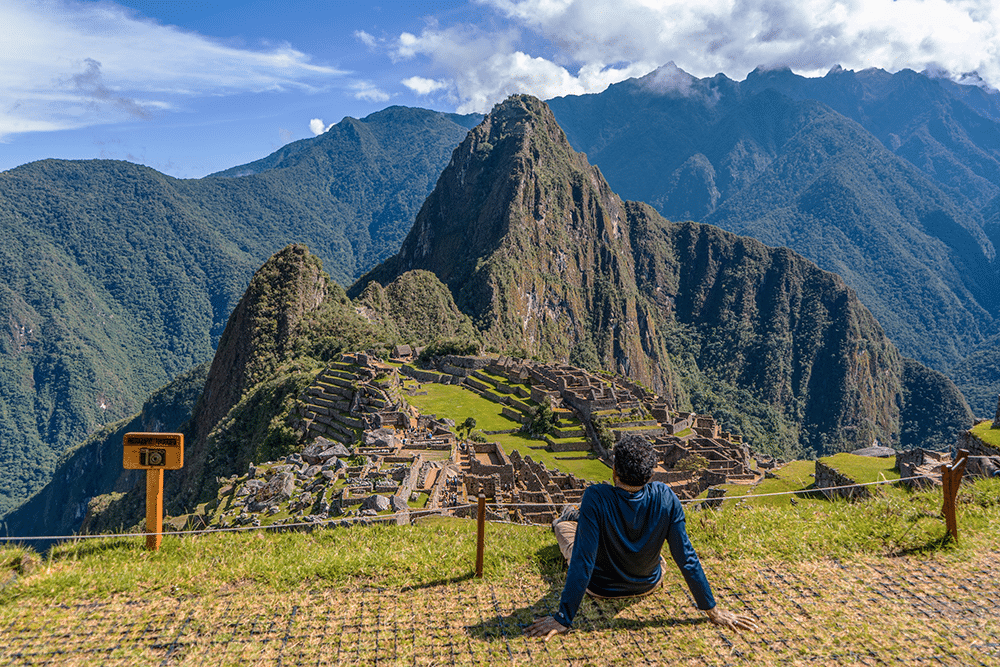
Machu Picchu is visited on foot and loses none of its force. After covering part of the Sacred Valley by bicycle, the citadel appears within a broader geography. You have already felt the altitude, seen the rural paths, and understood how much the mountains change between Cusco and the Urubamba.
Before Machu Picchu come the trails, the lagoons, the dust, the sound of brakes on stone, and the Sacred Valley opening out beneath the bicycle.
Mountain biking adds a new layer to a Machu Picchu journey. By riding through Cusco, the Sacred Valley, lagoons, villages and technical trails, travelers experience the landscape more slowly, actively and personally before reaching one of Peru’s most iconic sites.
More Tips to Grow Your Business
Revfine.com is the leading knowledge platform for the hospitality and travel industry. Professionals use our insights, strategies, and actionable tips to get inspired, optimize revenue, innovate processes, and improve customer experience.Explore expert advice on management, marketing, revenue management, operations, software, and technology in our dedicated Hotel, Hospitality, and Travel & Tourism categories.






Leave A Comment