


Hospitality leaders often talk about personalization as if it begins when the guest walks through the door. In practice, the most useful signals appear much earlier: when the traveler books, prepares documents, checks airline rules, arranges transfers, shares arrival times, and decides what they need from the destination before they leave home. This is where the wider shift toward digital travel preparation becomes strategically important.
Turning eTravel Readiness Into Guest Insight
A traveler researching eTravel to the Philippines is not simply completing a pre-trip task; they are showing a clear intent to arrive prepared.
For hotels, resorts, destination management companies, and travel brands, that intent is valuable. It reveals a new commercial and operational opportunity: using pre-arrival moments to understand guest needs without becoming intrusive, promotional, or responsible for formal travel advice.
The Hidden Value of “Before the Trip” Behavior
For many hotels, pre-arrival communication is still built around the booking record. The PMS shows dates, room type, rate code, guest name, perhaps a loyalty profile, and sometimes an expected arrival time. Useful, but incomplete.
The modern guest journey produces richer signals. A guest traveling with children may ask about late meals, connecting rooms, airport transfers, or quiet check-in. A long-haul guest may want mobile confirmations saved offline. A business traveler may prioritize fast Wi-Fi, invoice accuracy, workspace, and predictable transport. A first-time visitor may need reassurance about arrival flow, local currency, connectivity, or hotel location.
These signals do not need to be collected through heavy forms. They can emerge naturally through short pre-arrival questions, consent-based messaging, preference centers, booking add-ons, and guest service conversations. The key is to treat them as service data, not just marketing data.
Why Data Minimization Can Improve Personalization
It may sound contradictory, but collecting less data can lead to better personalization. The point is not to know everything about a guest. It is to know the right things at the right time. A resort does not need a complex profile to know that a guest arriving at 11:30 p.m. may appreciate a late check-in meal option.
A city hotel does not need a full lifestyle survey to understand that a traveler landing early may want luggage storage or early check-in information.
A destination management company does not need sensitive personal details to segment guests by arrival airport, transfer type, or tour start time.
Revfine’s guidance on data collection for personalized guest experiences underlines the importance of transparency, consent, relevance, and restricted access when hotels collect guest data. That principle should sit at the center of any pre-arrival strategy: ask only for information that improves the stay, explain why it is useful, and make the benefit clear to the traveler.

The Mobile Screen Is Now the Real Pre-Arrival Desk
The hotel front desk has always been a place of clarification. Guests arrive, ask questions, confirm details, and resolve uncertainty. But many of those conversations now happen on a mobile screen days before travel.
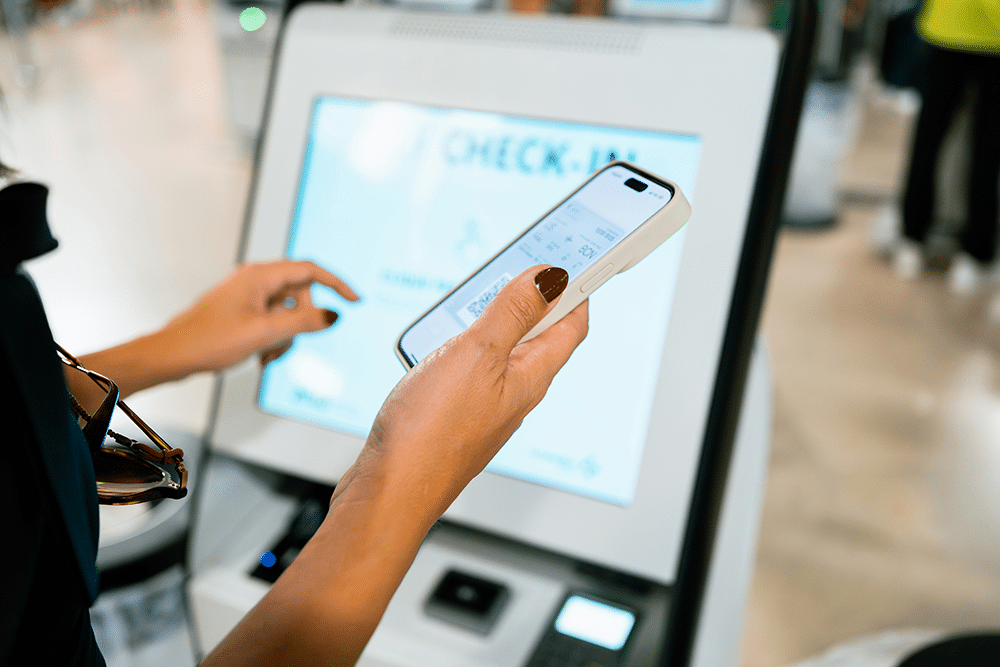
IATA’s 2025 Global Passenger Survey reported that passengers are increasingly managing travel through smartphones, with mobile channels, digital identity, payments, check-in, immigration, boarding, and baggage all becoming part of the connected journey. The same survey also highlighted the importance of trust and cybersecurity as digital travel expands. This matters to hospitality because guest expectations do not stop at the airport. If the airline journey feels mobile-first, guests expect the hotel journey to feel equally coherent.
A hotel’s pre-arrival message should therefore be designed like a mobile service tool, not a newsletter. It should be short, scannable, and action-led. Instead of long paragraphs, guests need clear prompts: confirm your arrival time, save the hotel address, arrange your transfer, tell us about a late arrival, check what you need before flying, and review any destination-specific preparations independently.
A Different Way to Segment Guests
Traditional segmentation focuses on market, channel, room type, loyalty status, or purpose of travel. Those categories remain useful, but pre-arrival readiness introduces another layer: how much support the guest needs before they arrive.
A “high-readiness” guest may complete online check-in, add arrival time, book transport, and open key pre-arrival messages. This traveler may be ready for experience-based offers: dining, wellness, tours, or room upgrades.
A “medium-readiness” guest may have confirmed the booking but not shared travel details. This traveler may need a short nudge: arrival planning, airport transfer options, and a reminder to verify travel requirements.
A “low-readiness” guest may ignore messages, arrive without clear transport, ask basic destination questions, or contact the hotel repeatedly. This traveler may need proactive but careful support, especially for late arrivals, family travel, or multi-leg itineraries.
This segmentation is operationally useful because it prioritizes staff attention. Instead of sending the same pre-arrival content to everyone, hotels can focus the most helpful prompts on the guests most likely to experience friction.
Compliance Without Becoming a Compliance Provider
There is a clear boundary that hotels should not cross. They should not interpret entry rules for individual guests, guarantee travel outcomes, or collect unnecessary documentation. However, they can still support compliance-adjacent readiness.
The right language is neutral and service-oriented. For example, a hotel might write: “Before traveling, please make sure you have checked the latest airline and destination requirements that apply to your trip. For hotel arrival support, we can help with transfers, late check-in, luggage storage, and local arrival information.
This kind of wording avoids overpromising while still acknowledging the reality of modern travel. Guests do not expect hotels to control border systems, but they do value brands that help them prepare intelligently.
How to Build a Pre-Arrival Data Loop
A practical readiness system can be built in stages.
First, map the questions guests already ask before arrival. These may come through reservations, WhatsApp, email, call centers, travel agents, or social media. Repeated questions are signals that existing communication is unclear.
Second, identify which questions create operational costs. Do missed transfer details delay drivers? Do late arrivals create food and beverage complaints? Do guests arrive without knowing local payment expectations? Do families repeatedly request amenities on check-in that could have been prepared earlier?
Third, convert those friction points into short pre-arrival prompts. The best prompts are not generic reminders; they are decision aids. “Will you arrive after 10 p.m.?” is more useful than “Let us know if you need anything.”
Fourth, connect the responses to service delivery. Data that sits in a marketing platform but never reaches operations will not improve the stay. If a guest requests a baby cot, a late meal, or a transfer, the relevant team must see it in time.
Finally, review the outcomes. Look at transfer fulfillment, arrival-day complaints, upsell conversion, first-night spend, guest satisfaction, and staff workload. The aim is not to create more messages. It is to remove avoidable uncertainty.
The Strategic Opportunity
Pre-arrival data sits at the intersection of guest experience, revenue management, operations, and compliance awareness. Used poorly, it becomes another layer of digital noise. Used well, it helps guests feel prepared, gives staff better context, and creates more relevant commercial opportunities.
For destinations such as the Philippines, where international arrivals may involve long-haul travel, island itineraries, mobile-first planning, and multiple handoffs among airlines, airports, transfers, and hotels, this matters even more. The brands that win will be those that see travel preparation not as an external inconvenience, but as part of the guest journey.
The future of hospitality personalization is not just about remembering a pillow preference. It is about understanding what the guest needs before they arrive, asking for only the data that supports that need, and turning preparation into a smoother, calmer, more profitable stay.
Pre-arrival data is becoming one of hospitality’s most valuable assets. Hotels that use guest insights responsibly can reduce arrival friction, personalize services more effectively, improve operational efficiency, and create smoother, more memorable journeys that strengthen guest satisfaction, loyalty, and long-term revenue.
More Tips to Grow Your Business
Revfine.com is the leading knowledge platform for the hospitality and travel industry. Professionals use our insights, strategies, and actionable tips to get inspired, optimize revenue, innovate processes, and improve customer experience.Explore expert advice on management, marketing, revenue management, operations, software, and technology in our dedicated Hotel, Hospitality, and Travel & Tourism categories.





Leave A Comment