

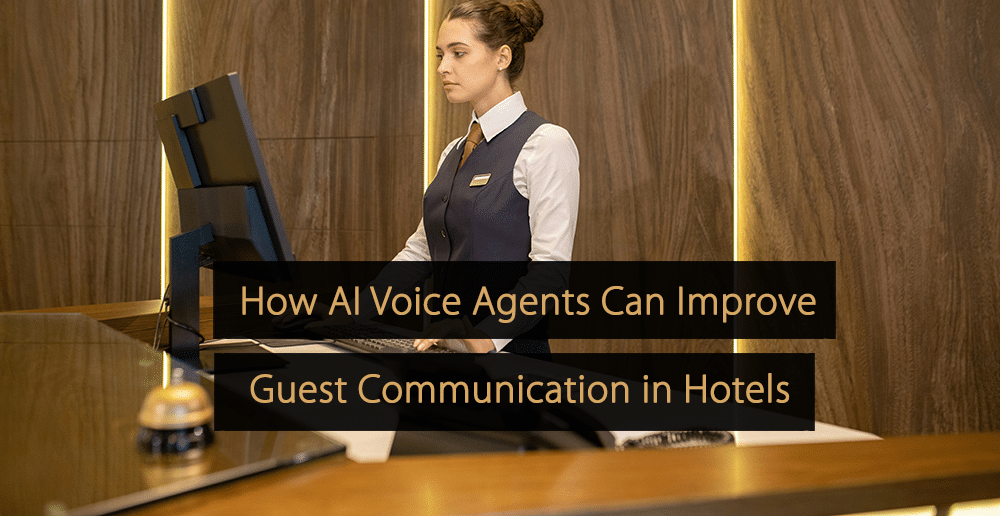
Guest communication is one of the first things people notice about a hotel. A guest may call before booking a room. Another guest may call after reaching the airport. Someone may ask about check-in time, breakfast, parking, Wi-Fi, room service, and many other small things. These questions may look simple, but they matter a lot. When guests get a clear answer quickly, they feel relaxed. They feel the hotel is active and helpful. But when no one answers the call, the experience starts badly, even before the guest enters the hotel.
This is where AI voice agents can help. They are not here to replace hotel staff. They are here to support them. Moreover, they can answer basic guest questions, take simple requests, and reduce call pressure on the front desk. For hotels, this can make daily work easier. For guests, it can make the whole stay smoother.
What Are AI Voice Agents?
AI voice agents are smart calling systems that can speak with guests over the phone.
They can listen to a question, understand it, and give a useful answer. They are much better than old phone menus, where guests have to press 1, press 2, and wait for the right option.
A guest can simply ask, “What time is breakfast?” The voice agent can answer with the correct timing.
A guest can ask, “Is parking available?” The voice agent can explain the parking details.
Hotels can use an AI voice agent to manage common guest calls in a simple and helpful way. It can answer normal questions and pass important calls to staff when needed.
This means guests do not have to wait for every small answer. It also means hotel staff can focus on guests who need real personal help.
Why Guest Communication Is So Important in Hotels
A hotel is not just about rooms and beds. It is also about comfort, trust, and service.
Good communication makes guests feel safe. It tells them that someone is there to help.
Think about a guest who is visiting a city for the first time. They may already be tired from travel. If they call the hotel and get a fast answer about directions, check-in, and parking, they feel better right away.
Now think about the opposite. The guest calls three times, and no one answers. This can create stress. The guest may start thinking the hotel service is poor.
That is why communication is so important.
It also affects reviews. Many guests write about how quickly the hotel helped them. They may not remember every small detail of the room, but they remember how they were treated.
Common Guest Communication Problems in Hotels
Look how hotel communication can become difficult when calls pile up, staff are busy, and guests need quick answers about their stay.
1. Long Waiting Time
Hotels are busy places. The front desk may be helping guests who are checking in. At the same time, another guest may be asking for towels. Someone else may be calling from outside.
During busy hours, calls can be missed.
For a hotel team, this is normal. But for the guest, it feels frustrating. They only know that no one is answering.
AI voice agents can help by picking up calls quickly. Even if the staff is busy, the guest can still get a reply to simple questions.
2. Too Many Repeated Questions
Hotel staff often answer the same questions again and again.
- What is the Wi-Fi password?
- What time is breakfast?
- Can I check in early?
- Is parking free?
- Do you have room service?
- What time is checkout?
These questions are simple, but they take a lot of time during the day. If staff members spend too much time on these calls, they may not have enough time for guests who need personal help.
A voice agent can answer these repeated questions without getting tired. It keeps the service fast and steady.
3. Language Issues
Hotels welcome guests from different cities and countries. Not everyone speaks the same language clearly.
Sometimes, a guest knows what they need but cannot explain it well. Sometimes, staff understand the question but struggle to reply in the guest’s language.
This can make the conversation slow.
AI voice agents can support different languages if set up correctly. This can help international guests feel more comfortable. It also makes the hotel look more guest-friendly.
4. Busy Staff
Hotel staff do many things in one day. They manage bookings, check-ins, checkouts, complaints, room updates, housekeeping calls, and guest requests.
It is not easy to handle all of this while also answering every phone call.
AI voice agents can take some of this load away. They can manage basic calls, so the staff can focus on the guest in front of them.
This helps the team work better without feeling rushed all the time.
How AI Voice Agents Improve Guest Communication
Here’s how AI voice agents can make hotel communication faster by answering common questions, handling simple requests, and keeping guests supported at any time.
1. They Answer Calls at Any Time
Guests do not always call during office hours.
Some guests arrive late at night. Some may call early in the morning. However, some may be in a different time zone and want to ask about booking details.
A voice agent can answer calls 24/7. This is useful for hotels that do not have a large night team.
For example, a guest may call at 1 AM to ask if late check-in is allowed. Instead of waiting until morning, the guest can get the answer right away.
This small thing can make the guest feel more confident.
2. They Help Guests Get Quick Answers
Most guest questions do not need a long conversation. They only need a simple answer.
AI voice agents can give that answer in a few seconds.
They can share details about:
- Check-in time
- Checkout time
- Breakfast timing
- Wi-Fi
- Parking
- Room service
- Hotel address
- Airport pickup
- Basic hotel rules
This makes communication faster. It also reduces pressure on the front desk.
3. They Make the First Impression Better
Many guests call before booking. This first call can decide whether they trust the hotel.
If the call is answered quickly, the guest may feel the hotel is professional. If the call is missed, they may move to another hotel.
A voice agent helps hotels avoid missed calls. It can answer common booking questions and guide the guest in the right way.
This can help the hotel get more booking chances.
4. They Support Staff During Busy Hours
There are times when hotel staff cannot pick up every call. This often happens during check-in time, checkout time, weekends, and holiday seasons.
A voice agent can handle the simple calls during these busy hours.
For example, if five guests call at the same time, the system can still answer basic questions. Staff can then handle the calls that need personal attention.
This makes the service smoother for both sides.
5. They Help Guests Feel Heard
A guest does not always need a perfect answer. Many times, they just want to feel heard.
If a guest calls and gets a polite response, they feel that the hotel is available. This can reduce frustration.
A good voice agent can greet the guest, understand the question, and give a clear reply. If needed, it can send the call to a real person.
This balance is important. Guests should not feel trapped in a machine system. They should feel guided.
Useful Ways Hotels Can Use AI Voice Agents
Here’s how hotels can use AI voice agents for everyday guest needs, from booking questions to room service requests and local information.
1. Booking Questions
Guests often call to ask about room prices, room types, available dates, and booking rules.
A voice agent can answer these questions quickly. It can also guide the guest to the next step.
For example, it can say that rooms are available for a certain date, then connect the guest to the booking team if needed.
This saves time and keeps the guest interested.
2. Check-In and Checkout Help
Check-in and checkout questions are very common.
Guests may ask:
- Can I check in early?
- What time is checkout?
- Can I check out late?
- What ID do I need?
- Is there any extra charge?
A voice agent can answer these simple questions clearly. This helps guests plan better.
It also reduces confusion at the front desk.
3. Room Service Requests
Guests may call for water, towels, food, cleaning, laundry, and other room needs.
A voice agent can take these requests and send them to the right team.
This is helpful because the request is recorded clearly. Staff do not have to remember every small call by memory.
It also helps guests get faster service.
4. Hotel Facility Information
Guests often ask about hotel facilities. They may want to know about the gym, swimming pool, spa, restaurant, parking, breakfast area, and meeting rooms.
A voice agent can give these details in a simple way.
For example, if a guest asks about pool timing, the voice agent can answer instantly. The guest does not need to walk to the reception just to ask.
5. Local Area Help
Guests also ask about nearby places. They may ask about taxi service, airport distance, shopping areas, local attractions, and public transport.
A voice agent can share basic local information. It can help guests plan their day without waiting for staff.
This is very useful for tourists and business travelers.
6. Feedback After Stay
Hotels need guest feedback to improve their service.
A voice agent can call guests after checkout and ask a few simple questions. It can ask about the room, staff support, food, and overall stay.
This gives hotels useful feedback. It also shows guests that the hotel cares about their opinion.
Benefits for Hotel Owners and Managers
For hotel owners and managers, AI voice agents can improve guest service, reduce front desk pressure, and help the team work more smoothly.
1. Better Guest Experience
Fast replies can make guests happier.
Even small things matter in hotels. A quick answer about Wi-Fi or breakfast can save the guest from frustration.
AI voice agents help hotels stay available for guests. This creates a better experience from the first call to checkout.
2. Less Pressure on Staff
Hotel staff can get tired of answering the same questions many times a day.
When AI handles basic calls, staff get more time for important work. They can help guests face-to-face. They can solve real problems. And they can give better care.
This improves the work environment, too.
3. Fewer Missed Calls
Every missed call can be a missed booking.
A guest who cannot reach the hotel may simply call another hotel. This is especially true when the guest is ready to book.
AI voice agents help hotels answer more calls. This can support more booking chances and better guest service.
4. Better Reviews
Guests remember quick help.
If the hotel answers fast, handles requests well, and gives clear information, guests may mention this in reviews.
Good communication can lead to better ratings. Better ratings can bring more guests.
5. Smooth Service During Peak Time
Hotels are not always equally busy. Some days are normal. Some days are full of pressure.
During holidays, events, wedding seasons, and weekends, calls can increase a lot.
AI voice agents can help during these times. They can manage simple questions while the staff handles important guest needs.
This keeps the hotel service steady.
Things Hotels Should Keep in Mind
Hotels need to set up AI voice agents carefully so guests receive accurate, friendly, and secure support throughout their stay.
1. Keep the Voice Friendly
The voice should sound polite and clear. It should not feel cold.
Guests should feel like they are getting help, not talking to a wall.
The words should be simple. The answers should be short. The tone should match the hotel brand.
2. Keep the Information Updated
A voice agent is only useful when it has the right information.
Hotels should update details like breakfast timing, room service timing, parking rules, check-in time, checkout time, and special offers.
Wrong information can create guest complaints. So regular updates are important.
3. Let Guests Talk to Staff When Needed
AI should not handle every problem alone.
Some issues need human care. A guest complaint, payment issue, lost item, health problem, and special request should go to the staff.
The best setup is simple. Let AI handle simple calls. Let humans handle sensitive calls.
4. Keep Guest Details Safe
Hotels deal with private guest information. This includes names, phone numbers, booking details, and payment details.
Hotels should choose a safe tool and protect guest data.
Guests trust hotels with their information. That trust should never be taken lightly.
Future of AI Voice Agents in Hotels
AI voice agents will become more common in hotels. Many hotels already use technology to manage bookings, payments, and guest messages. Voice support is a natural next step.
In the future, voice agents may help with room upgrades, booking changes, guest reminders, and special offers. But hotels should remember one thing. Hospitality is still about people.
AI can answer calls. It can save time. It can make things faster. But the warmth of a real staff member still matters. The best hotels will use AI as support. Not as a full replacement for human service.
How AI Voice Agents Can Help Hotels Serve Guests Better
AI voice agents can make guest communication easier for hotels.
They can answer calls quickly, help guests at any time, reduce missed calls, and manage common questions. They can also support hotel staff by handling simple work in the background.
For guests, this means less waiting and clearer answers. For hotel teams, it means less pressure and more time for personal service.
Used in the right way, AI voice agents can help hotels offer faster, smoother, and more helpful communication. And when guests feel supported, they are more likely to enjoy their stay, leave good reviews, and come back again.
AI voice agents can help hotels answer faster, support busy teams, and improve the guest experience. When used with care, they reduce missed calls, handle routine questions, protect service quality, and give staff more time for personal hospitality every day.
More Tips to Grow Your Business
Revfine.com is the leading knowledge platform for the hospitality and travel industry. Professionals use our insights, strategies, and actionable tips to get inspired, optimize revenue, innovate processes, and improve customer experience.Explore expert advice on management, marketing, revenue management, operations, software, and technology in our dedicated Hotel, Hospitality, and Travel & Tourism categories.






Leave A Comment