

Sites like Airbnb represent an important expansion in peer-to-peer rental options. Airbnb sparked huge changes in the hospitality sector by first introducing the model. However, websites like Airbnb are becoming more common and offer innovative and unique opportunities for owners and travelers alike. Likewise, as a hotel owner, they’re both a source of inspiration and your competition.
In this article, you’ll discover the most important sites, their effect on the hospitality sector, and methods to succeed by adapting to them.
Key Takeaways:
|
–
Table of Contents:
- What Are Sites Like Airbnb and Their Business Model?
- Why Are Websites Like Airbnb Important for Hotel Professionals?
- 9 Leading Websites Like Airbnb for Hosts
- Best Alternatives to Airbnb for Different Use Cases
- How These Platforms Compare to Airbnb
- Benefits of Diversifying Beyond Airbnb
- Tips for Switching to or Listing on Other Rental Websites like Airbnb
- Airbnb Login: Tips For Airbnb Hosts To Optimize Your Listing
- 12 Online Travel Agents (OTAs) to Increase Your Hotel Bookings
- FAQs Related to Sites Like Airbnb
What Are Sites Like Airbnb and Their Business Model?
Sites like Airbnb run through a peer-to-peer model that leverages online technologies, which let property owners rent out their homes or even spare rooms. This is often used to let a property owner turn unused space into secondary income.
According to Precedence Research, the global short-term rental market is projected to grow to approximately $344.06 billion by 2034 at a CAGR of 10.70%. Travelers benefit by having a chance to experience a unique setting distinct from other options. The payment, communication, and booking details are also streamlined through the short-term rental websites. Travelers can often get a more authentic local experience while still enjoying competitive pricing.
Why Are Websites Like Airbnb Important for Hotel Professionals?
One of the most significant elements of sites like Airbnb for hotel professionals comes from guest expectations.
According to Grand View Research, more than 35% of travelers now favor vacation rentals over traditional hotels, driven by affordability, home-like amenities, increased privacy, and opportunities to experience local culture.
Travelers have shifted their ideas about what their money is worth in terms of experiential impact. Rather than a roadblock, this can be a huge inspiration to hoteliers. Travelers have shown appreciation for personalization, local flavor, and room aesthetics that evoke real feelings.
Hotels that build on these concepts can not only retain market share but also find competitive advantages. The hospitality industry should look at these sites as a testbed for rewarding design philosophies.
Merilee Karr, founder and CEO of UnderTheDoormat, states:
“I think travelers continue to look for a great place to stay and, increasingly, that local experience when they travel. Vacation rentals are a category that provides that, almost by its very nature.”
Video: 35 Websites Similar to Airbnb
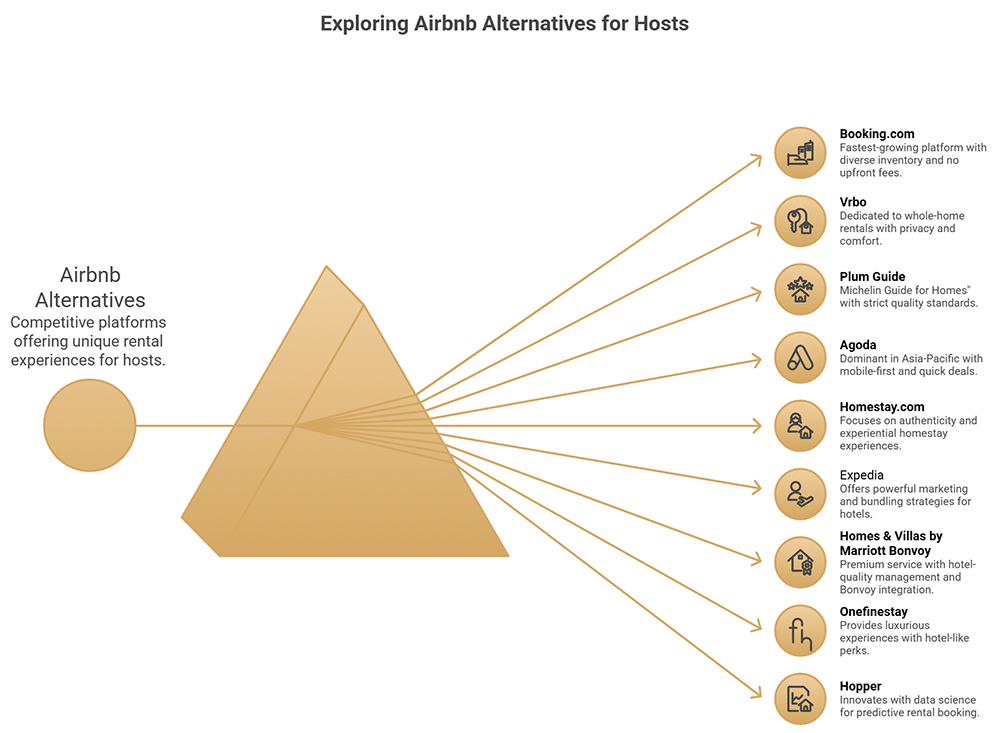
9 Leading Websites Like Airbnb for Hosts
Each of the following sites has proven itself competitive with Airbnb. Take special note of the specialization and unique options each brings to the table to meet specific market demographics.
1. Booking.com
Booking.com has seen a tremendous level of growth in its overall scope since its inception. What began as a hotel-focused service has become one of the most popular sites similar to Airbnb.
According to Skift, Booking.com increased its global short-term rental market share from 14% to 18%. It is the fastest growth rate among the big three platforms during the post-COVID period, representing a 20% jump in revenue share. Additionally, the lack of upfront fees for hosts has helped build trust and popularity.
Booking.com has, over time, been able to diversify its inventory and operations to stay competitive with the latest trends and changes to the larger market.
For a deeper look at how to optimize your presence on the platform, read the article “Booking Admin: Increase Bookings with Your Booking.com Listing!”
2. Vrbo
Vrbo is one of the websites like Airbnb that has found success by dedicating itself to a particular market. The company is committed to whole-home rentals, which emphasize the feeling of really being at home during an extended stay. The combined draw of privacy and comfort also makes it ideal for vacation homes, as is its integration with Expedia Group. Hosts have a choice of either an annual subscription fee or pay-per-booking costs of around 8%.
For more practical tips on managing the platform effectively, read the article “Vrbo Owner Login Strategies & Optimization for More Bookings.”
Video: Airbnb vs VRBO vs Booking.com (Comparison)
3. Plum Guide
Plum Guide is in many ways the “Michelin Guide for Homes”. Guests can rest assured of the property’s quality as each of these vacation homes needs to pass a 150-point quality test. This dedication to quality does come at a cost. The commission rate for Plum Guide is 3% from hosts and 15% from guests. However, the more curated premium approach has created a dedicated market for more well-off travelers.
Doron Meyassed, CEO and Founder of Plum Guide, from a Skift interview on AI and curation:
“Plum Guide was born from an observation rather than a typical pain point. I found that only one in every 20 places I booked on Airbnb genuinely stood out, despite thorough research. These were hosts who approached their homes with the care of a hotelier — adjusting the ambiance, ensuring perfect bedding, and selecting each piece of furniture and art with intent.”
4. Agoda
Agoda isn’t just one of the websites like Airbnb. It is a force to be reckoned with in the Asia-Pacific region. Agoda’s “List my property” materials say partners can list for free and sync bookings from other travel sites, which supports its accessibility for hosts and managers. The platform stresses the importance of letting people use mobile options and even quick deals for those last-minute savings. Likewise, the host commission doesn’t have any upfront expenses and has fees between 15% and 20%. Because of Agoda’s influence and success, it’s an important guide to the Asian market’s view of travel and hospitality.
5. Homestay Technologies Limited
Homestay.com is an example of how focusing on authenticity and experiential elements can provide success for websites like Airbnb. Travelers don’t just find a room to sleep in; they’re truly invited into a home. Guests are able to experience the daily life and hospitality of a different culture to feel true immersion. The booking fee for guests is 15%, and hosts are charged a 3% commission. The combination of social connection, learning, and lower prices has made it a hit with both students and people traveling on their own.
6. Expedia
Expedia is one of the similar websites to Airbnb, which offers powerful marketing options, including Vrbo. The platform functions as a travel agency linking the globe and listing packages, hotels, property rentals, and more alongside flights. Expedia Group says one vacation-rental listing can be shared across Vrbo and Expedia and with over 70,000 business partners. Its bundling strategy in particular is worth special attention as it expertly meshes with the platform’s large distribution network. Tim Rosolio of Expedia Group describes Vrbo, Hotels.com, and Expedia as “stores,” where the challenge is stocking the right vacation rentals for the right channels. That reinforces an important lesson for hotels: platform fit matters as much as platform reach.
For more practical guidance on managing your presence on the platform, read the article “Tips & Strategies to Use the Expedia Extranet to Get More Bookings.”
7. Homes & Villas by Marriott Bonvoy
Marriott’s premium service provides rental homes with extra experiential care. The service is hotel-quality and professionally managed by professionals vetted by Marriott itself. The fees vary by region, but the dedication to quality is universal, as is its integration with Marriott Bonvoy’s point system. This is one of the key websites like Airbnb that highlight how existing hotels can leverage Airbnb’s concepts to compete within the market. Marriott found a strong target demographic in luxury property owners and brand-aware travelers.
Jennifer Hsieh, Vice President of Homes & Villas by Marriott Bonvoy, has noted the platform’s ambition clearly:
“We want to inspire our Marriott Bonvoy members with amazing, wow-worthy homes in our top destinations. Our survey shows 74% of prospective US travelers have pain points when searching for vacation accommodations.”
8. Onefinestay
Onefinestay is another site like Airbnb that strives to create a more luxurious experience for guests. The company, now a component of Accor, leverages perks similar to those of a hotel, such as housekeeping and concierge services. The host commission of around 15% to 20% is paired with strict criteria for inclusion in order to ensure the highest-quality experience. Onefinestay is an ideal way to match boutique property owners with guests who want a luxury experience within in-demand locations.
9. Hopper
Hopper is already a well-known entity for predicting hotel prices and flights. However, with the addition of Hopper Homes, it’s become a solid option within vacation rental platforms. Hopper is among the websites like Airbnb that innovate through data science. Hopper Homes uses its powerful predictive platform to help people find the best time to book vacation rentals. It provides an example of how the needs of travelers evolve. Guests appreciate the emphasis on mobile-first technologies, price predictions, and data-driven decision-making.
Best Alternatives to Airbnb for Different Use Cases
Specialization helps websites similar to Airbnb thrive by meeting the needs of specific demographics.
- For Luxury Rentals: Onefinestay, Plum Guide, and similar platforms leverage high standards, solid quality metrics, and curation to ensure top-tier services for travelers who want premium experiences.
- For Budget Travelers: Students, solo travelers, backpackers, and anyone balancing a budget can find affordable options and immersive local flavor with Hostelworld and Homestay.
- For Business Travelers: The best Airbnb alternative websites for professionals, such as Sonder and Blueground, mix business options with the comfort of home through furnished options.
- For Property Managers: Evolve and Vacasa meet the needs of property owners through specialized marketing tools, full-service administration, and variable pricing options.
- For Local Experiences: Trip.com Rentals, along with Tujia, open up immersive local experiences, in particular within Asia, with services used by residents and local markets.
Video: Discover BETTER Alternatives To Airbnb And Say Goodbye For Good!
How These Platforms Compare to Airbnb
The strongest competitive advantages for websites like Airbnb often come from flexibility. The following features all compare quite differently to Airbnb.
- Fee Structure: Airbnb uses a service fee of up to 20%, with 3% to 15% for hosts. Booking.com sets its host fee at 15% commission. Vrbo uses between 5% and 8% for hosts and 6% to 12% for guests.
- Ease of Listing: The various sites that are like Airbnb often differ in their ease of use and features, such as instant booking and easy listing, with examples like Plum Guide, which have strict guidelines and approvals, while Onefinestay offers property management featuring full-service.
- User Demographics: The demographics covered by Airbnb are expansive and range from cost-cautious travelers to millennials, while competitors look for niches like the group and family support of Vrbo or Onefinestay and Plum Guide’s luxury.
- Niche Focus: Airbnb offers an immense variety in property options, while Marriott Homes leverages premium properties tied to loyalty programs, Vrbo offers entire home rentals, and Homestay focuses on the property’s surrounding culture.
- Regional Availability: Over 220 countries are covered by Airbnb, but Booking.com is strong in Europe, FlipKey in the US, and Agoda in the Asia-Pacific.
- Support Services: Airbnb uses a host guarantee program to ensure guests have 24/7 support, which differs from options like Marriott Homes, which leverages hotel-emulated support through their existing system.
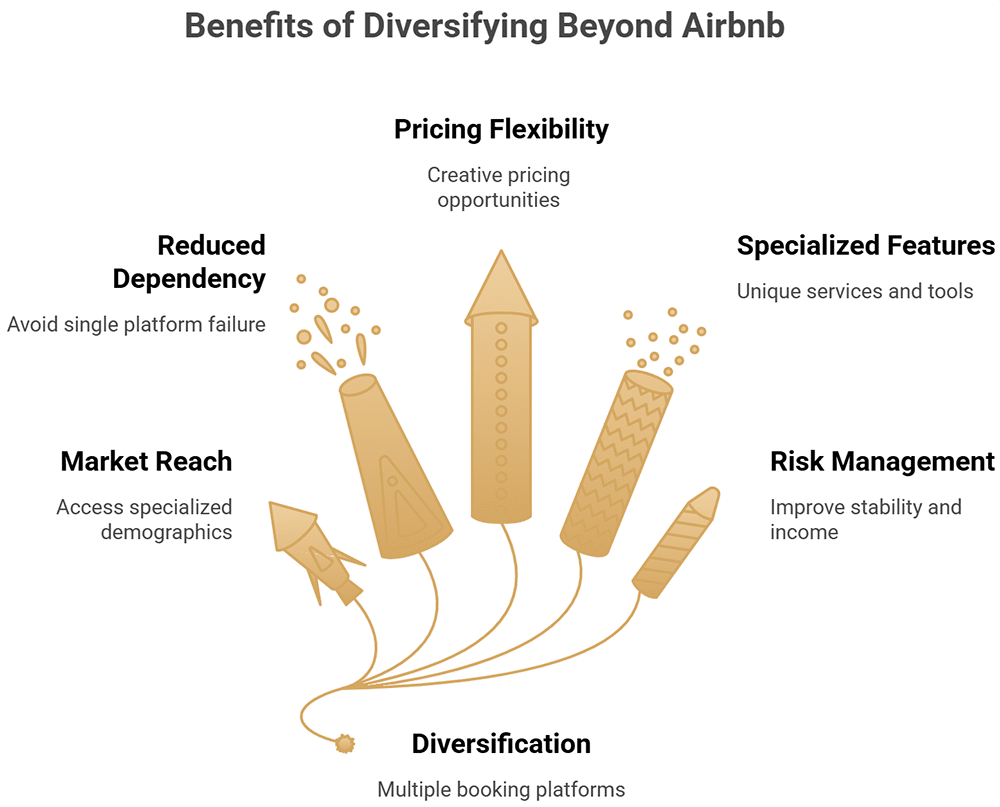
Benefits of Diversifying Beyond Airbnb
Sites that deliver similar functionality to Airbnb provide a number of important benefits that you should incorporate into your overall strategy.
1. Expanded Market Reach
Not every type of traveler uses Airbnb regularly, and the same holds true for similar services. The platforms typically cater to specialized demographics like Plum Guide with luxury travelers or Vrbo with families. According to Mordor Intelligence, the Asia-Pacific region is predicted to grow at a CAGR of 14.24% between 2025 and 2030 in the short-term vacation rental market. You can often tap into a significant percentage of these demographics by working with the right service and marketing to them accordingly. This doesn’t simply let you increase your customer base; it often allows for increased strategic planning to compensate for slow seasons.
2. Reduced Platform Dependency
When you’re relying on a single service, you’re at risk of any disruption from within it. This can range from changes to the system’s ranking algorithms, service outages, changes in policies that put you at a disadvantage, and more. When you’re present on multiple services, you’re no longer putting all your eggs in one basket. At the same time, this independence from a single point of failure provides you with additional leverage during any negotiation since you have options.
3. Enhanced Pricing Flexibility
Every service provides different types of pricing options, which can often provide you with unique opportunities. For example, the host-only costs of Booking.com allow for creative options with pricing that wouldn’t be possible elsewhere. These pricing opportunities also go along with different platforms’ user base. You can work with rate optimization over different platforms to accommodate or encourage people during specific seasons, with special deals or other dynamic pricing strategies.
4. Access to Specialized Features
Onefinestay provides concierge services to guests, Hopper uses its price predictive technologies, Marriott Homes integrates with the company’s loyalty program, and that’s just the tip of the iceberg. Every platform has its own unique services and tools, which open up a wealth of possibilities. When you use multiple services, you’re not just adding options. You’re gaining the potential for synergistic connections between services, which will provide you with rare and significant competitive advantages over your competition.
5. Improved Risk Management
Risk is an inherent part of business, but so is the need for risk mitigation through diversification. You decrease risk and improve stability by working through different parts of the larger market. Each platform’s specialization means you’re guarding against potential market issues, regulations, or new restrictions. This can be additionally improved through further balancing of your diversification strategy with direct bookings. The end effect is multiple streams of guests and income, which can provide stability if one element suffers.
Tips for Switching to or Listing on Other Rental Websites like Airbnb
Strategy is key when moving to or leveraging multiple platforms. Use the following tips to balance complexity and rewards.
- Adjust Your Pricing Strategy: The Airbnb alternatives have specific demographics, and understanding them means understanding the pricing systems and values that will make you an attractive option.
- Optimize Listing Photos and Descriptions: People pay attention to both text and images that present an appealing narrative, so ensure you have enticing photographs and engaging descriptions.
- Sync Calendars Across Platforms: Your channel managers and administration tools can ensure you aren’t double-booking and that your services are consistent across all the websites, like Airbnb.
- Learn Platform-Specific Rules and Cancellation Policies: Both your experience and that of guests will improve by studying the specific rules used by the various sites, like Airbnb.
- Monitor Performance Metrics: Ensure you’re tracking metrics like average daily rates, guest satisfaction, and booking rates across all platforms to get the most out of your business strategies.
- Monitor Guest Reviews and Respond Promptly: You can build trust with guests by responding to them promptly, openly, and informatively, which also boosts your listing visibility.
Airbnb Login: Tips For Airbnb Hosts To Optimize Your Listing
Short-term rental sites like Airbnb, and of course Airbnb itself, typically provide some manner of unified digital management for both guest and host alike. These systems integrate booking, property management, reservations, payment, messaging, and more. When properly leveraged, it streamlines every aspect of the stay to make things smoother for every party. You can discover the various methods for logging in, authenticating, securing, and getting the most out of these systems in the article “Airbnb Login: Tips For Airbnb Hosts To Optimize Your Listing.”
12 Online Travel Agents (OTAs) to Increase Your Hotel Bookings
The rise of Airbnb competitors has come in part from the evolution of online travel agents (OTAs). The services have moved beyond hotel reservations to provide additional options like serviced apartments, vacation properties, and other unique options. Getting the most out of OTAs means understanding that they’re no longer a simple bridge between two parties. OTAs are powerful strategic pieces that can help both travelers and guests have the best possible experience. You can learn about how OTAs have changed, what they offer, commissions, and how to optimize your property for them in the article “12 Online Travel Agents (OTAs) to Increase Your Hotel Bookings.”
FAQs Related to Sites Like Airbnb
Sites like Airbnb are changing every aspect of hospitality. But that also means that to stay competitive, you’ll need to turn what you’ve learned about websites like Airbnb into a personalized, realistic plan. The next step after learning is action.
Did You Like This Article About Sites Like Airbnb?
You might also be interested in the following articles:
- Airbnb Pricing Strategies: Ultimate Guide for Revenue Management
- Hotel Review Websites and Online Reputation Management Tips
- Hotel Guide to Creating and Managing Airbnb Listings
More Tips to Grow Your Business
Revfine.com is the leading knowledge platform for the hospitality and travel industry. Professionals use our insights, strategies, and actionable tips to get inspired, optimize revenue, innovate processes, and improve customer experience.Explore expert advice on management, marketing, revenue management, operations, software, and technology in our dedicated Hotel, Hospitality, and Travel & Tourism categories.
This article is written by:

Hi, I am Martijn Barten, founder of Revfine.com. With 20 years of experience in the hospitality industry, I specialize in optimizing revenue by combining revenue management with marketing strategies. I have successfully developed, implemented, and managed revenue management and marketing strategies for individual properties and multi-property portfolios.





Leave A Comment